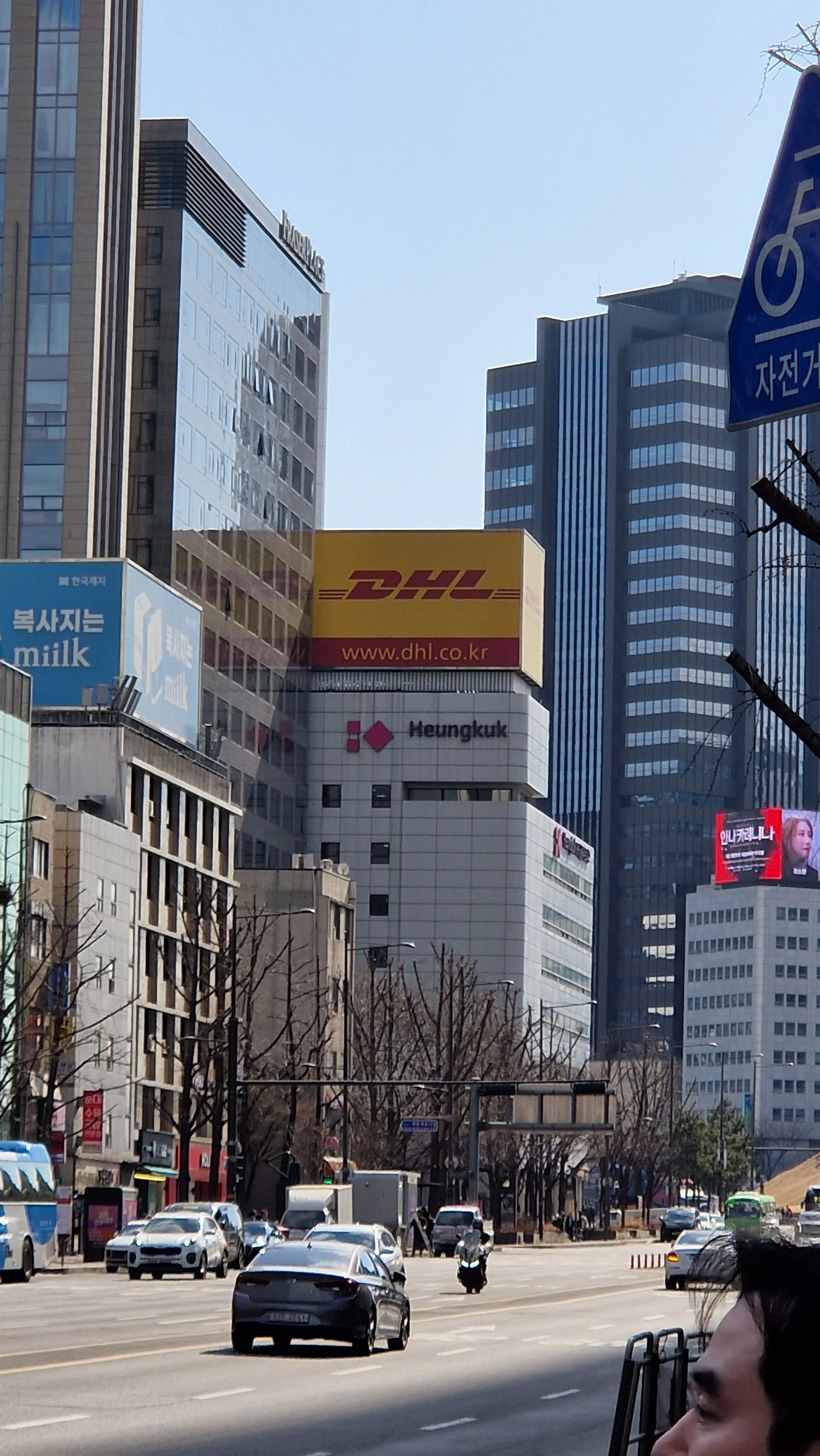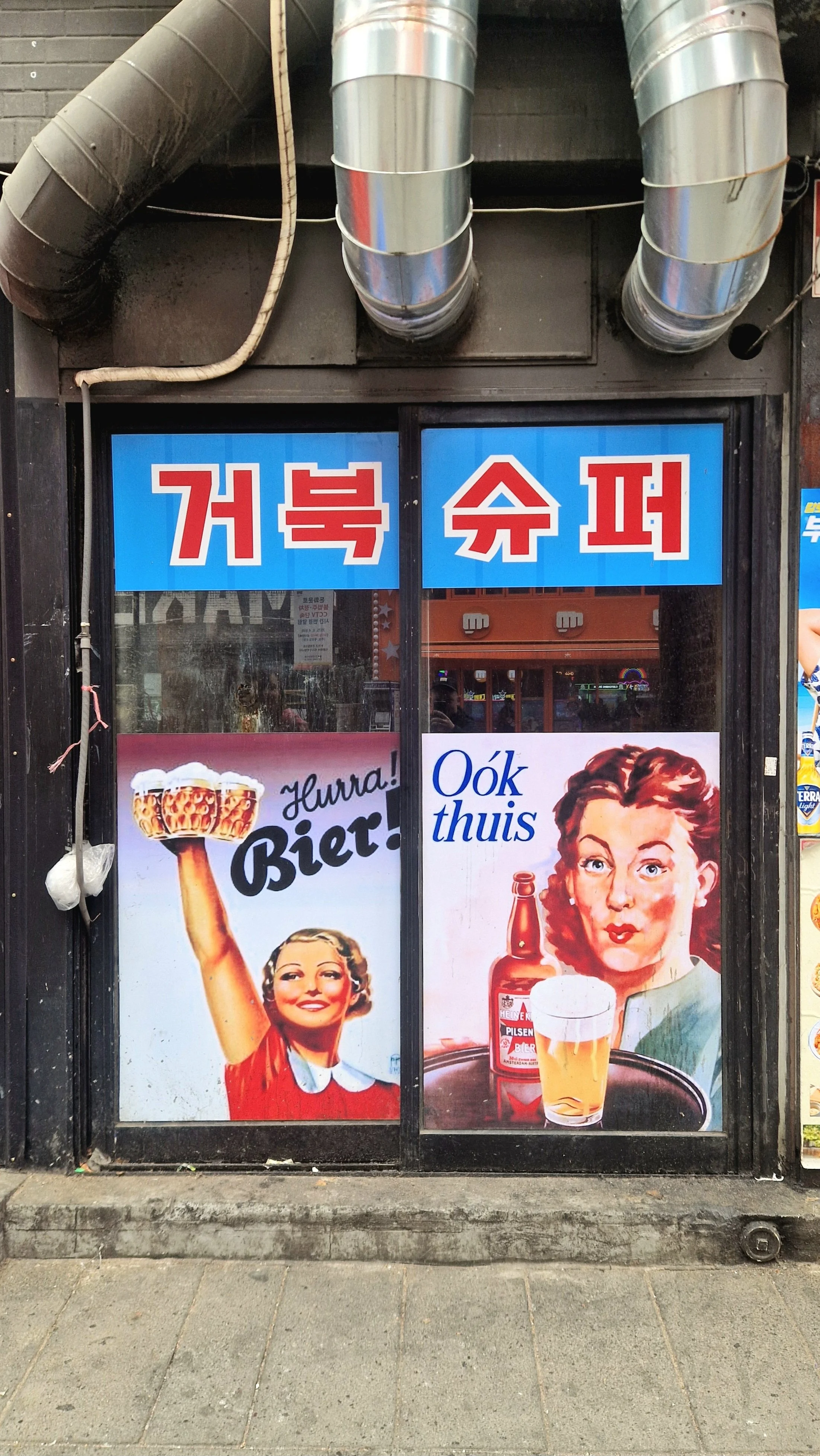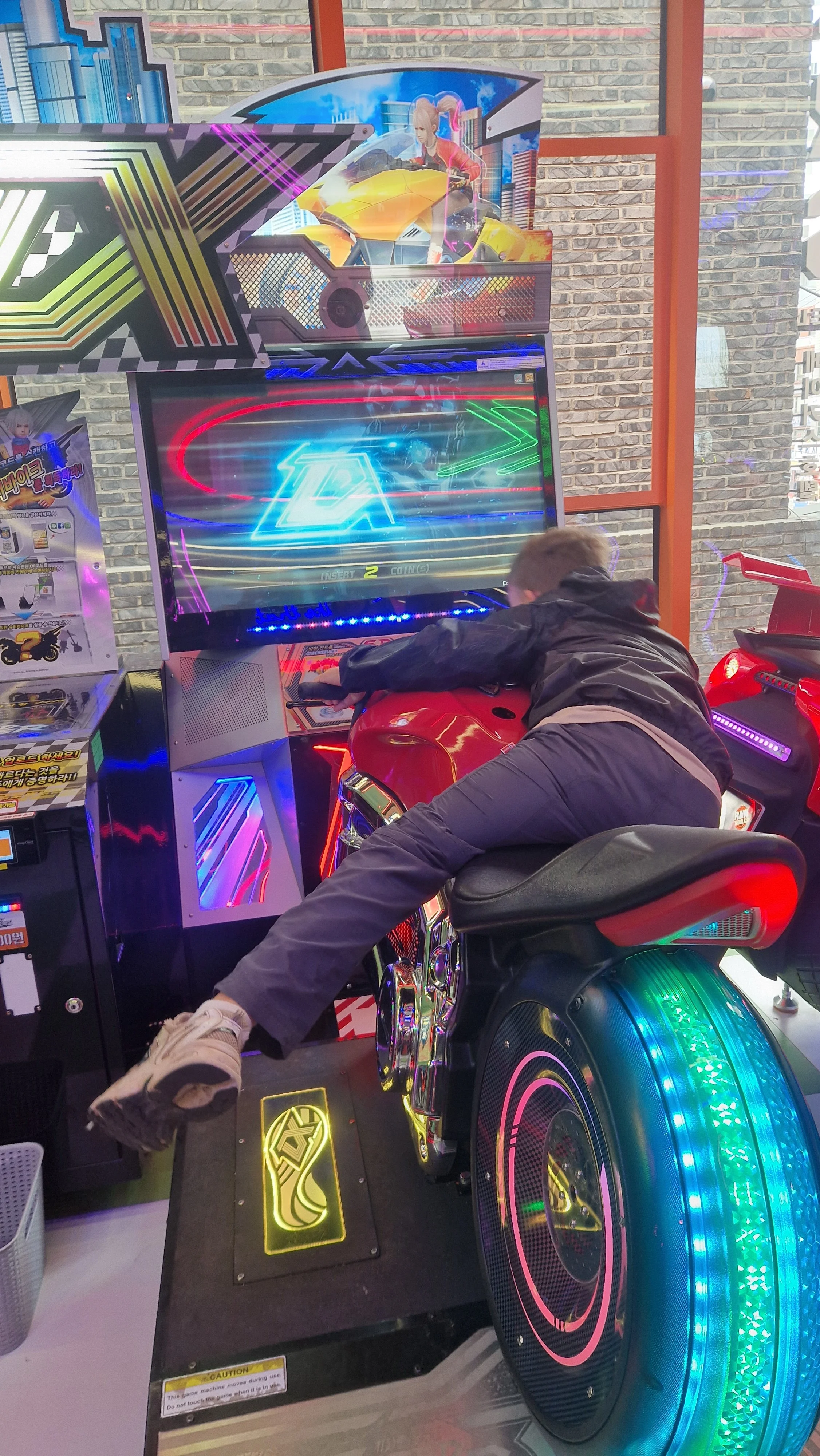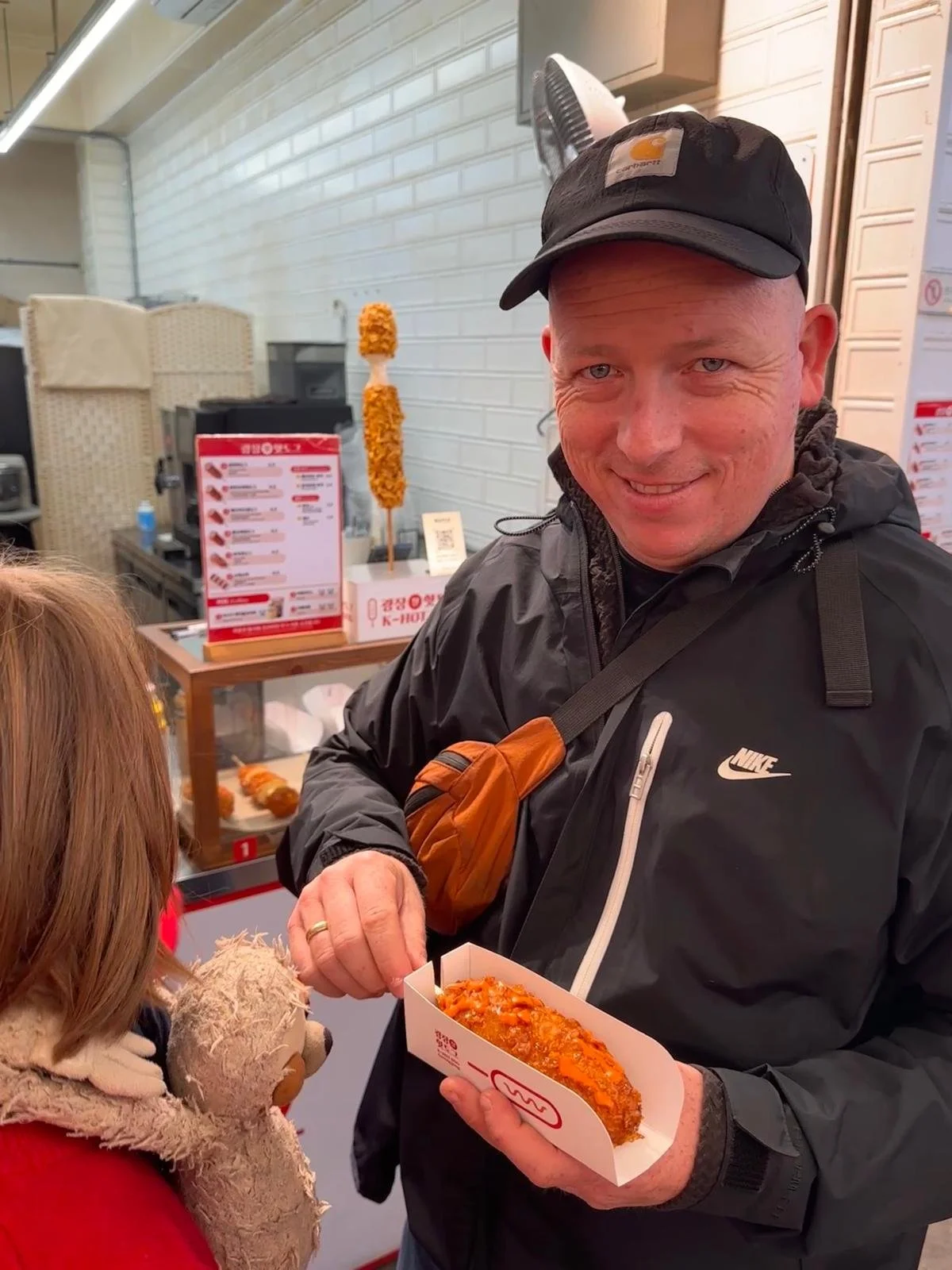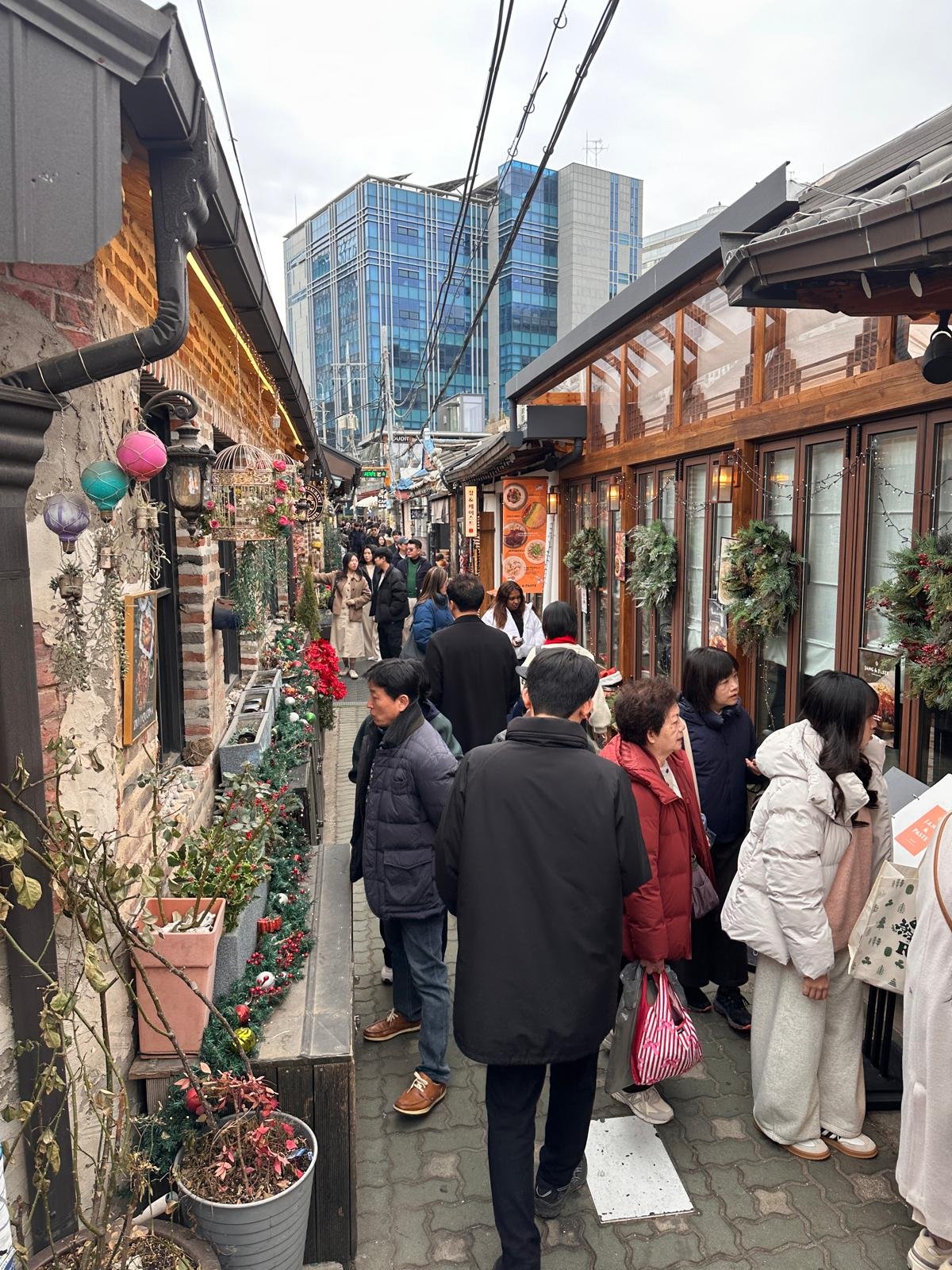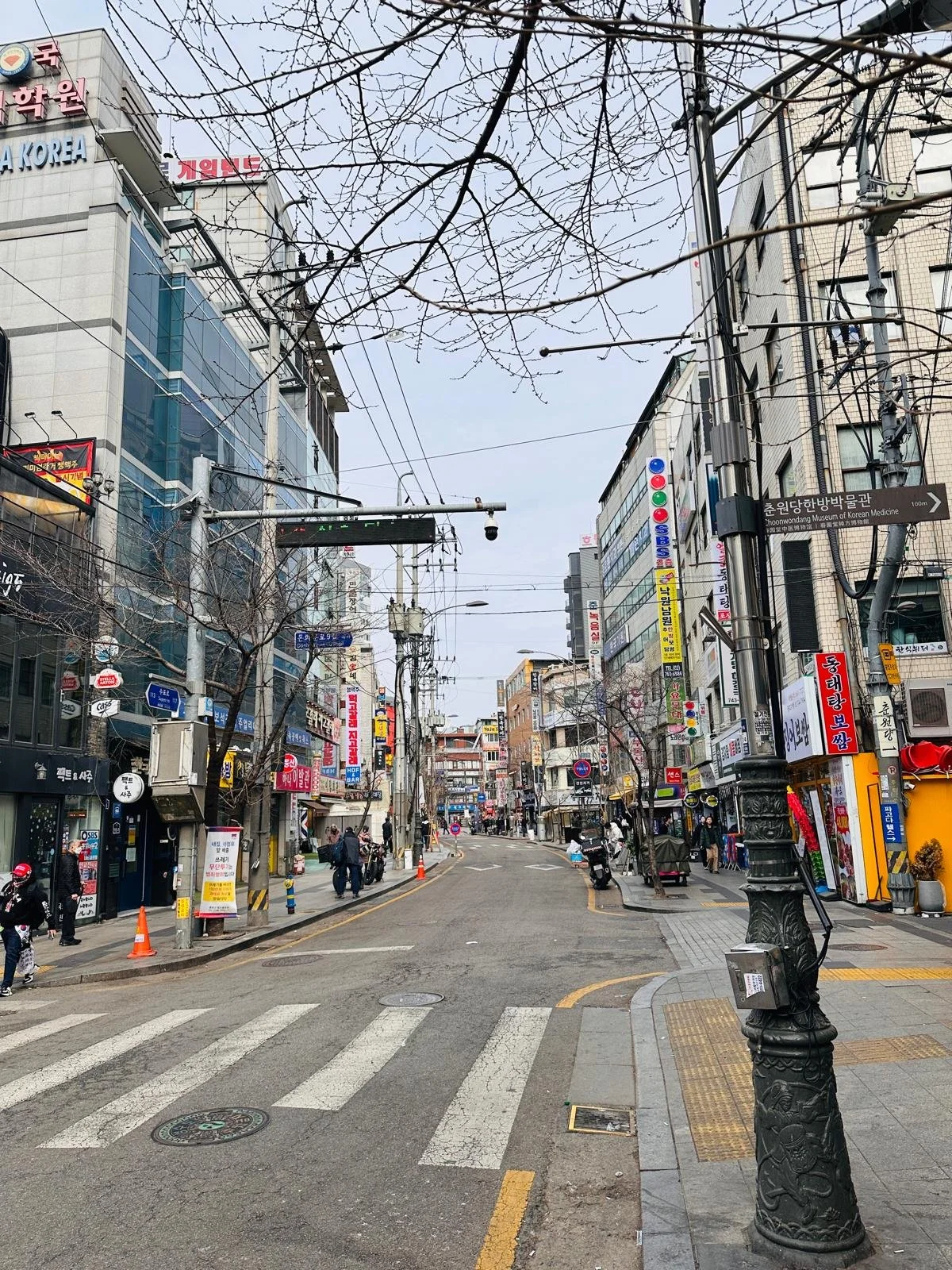
Seoul was not on our list when we thought about our travel plan, but I’m incredibly happy it manoeuvred itself into our path, as the city, and especially its wonderful citizens, have left a very positive and lasting impression on us. We’ve encountered incredible people in every country we have travelled so far, but the helpfulness, politeness and general friendliness of the people in Seoul was truly unmatched. You stand somewhere looking around to orientate yourself and someone will approach you immediately and offer clear, patient help. You enter a bus and the driver will take all the time in the world to make sure you are on the right route and will kindly let you know when to exit. You sit in a restaurant and strangers may invite you to share Soju or even buy dessert for the kids, small gestures that made our stay feel warm and welcoming. These are all real examples from our relatively short but memorable stay in Seoul, South Korea. Admittedly, it could have been a little warmer, though, as our backpacks certainly didn’t cater for temperatures around 10 degrees celsius.
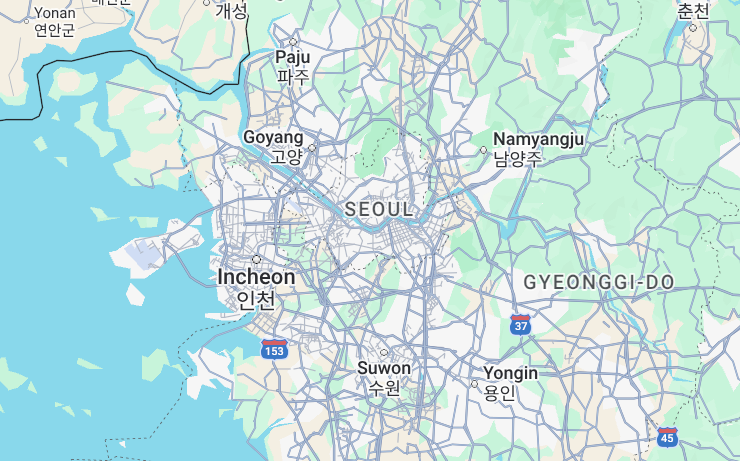
Seoul, the capital of South Korea, is home to almost 10 million people and remains by far the largest city in the country. The name is not especially fanciful, since “Seoul” simply means “capital city” in Korean. Seoul boasts a very long and layered history, with evidence of human habitation stretching back some 30,000 to 40,000 years. That span of time is obviously far too vast to cover in a short blog entry, so I will trim the story down to a few particularly noteworthy remarks.
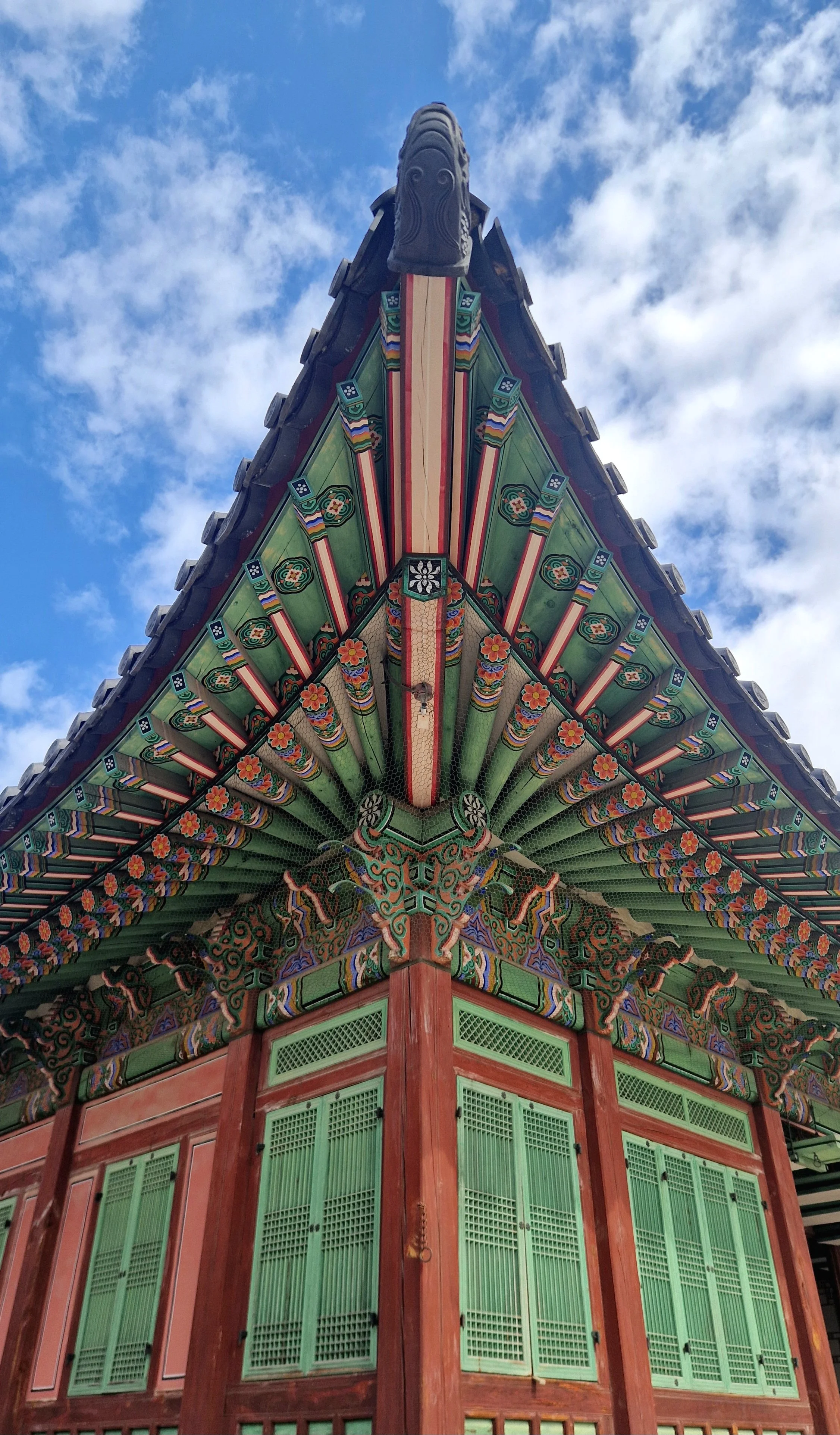
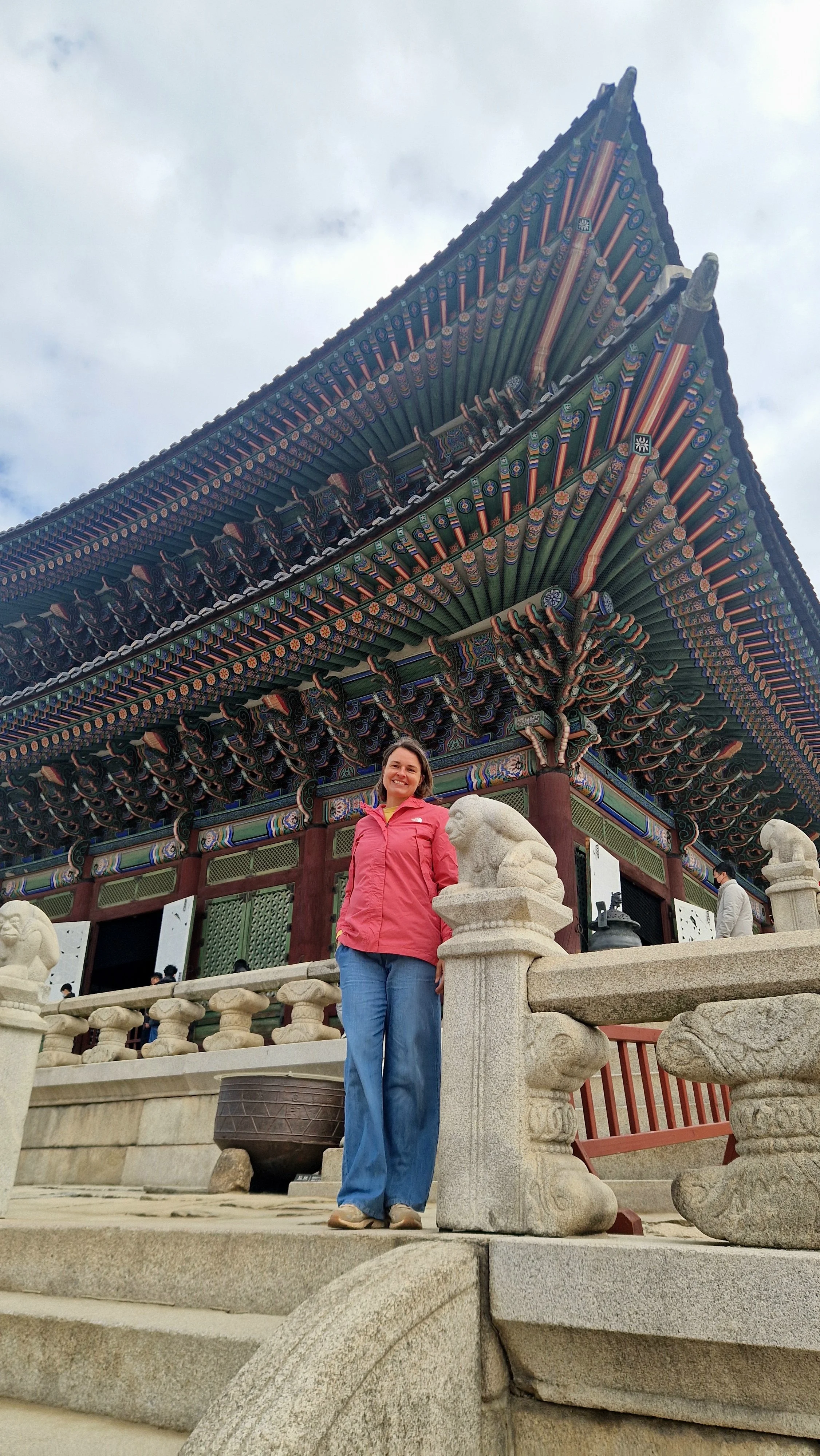
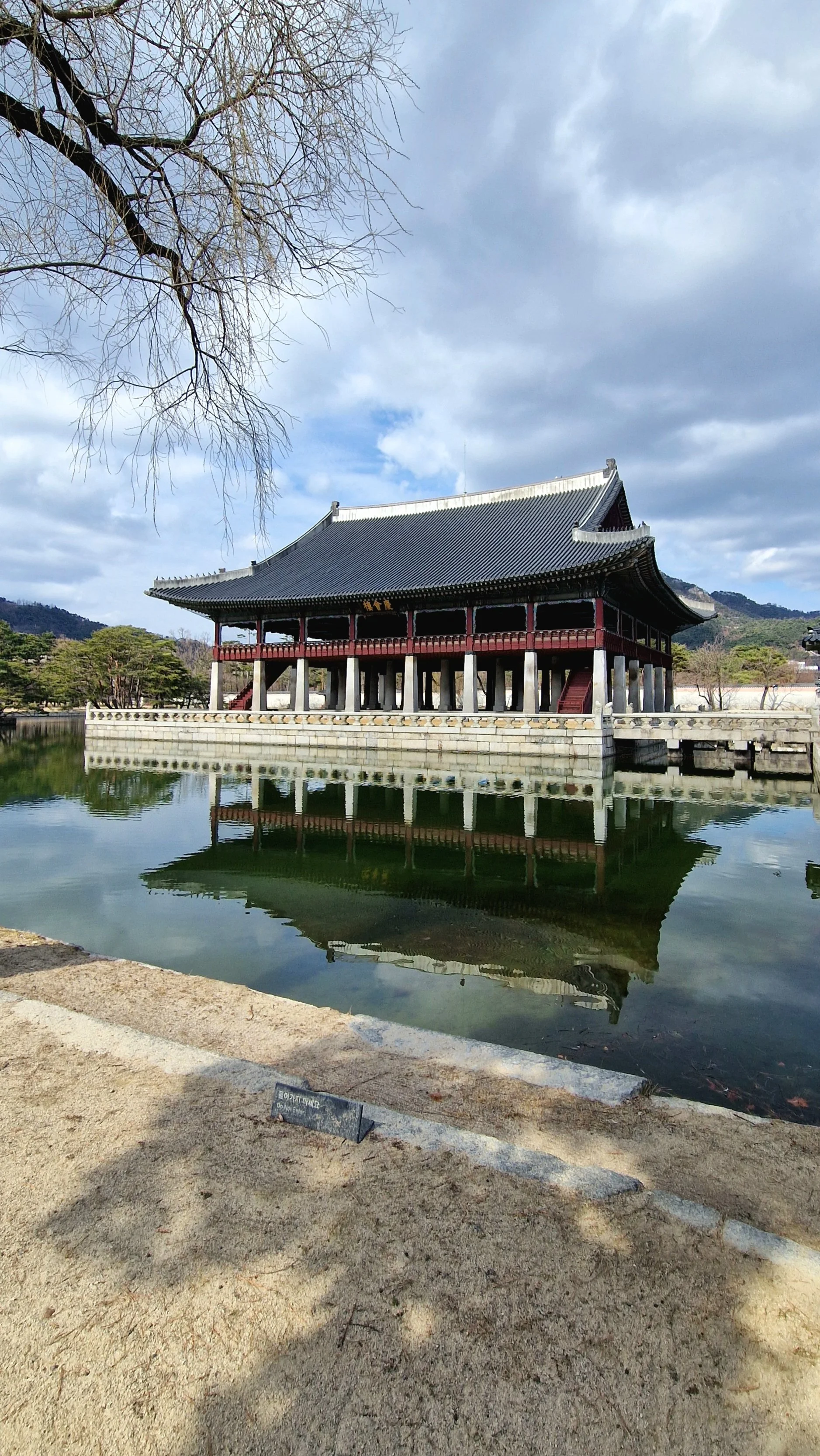
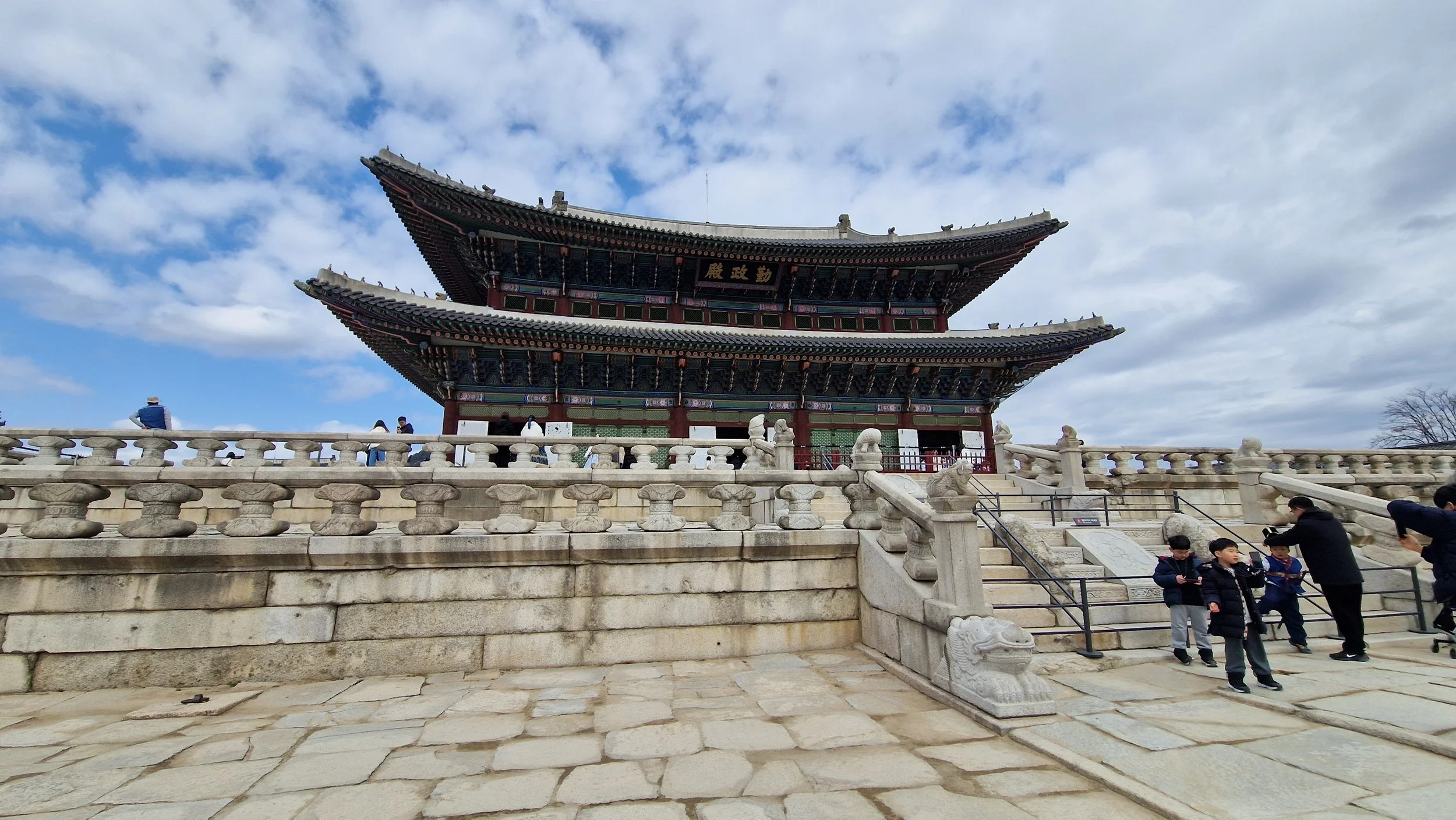
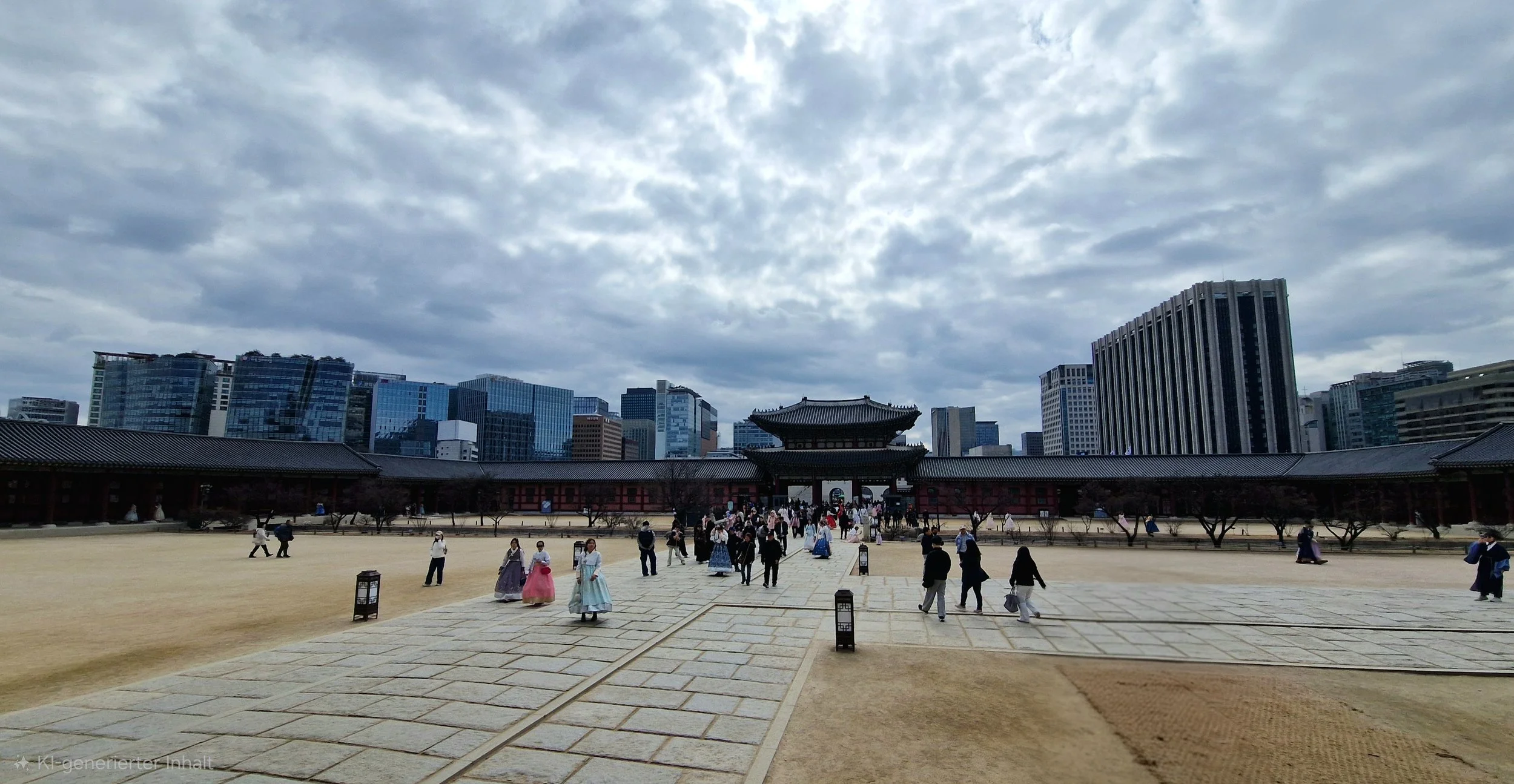
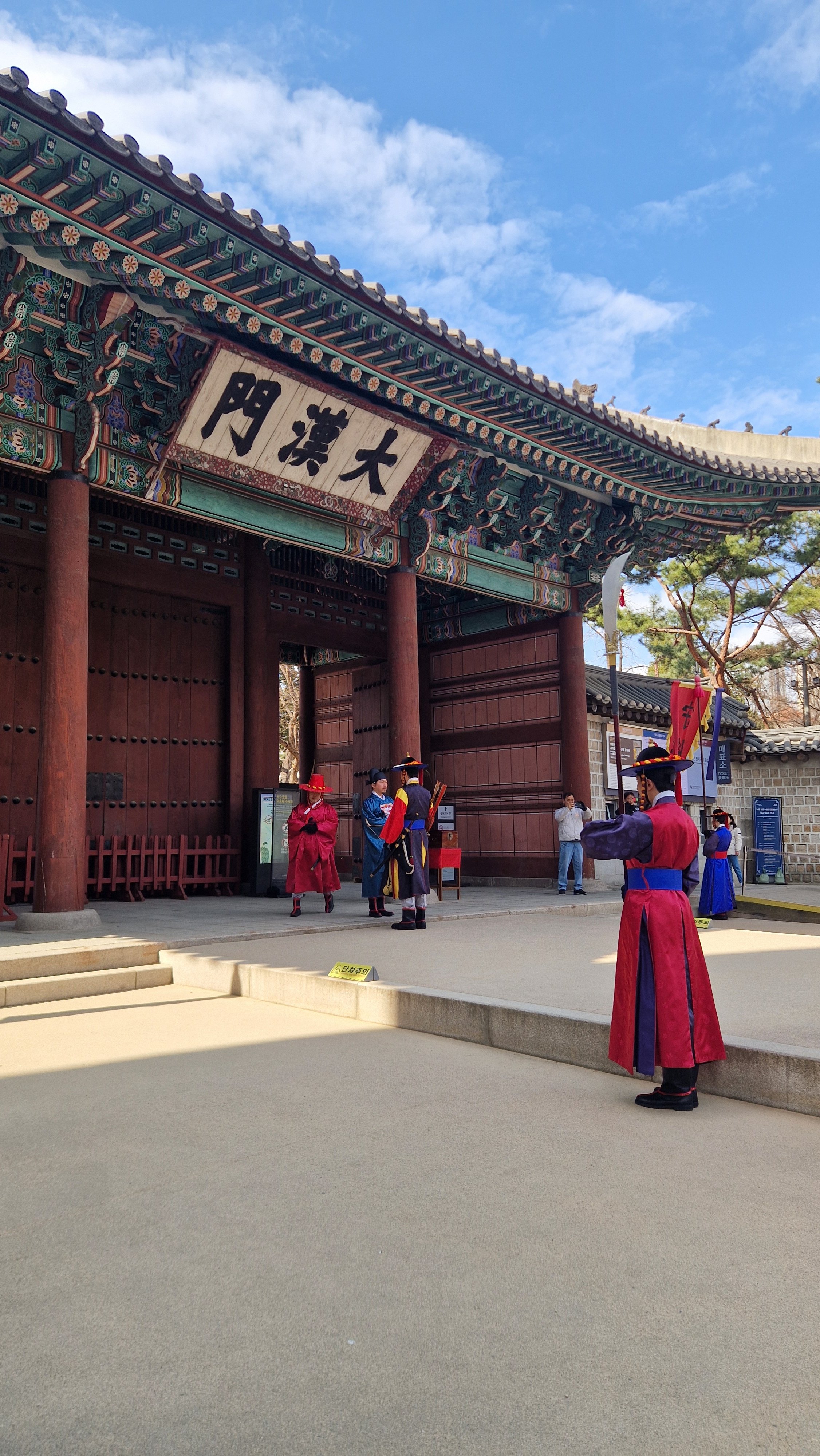
One of the most important periods in the history of Seoul and South Korea in general was the Joseon Dynasty. In 1394, King Taejo made Seoul the capital of the new Joseon dynasty, and grand landmarks such as the magnificent Gyeongbokgung Palace were constructed during this era. We visited the vast expanse of the palace on our first day in the city, and the scale, the meticulous level of detail in the buildings, and the ornate decorations are truly mind-boggling. The city walls and gates, portions of which still stand today, were also built in the Joseon period, and perhaps most significantly, Confucian scholarship flourished at that time. Why is that important? Because Confucian values continue to quietly influence contemporary society and still function as a cultural foundation. The Joseon Dynasty endured until 1910, making it one of the longest-lasting dynasties in world history.
South Korea is known to have one of the toughest schooling systems in the world, and the fact that the country regularly tops international studies like PISA is no coincidence. There is an intense focus on schooling and university entrance exams, very high respect for teachers, strong parental investment in education, and -for better or worse- a widespread belief that academic success determines moral and social worth. Pupils often study into the late hours in private study groups and cram schools, resulting in chronic sleep deprivation; the absence of a private life and the consequent decline in wellbeing are well-documented issues among South Korean students.
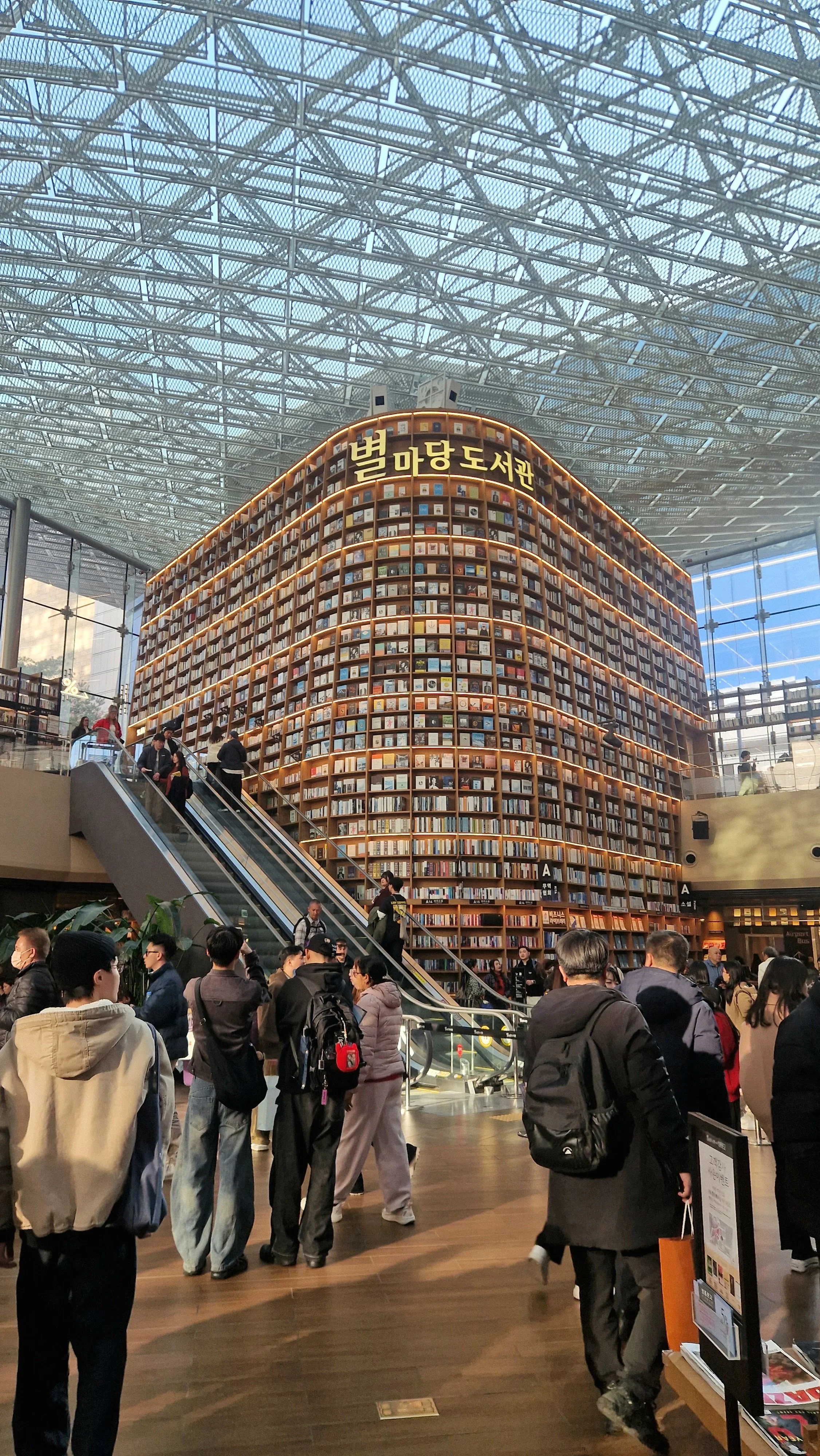
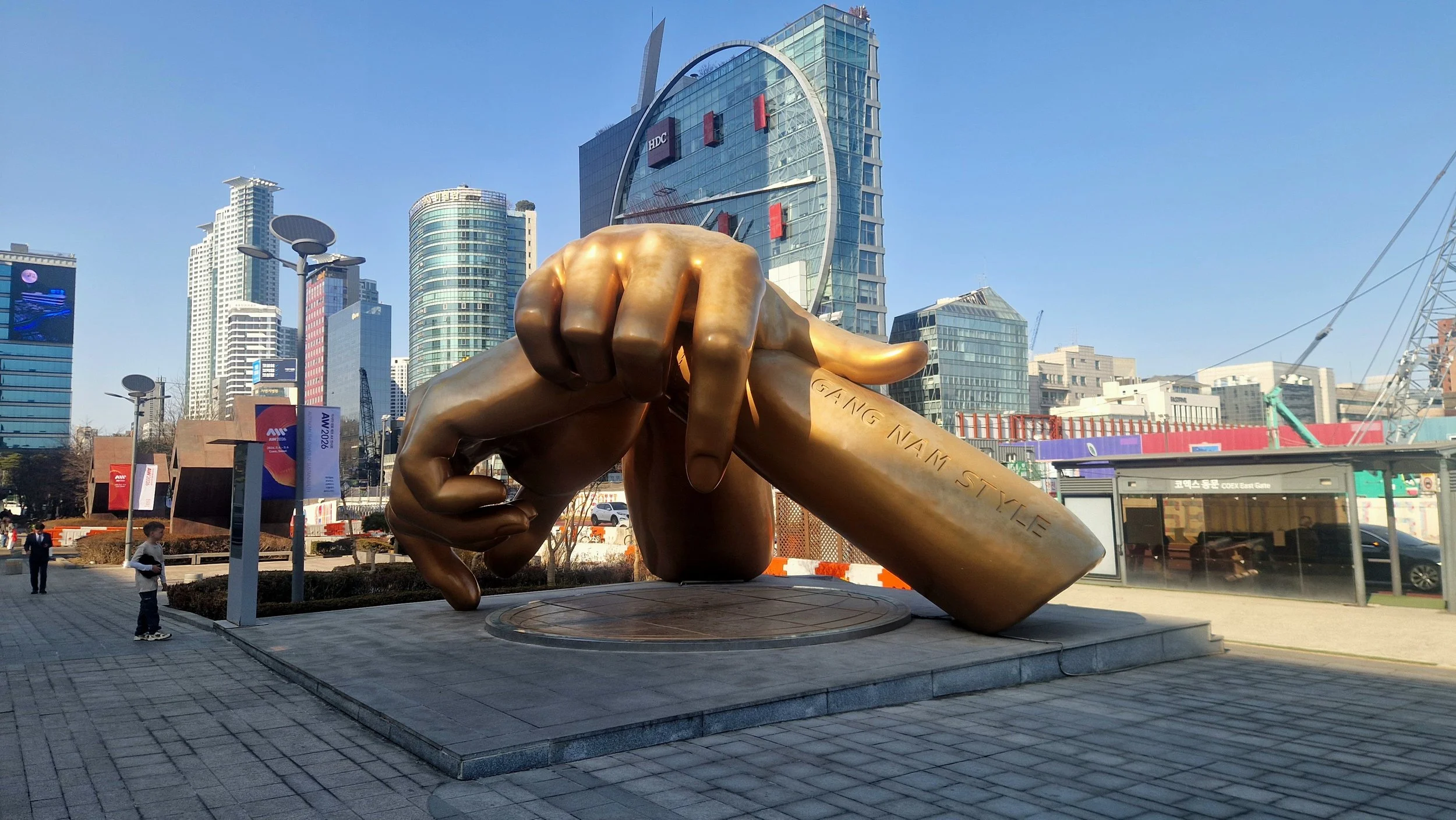
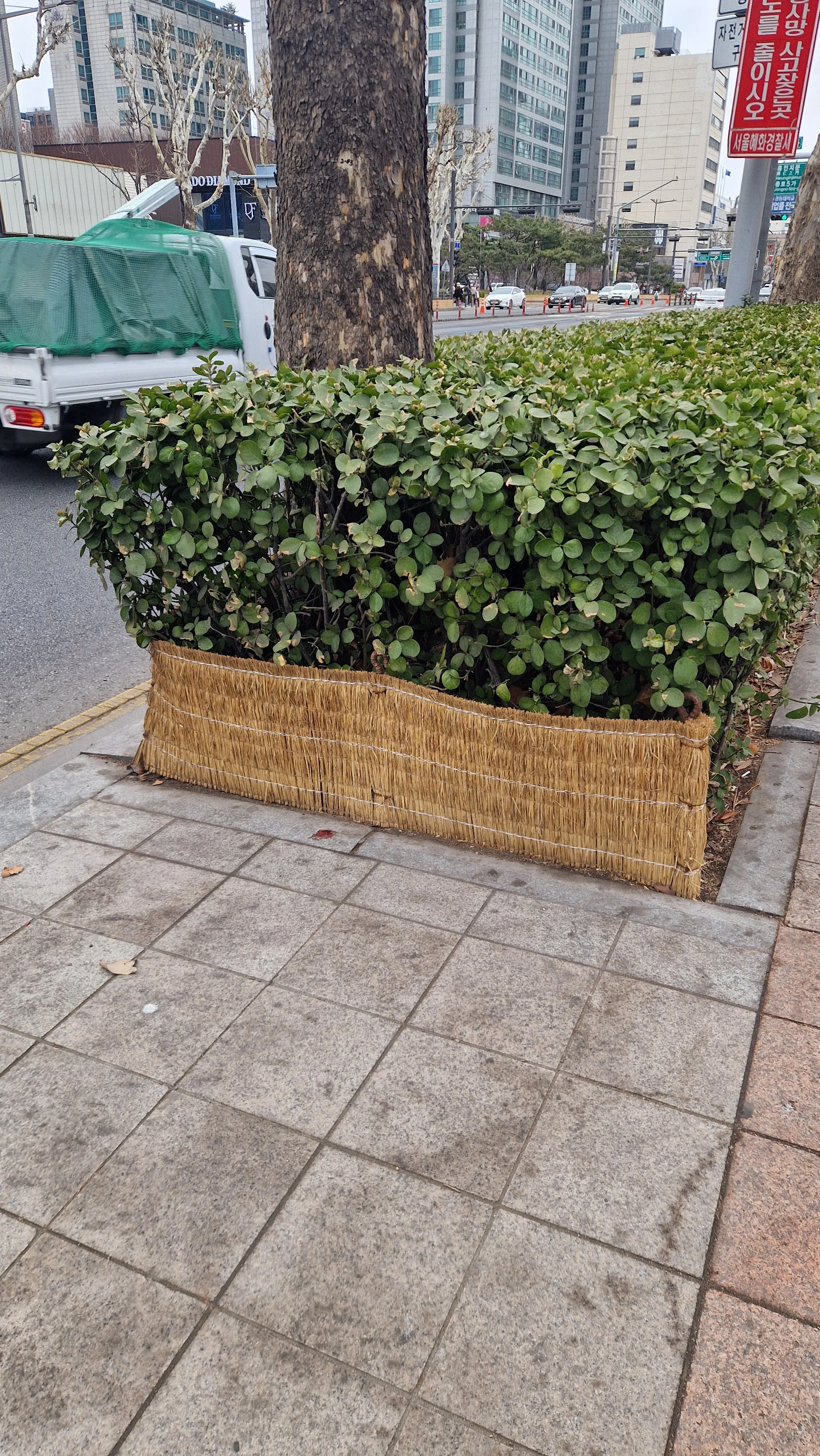
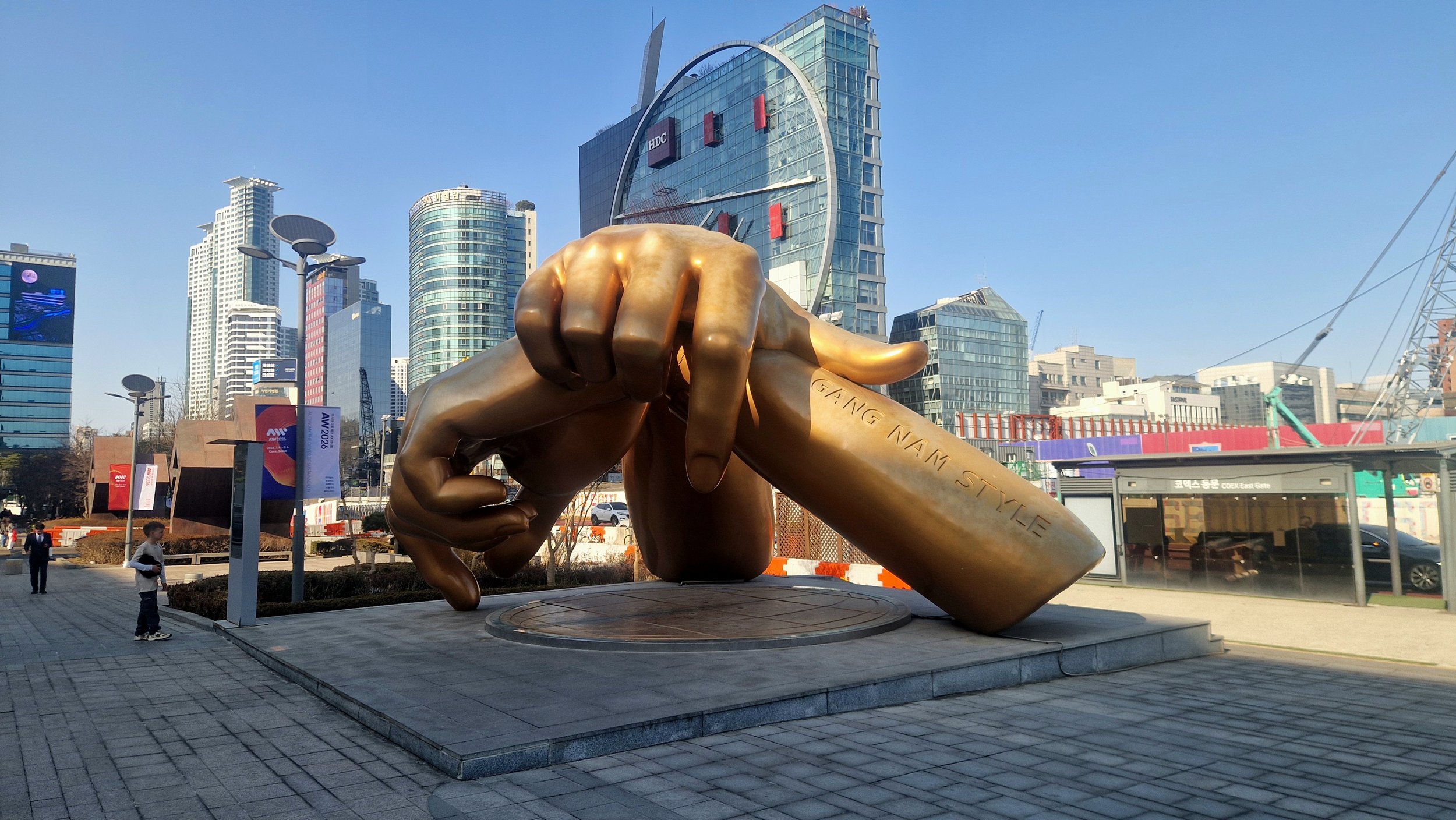
Other Confucian values, such as hierarchy and respect, clearly defined social roles, and an emphasis on social order, are visible everywhere. Whether it’s the tradition of bowing in Gangnam’s business district or the meticulous cleanliness of the streets, these principles are woven into daily life. I was struck, for example, by the delicate bamboo fences placed along sidewalks to protect the many green bushes from traffic and pedestrians; try setting those up in a major European capital and they probably wouldn’t survive a day. An open, public library sitting in the heart of a shopping mall? Completely normal in Seoul. We visited the Starfield Library in the ultra-modern COEX Mall during our stay and were impressed by its soaring 13-metre-high bookshelves and the calm, communal atmosphere amid the bustle.
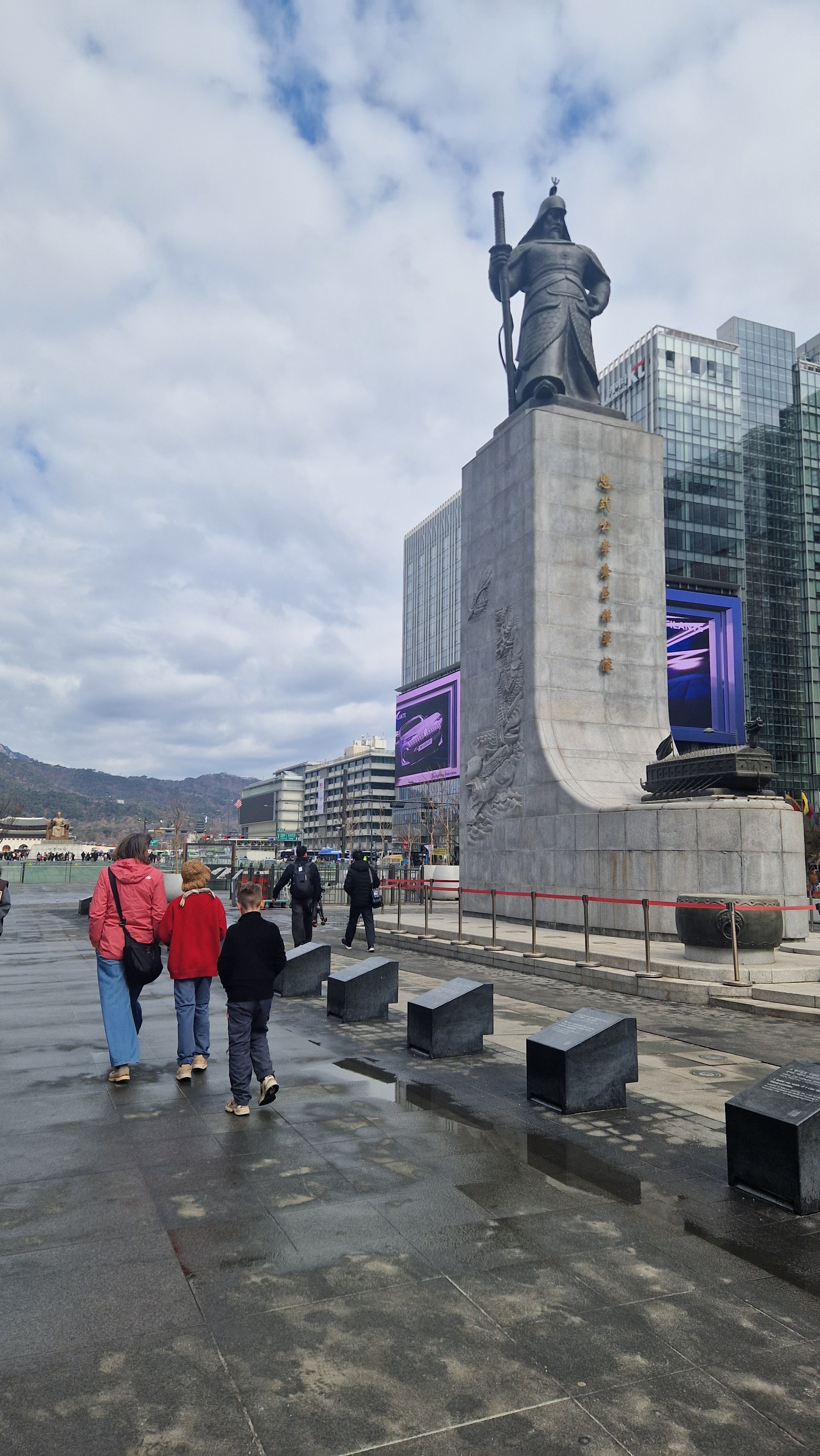
From 1910 to 1945, Seoul was under Japanese occupation and Korean identity and culture were heavily suppressed. This, and also the fact that Seoul was rebuilt from rubble after the Korean War in the early 1950s, helps explain why South Koreans are so proud today. After the war South Korea was among the poorest nations, yet it managed to rise and become a global powerhouse. Beginning in the 1960s under Park Chung-hee, Seoul transformed into a sprawling megacity, and today South Korea ranks among the world’s strongest economies. There is strong cultural pride as well: K-pop, with groups like BTS, enjoys global popularity, South Korean cinema has won major awards (for example, Parasite received an Oscar), and brands such as Samsung lead in their fields. Korean cuisine has also become a celebrated international export. And speaking of South Korean cuisine, we definitely indulged in some of the best food we had on our journey. I don’t think anyone fries chicken better than the Koreans!
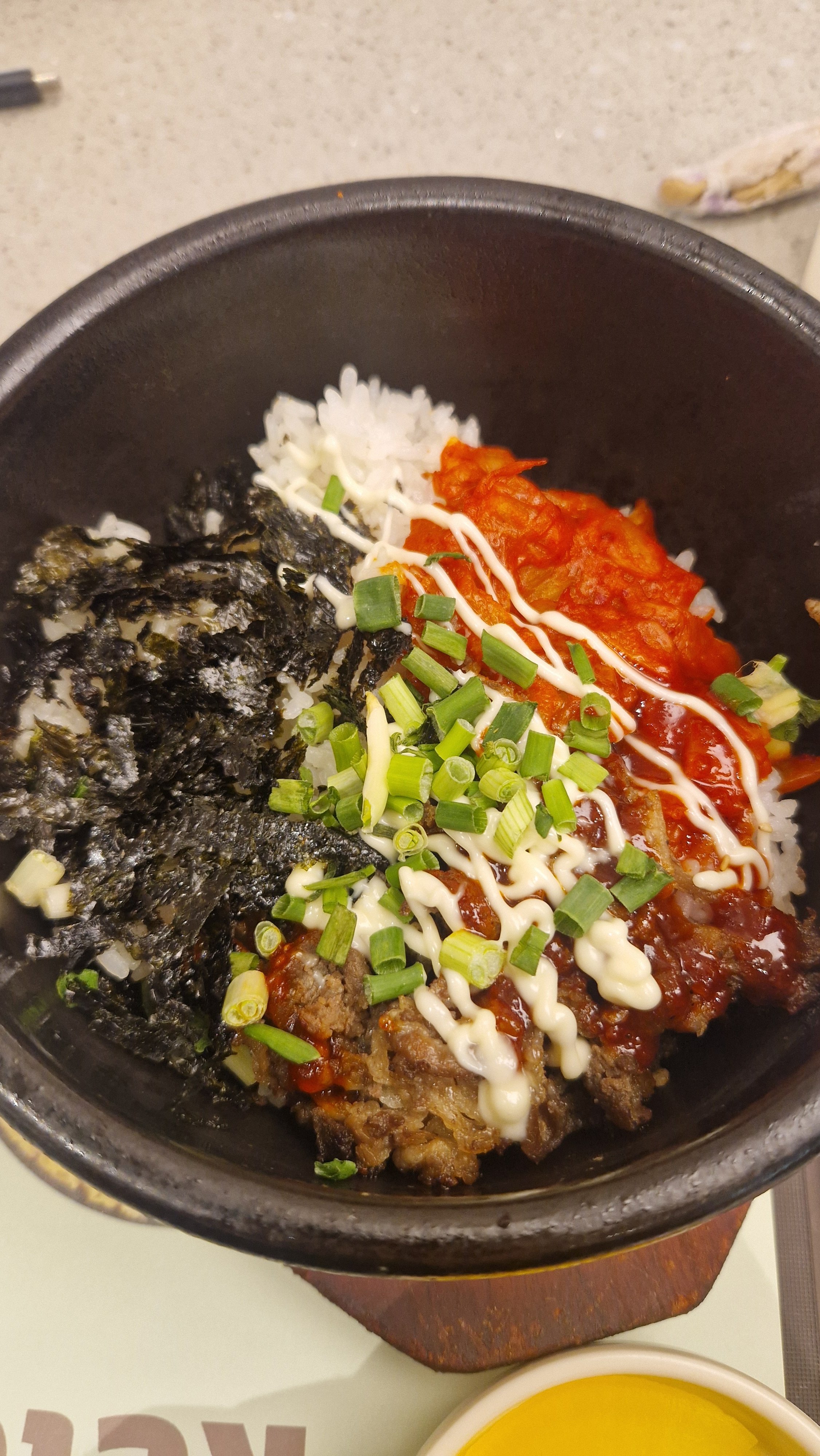
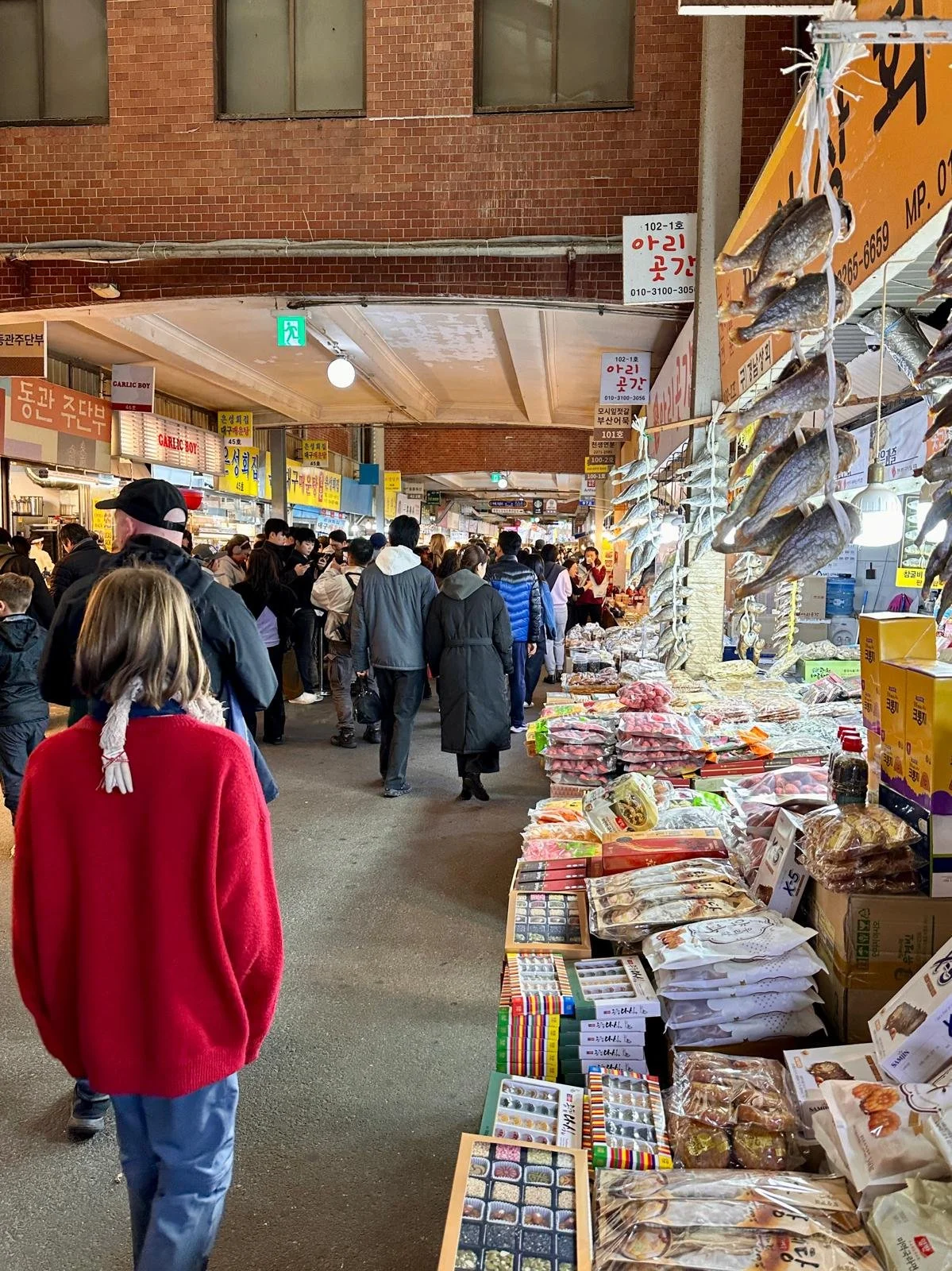
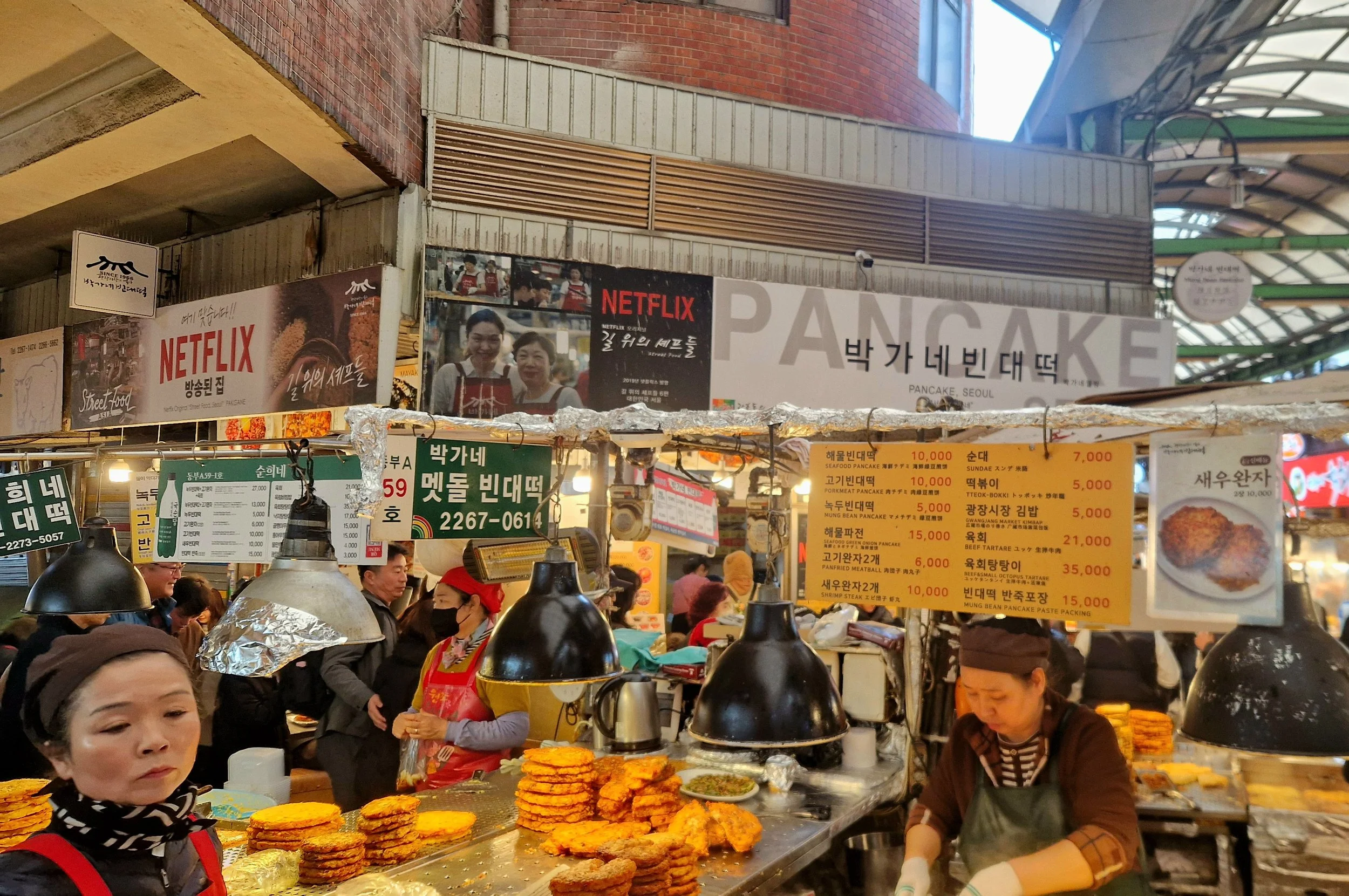
We of course had to go to a Korean BBQ, another world‑famous export, and it did not disappoint. Once again the restaurant staff were extremely helpful and welcoming - they must have realised we were completely clueless about the ritual, but rather than treating that as a source of amusement they were genuinely eager to guide us and explain each step patiently. Korean BBQ is special: you cook at your own table and choose from a wide range of meats accompanied by many colourful side dishes. There was bulgogi, very thinly sliced, marinated beef, alongside various pork cuts, all grilled right at the table and then wrapped in crisp salad leaves with sauces and pickles. What made the evening both memorable and a little amusing was the constant chorus of shouted orders and requests bouncing around the room, with waiters replying in their own energetic, occasionally uneven ways. All told, it was a great evening of spectacular food, lively atmosphere and warm hospitality. Afterward we wandered through the Gwangjang Food Market, which gained wider attention after being featured on Netflix in one of their street‑food documentaries. We sampled Tteokbokki rice cakes, a Korean comfort food served in a savoury, sweet but spicy sauce, and, naturally, enjoyed Bibimbap in several different variations.
We also undertook an extensive stroll along Cheonggyecheon, a 10.9 km urban waterway in Seoul. This stream, which historically served as a critical component of Seoul's sewage infrastructure and subsequently became an elevated expressway, has been transformed into a vibrant green space at the city's core. Through an urban renewal initiative in 2006, the expressway was dismantled, and the subterranean stream was revitalized. This project, exceeding 250 million USD, initially faced considerable public scrutiny; however, it appears to be widely embraced by the populace today, given that its enjoyment extends beyond tourists. It is plausible that certain urban planners were prescient in their vision when this project was conceived approximately two decades ago.
We had a fantastic time in Seoul, and not only the colder temperatures, but also the high level of organization and cleanliness made for a refreshing contrast to most of the countries we had visited in Asia. Six months in Asia are coming to an end now, as we will board a very long flight to Mexico tomorrow. It’s been an incredibly memorable period that neither I, Sarah, nor the kids will forget, and we’ve collected memories that will last a lifetime. I will probably write a separate blog post about our time in Asia, but first we will begin the final leg of our journey.. Until then, be well!
Seoul, South Korea