Phnom Penh, Cambodia
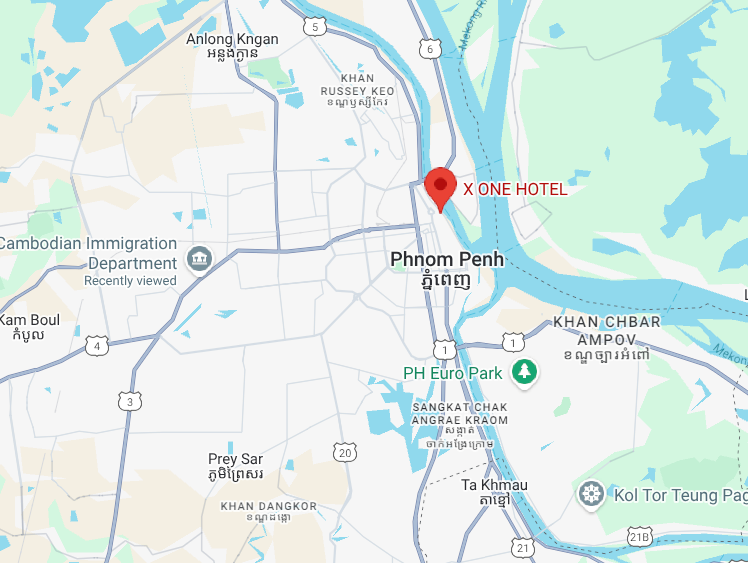
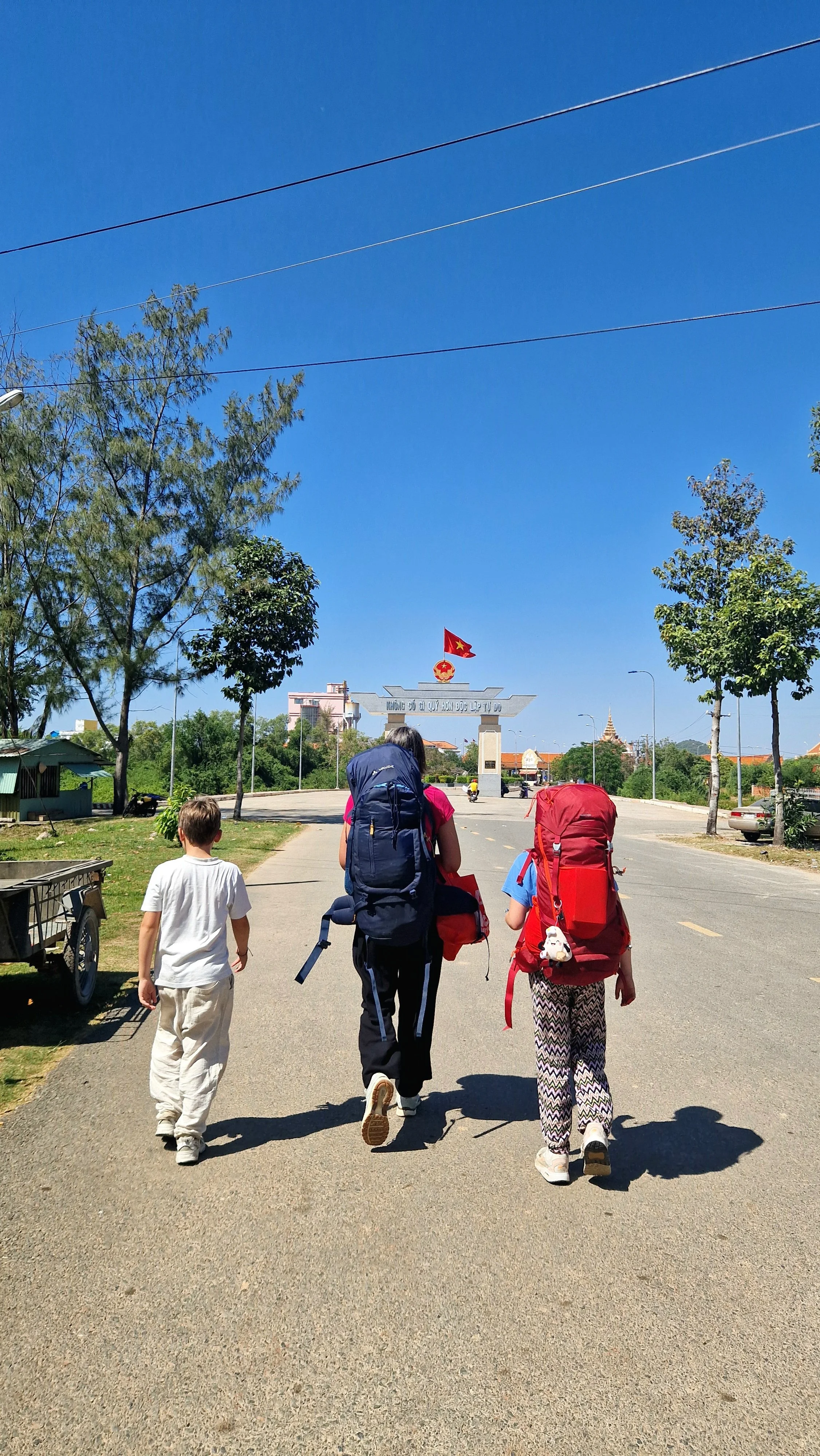
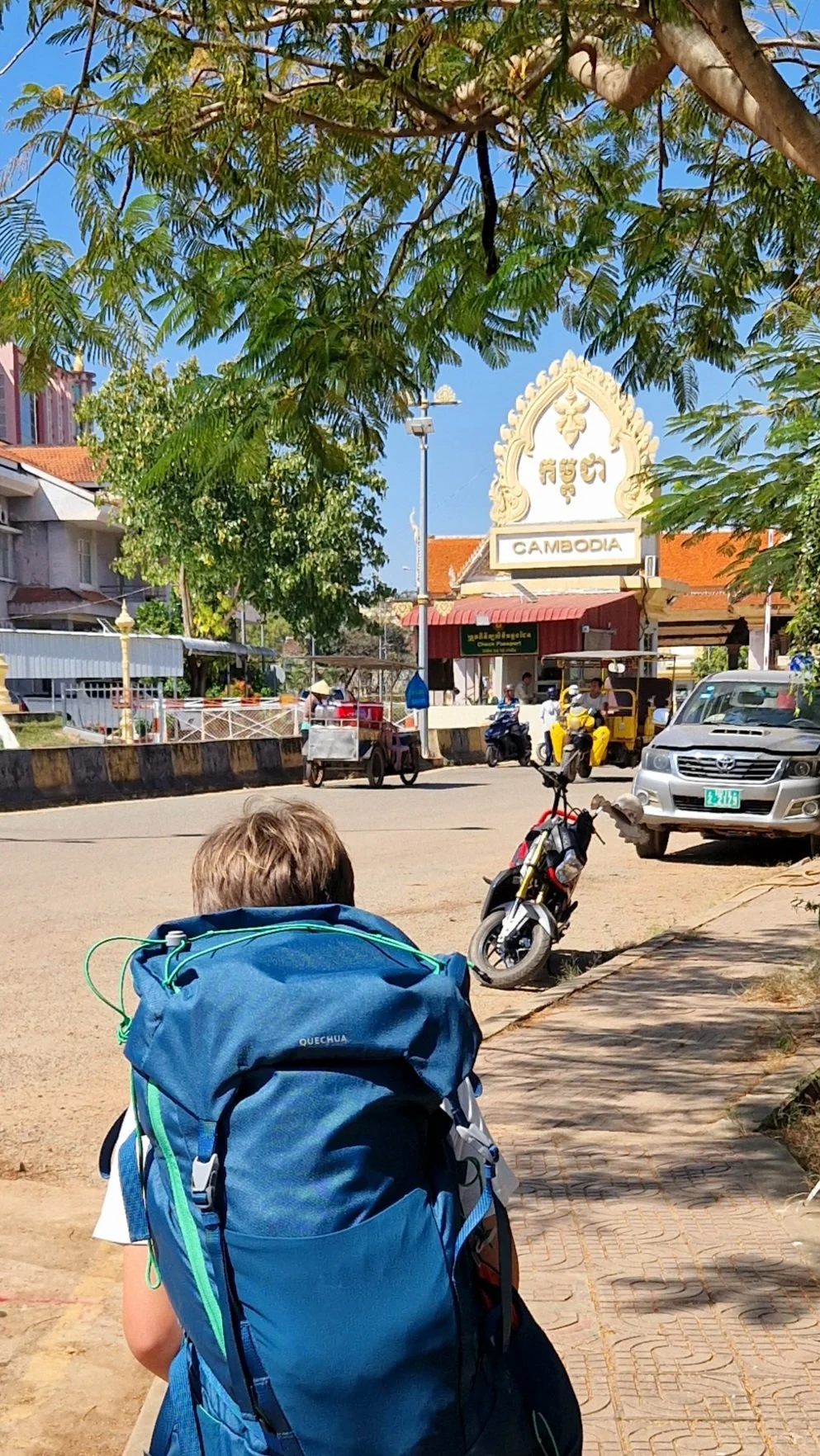
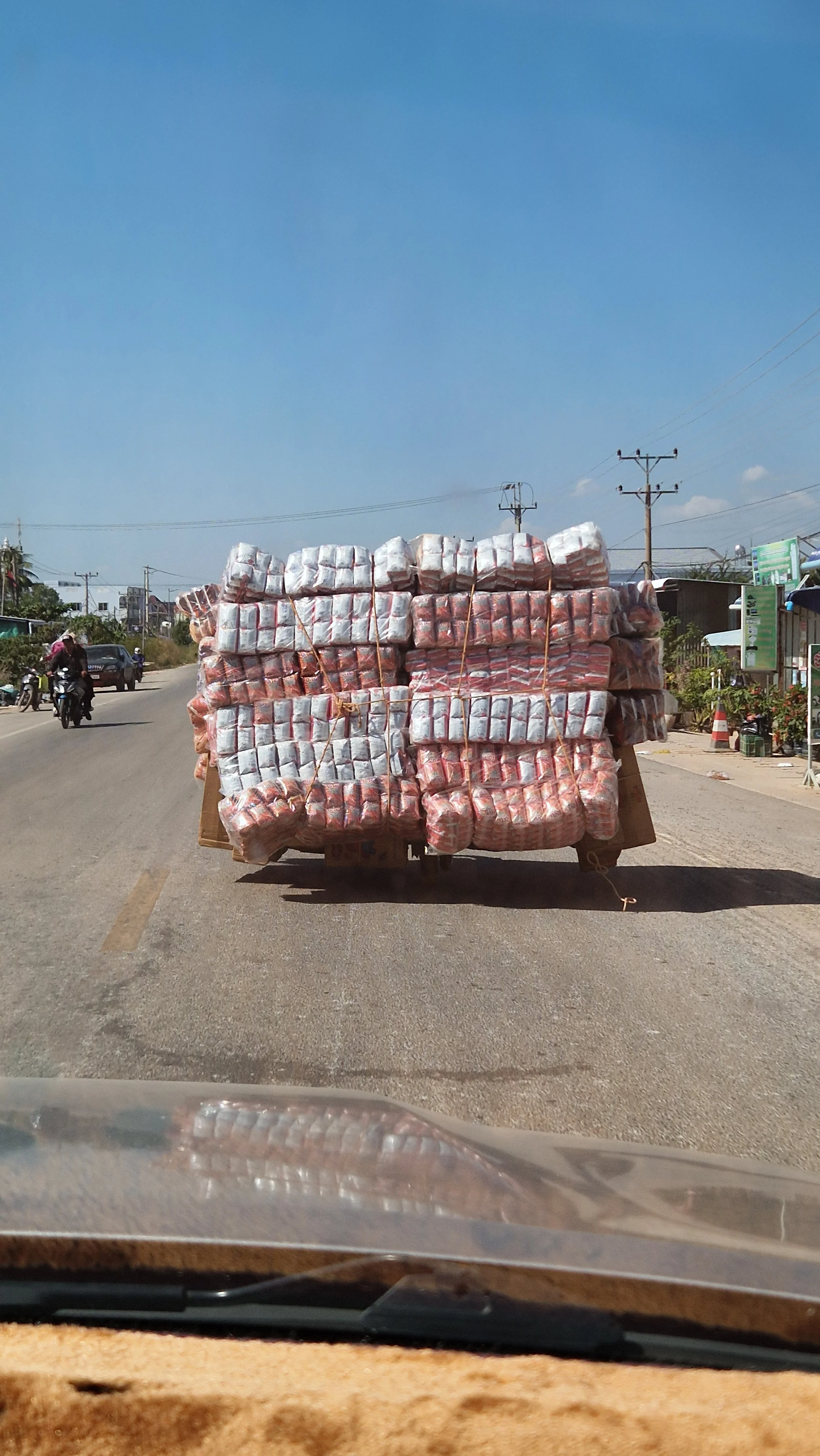
We took a ferry to get off Phu Quoc, grabbed a taxi that brought us to the Vietnamese-Cambodian border post and walked from Vietnam into Cambodia. Our first border crossing per pedes! After paying quite a few US Dollars for a visa and waiting about an hour for 4 stamps, we walked into Cambodia, country number 17 in our journey! W were picked up behind the border and commenced our 5 and a half hours journey to Phnom Penh, the capital of the Kingdom of Cambodia.
Cambodia! Another country with a violent past, and as I write this, I become more aware that many of the countries we have visited, beginning with those in the Balkans, have experienced significant periods of violent turmoil. It’s striking to acknowledge this pattern. At the same time, we are certainly not thrillseekers, which leads me to the further realization that there are very few places in the world that have not endured some form of bloodshed or conflict on their journey toward achieving a measure of relative stability.
Between the 1st and the 9th century, the area of today’s Cambodia was influenced by various powerful states that acted as key trading powers, effectively connecting the civilizations of China and India. It was during this formative period that Cambodia saw the introduction of its most prominent religions, Buddhism and Hinduism, which have since deeply shaped its culture and spiritual life. The period between the 9th and the 15th century is considered Cambodia’s golden age. During this time, the Khmer Empire established itself as one of the most powerful and influential civilizations in Southeast Asia. Monumental temples were constructed, with the iconic Angkor Wat standing out as the most remarkable example of Khmer architecture and religious devotion. Angkor also served as the political and cultural capital of the empire throughout this flourishing era.
Following the decline of the Angkor Empire, Cambodia entered a period often referred to as the post-Angkor era, during which it became a relatively weaker kingdom. It frequently found itself caught in the geopolitical struggle between the neighboring powers of Siam (modern-day Thailand) and Vietnam, resulting in territorial losses and diminished regional influence. Seeking protection amidst these challenges, King Norodom extended an invitation to the French in 1863, leading to Cambodia becoming part of French Indochina. This colonial period brought not only military protection from ongoing conflicts with neighboring states but also the introduction of modern infrastructure, new administrative systems, and a degree of political stability.
As nationalist sentiments intensified in the 20th century, Cambodia peacefully gained independence from French rule in 1953, shortly before the outbreak of the Vietnam War. Although Cambodia officially declared itself neutral throughout the nearly two-decade-long conflict, the reality on the ground was far more complex. Both the North Vietnamese Army and the Viet Cong utilized eastern Cambodia as a critical supply route, exploiting the dense, jungle-covered border to move men and materials. Due to its official stance of neutrality, the United States was legally restricted from directly attacking Cambodian territory. However, in 1969, under President Nixon, the US began a massive and secret bombing campaign that lasted until 1973. This campaign resulted in the deaths of tens of thousands of Cambodian civilians and significantly destabilized the country. The ensuing turmoil contributed to the rise of the Khmer Rouge, who capitalized on widespread resentment toward the US military actions to recruit fighters and ultimately seize power in Cambodia.
When the Vietnam War ended in 1975, an even darker and more tragic period for the Kingdom of Cambodia began. In April 1975, the Khmer Rouge forces captured Phnom Penh and very quickly began the massive evacuation of the city. This city had seen a significant increase in its population over the previous years, as many people had sought refuge there, fleeing from the war-ravaged rural areas. Although sources vary, it is estimated that around 2 million people were forcibly relocated from the city to rural countryside areas. What had once been a vibrant, bustling urban center was abruptly transformed into a ghost town. This event stands as one of the largest forced urban evacuations in modern history. The Khmer Rouge leadership viewed urban populations, especially intellectuals, professionals, and government workers, as enemies and potential threats or spies. Their radical ideology completely rejected urban life and aimed to create a purely agrarian communist society, where every citizen would live and work as a rural farmer. The Khmer Rouge horrors lasted until 1979, when the regime was overthrown with Vietnamese support, who had been dragged into the conflict as the Khmer Rouge leader, Pol Pot, saw Vietnam as an increasing threat to his revolution.
Anyways, enough of the historic excursions for now! Our time in Phnom Penh was actually very limited, as we had only planned to stay two nights in the city. Interestingly, that short stay wasn’t even intentional. Our visa for Cambodia was only valid for one month, but we intended to stay a little longer beyond that period. Because of this, we had to visit the Department of Immigration to apply for a visa extension, and what initially seemed like a fairly straightforward process turned out to be far more complicated than we had anticipated. Once we arrived at the immigration office, we were instructed to download a registration app, but after doing so, we quickly realized that we couldn’t provide much of the requested information due to various constraints. To make matters more difficult, we were informed that they would need to hold on to our passports for up to six days in order to process the visa extension. Since we planned to continue our journey the very next day, this was certainly not an option that worked in our favor.
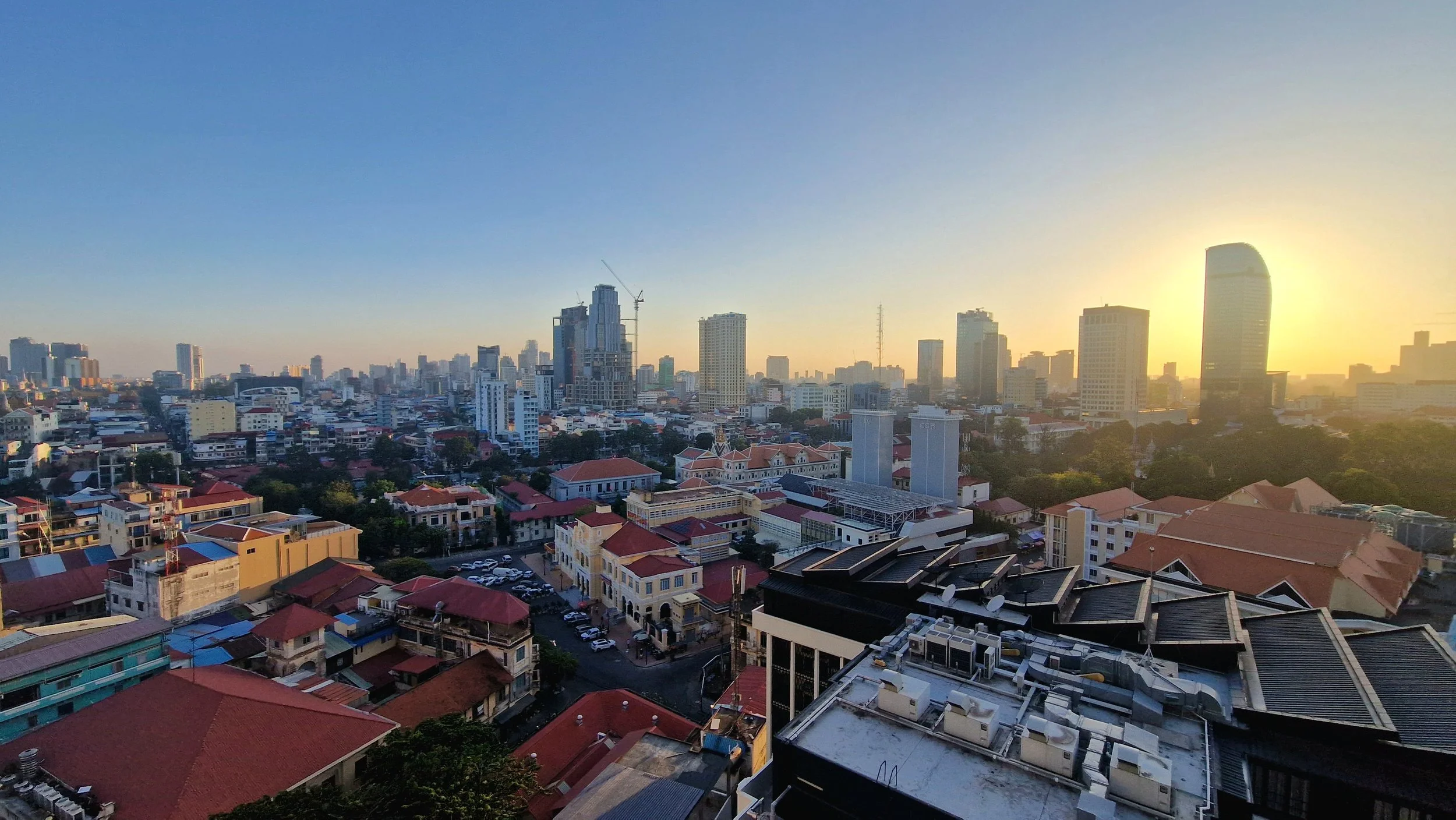
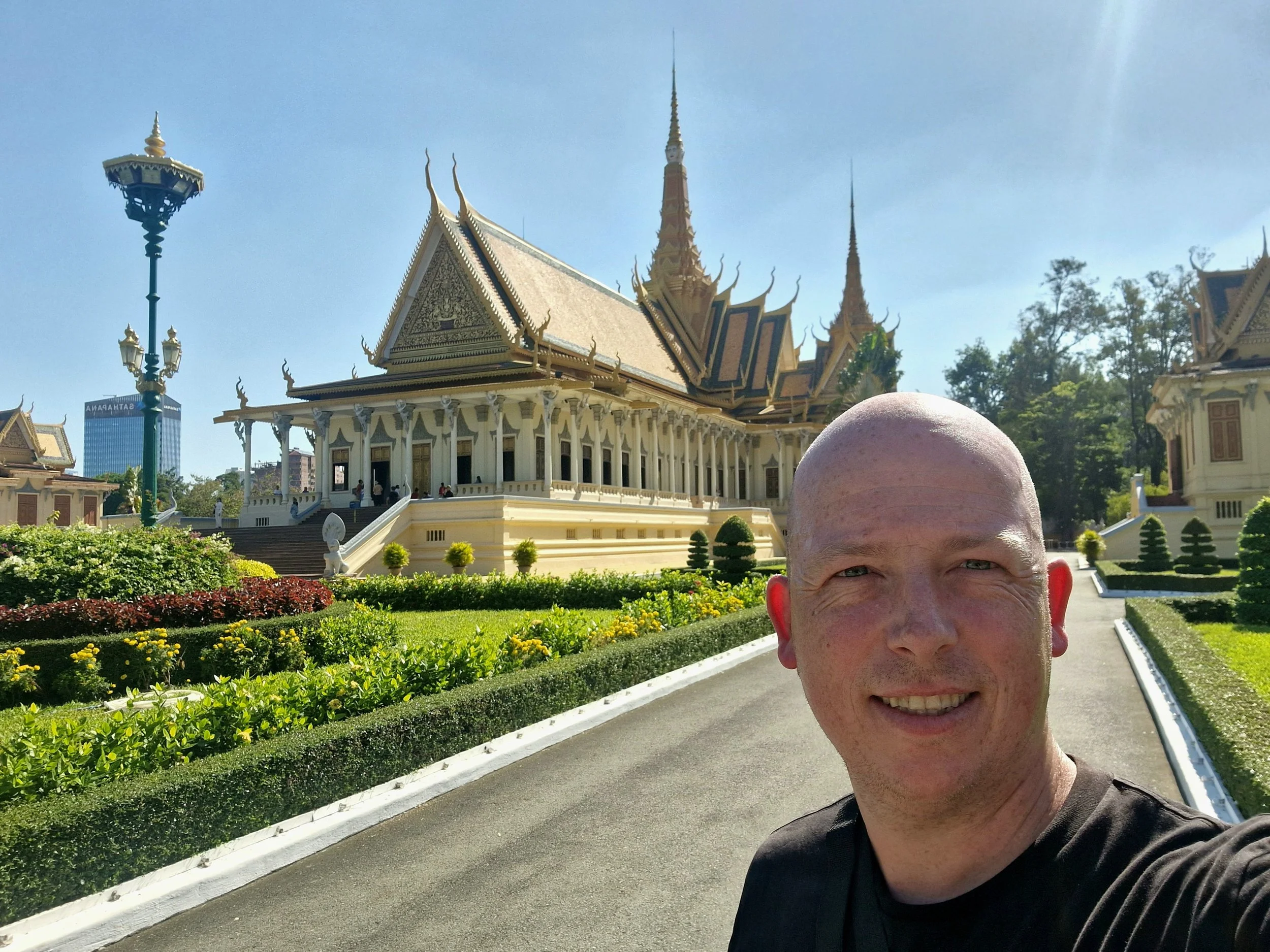
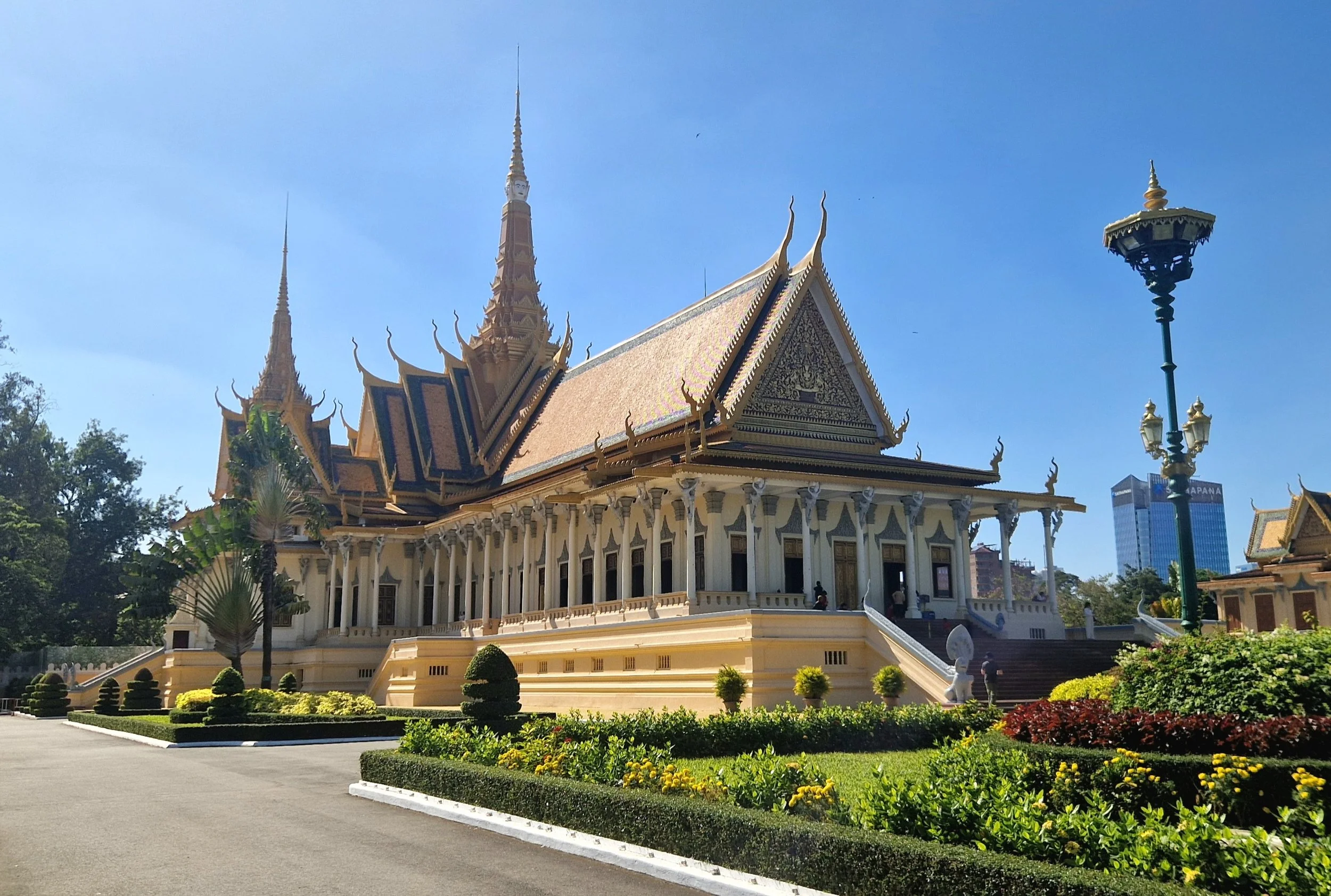
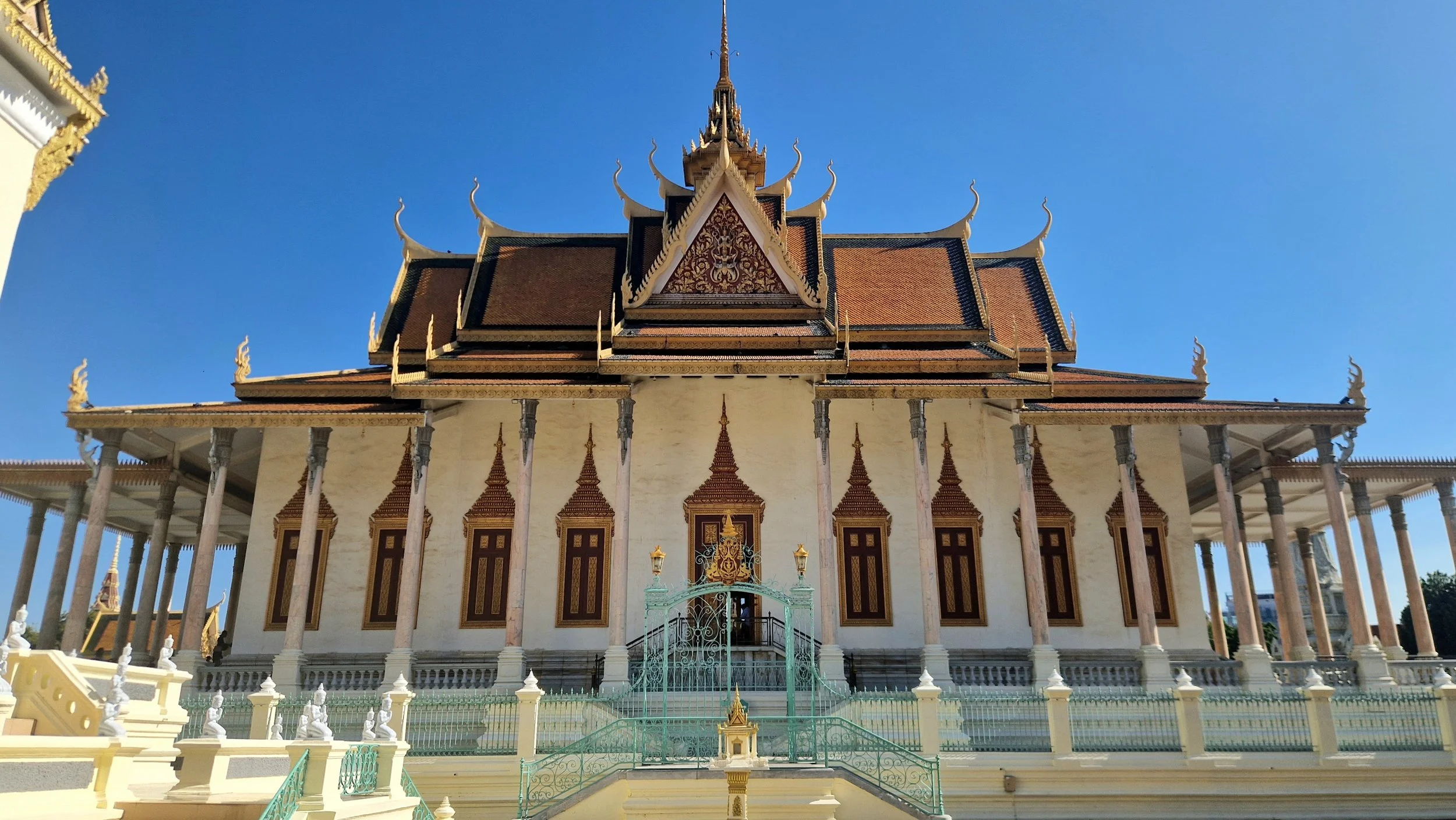
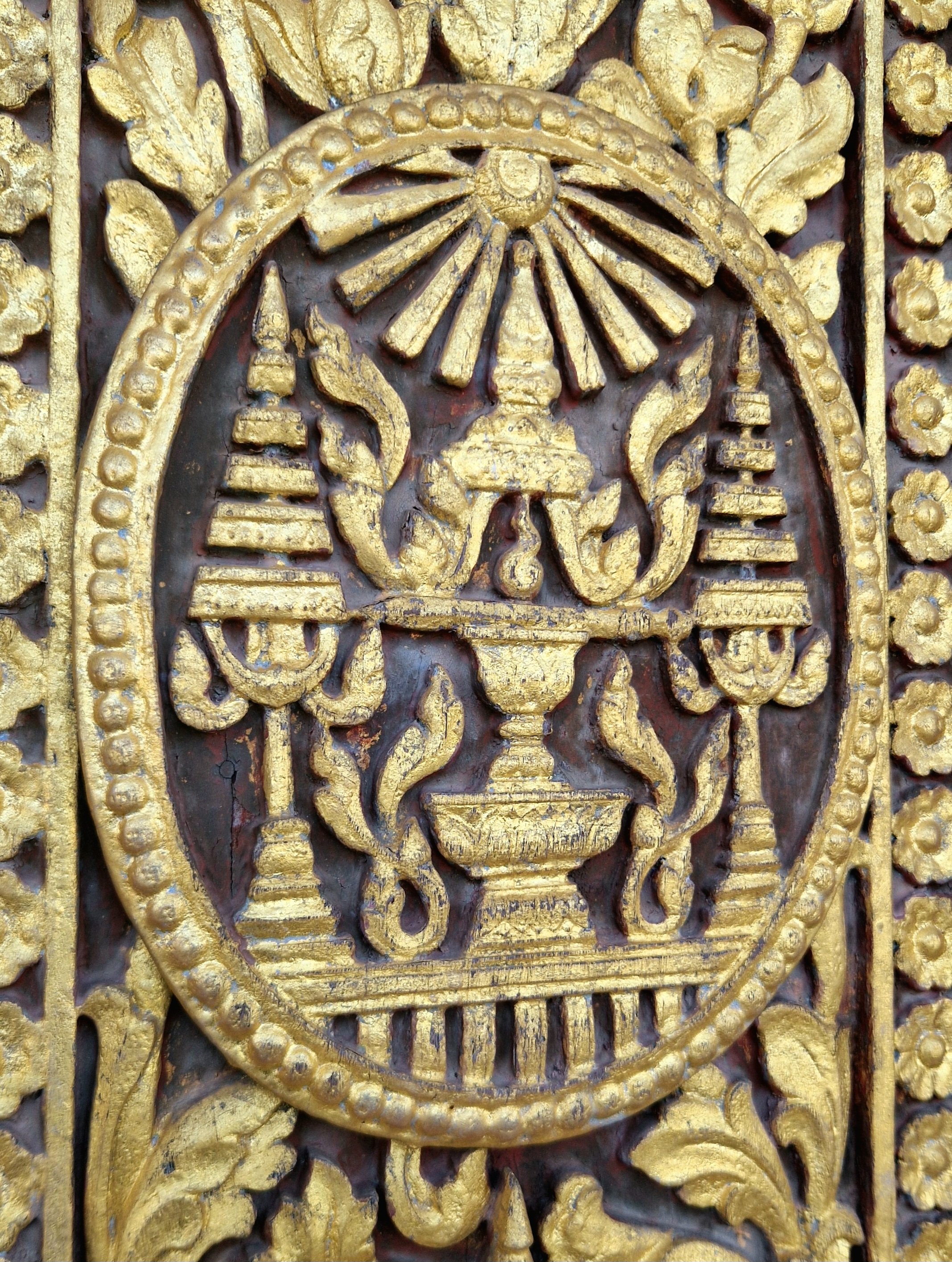
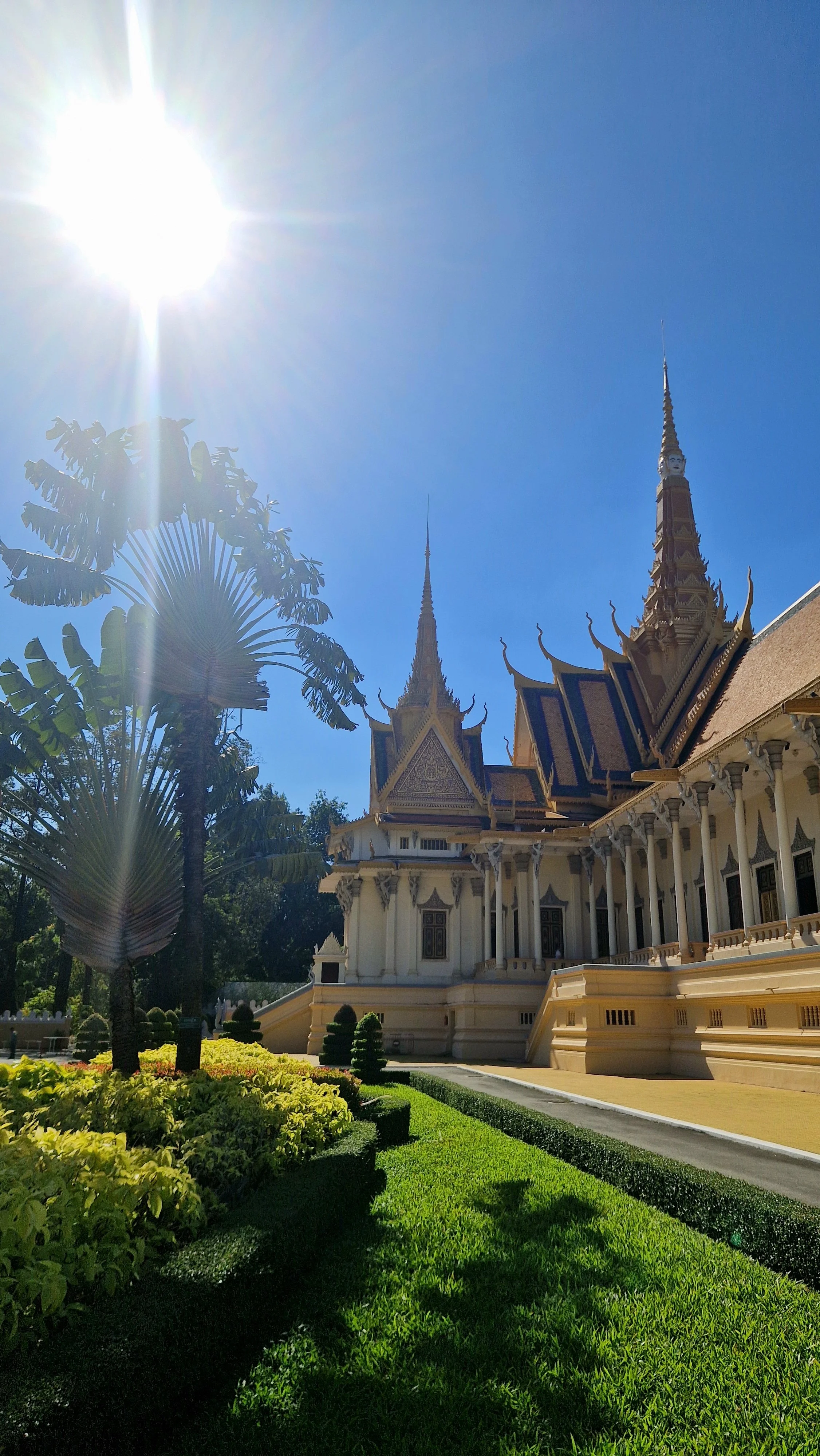
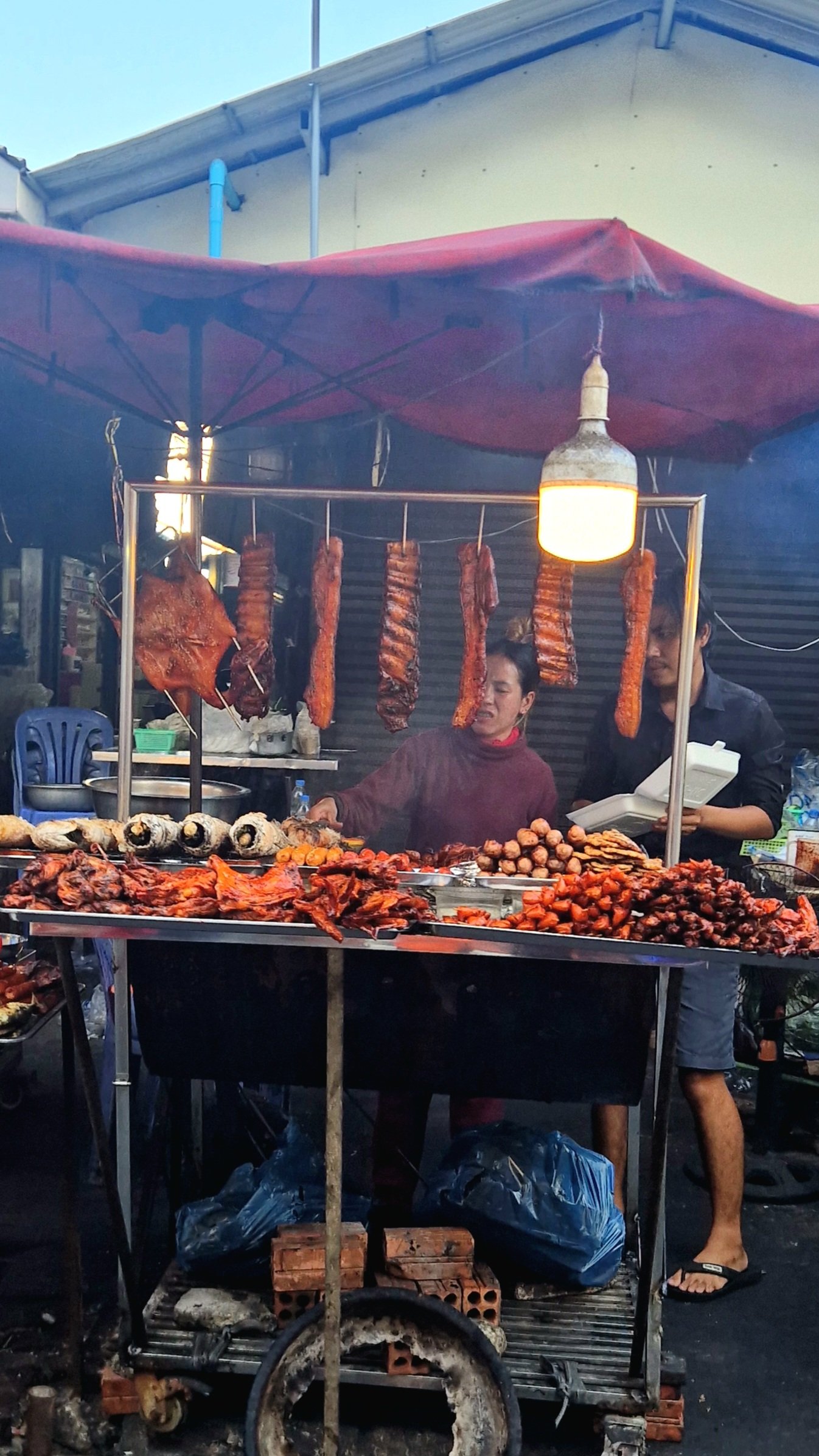
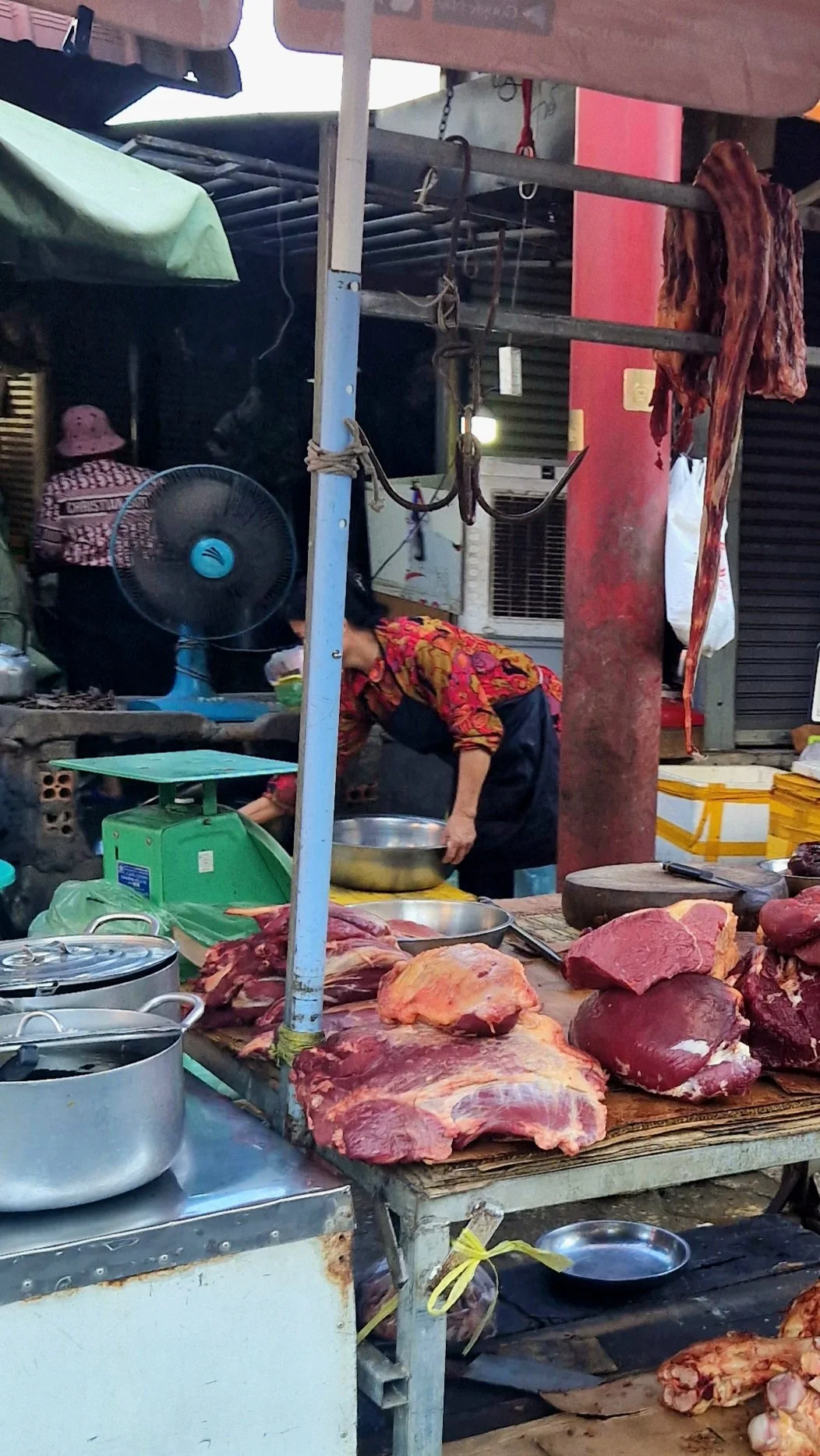
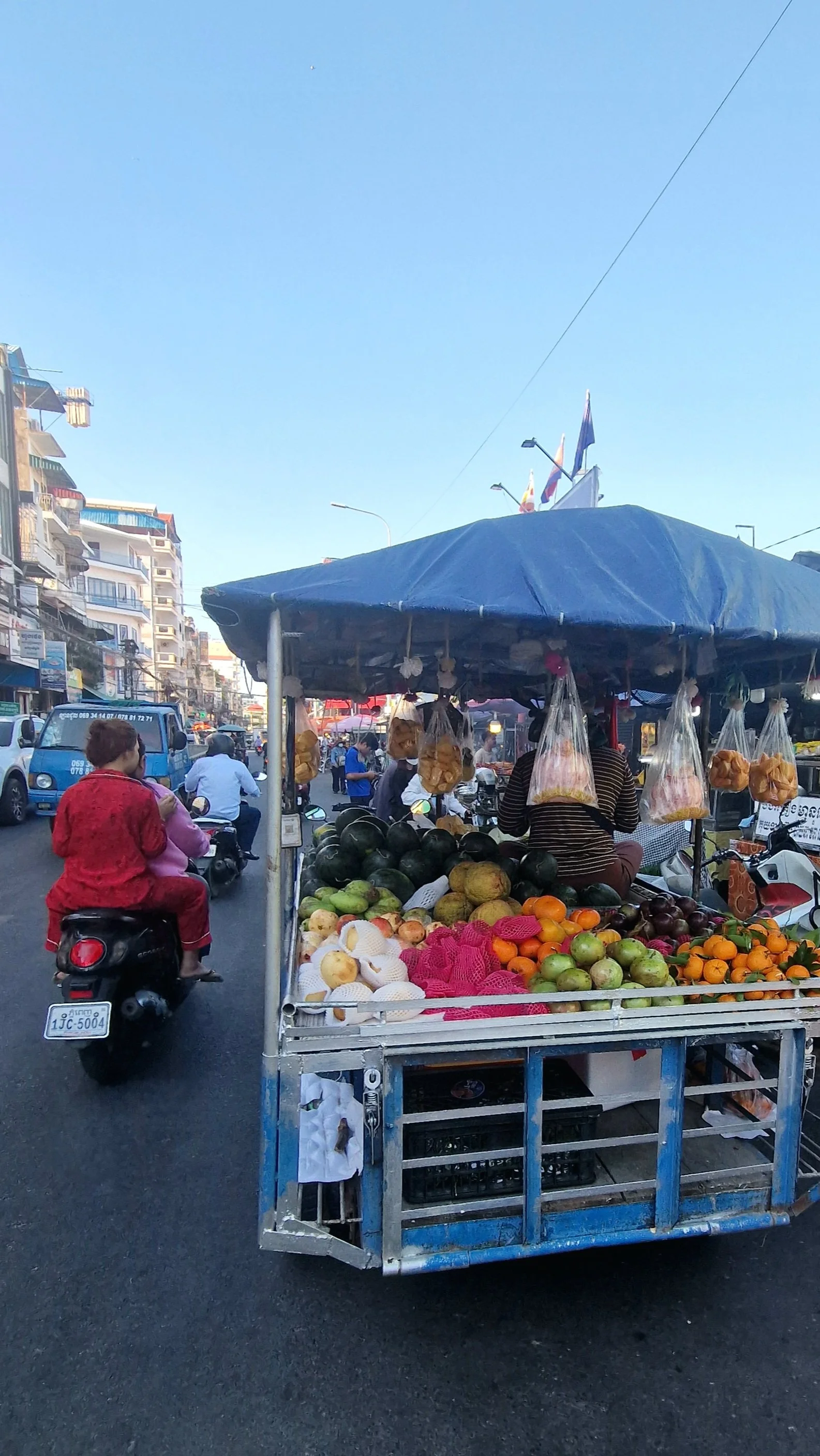
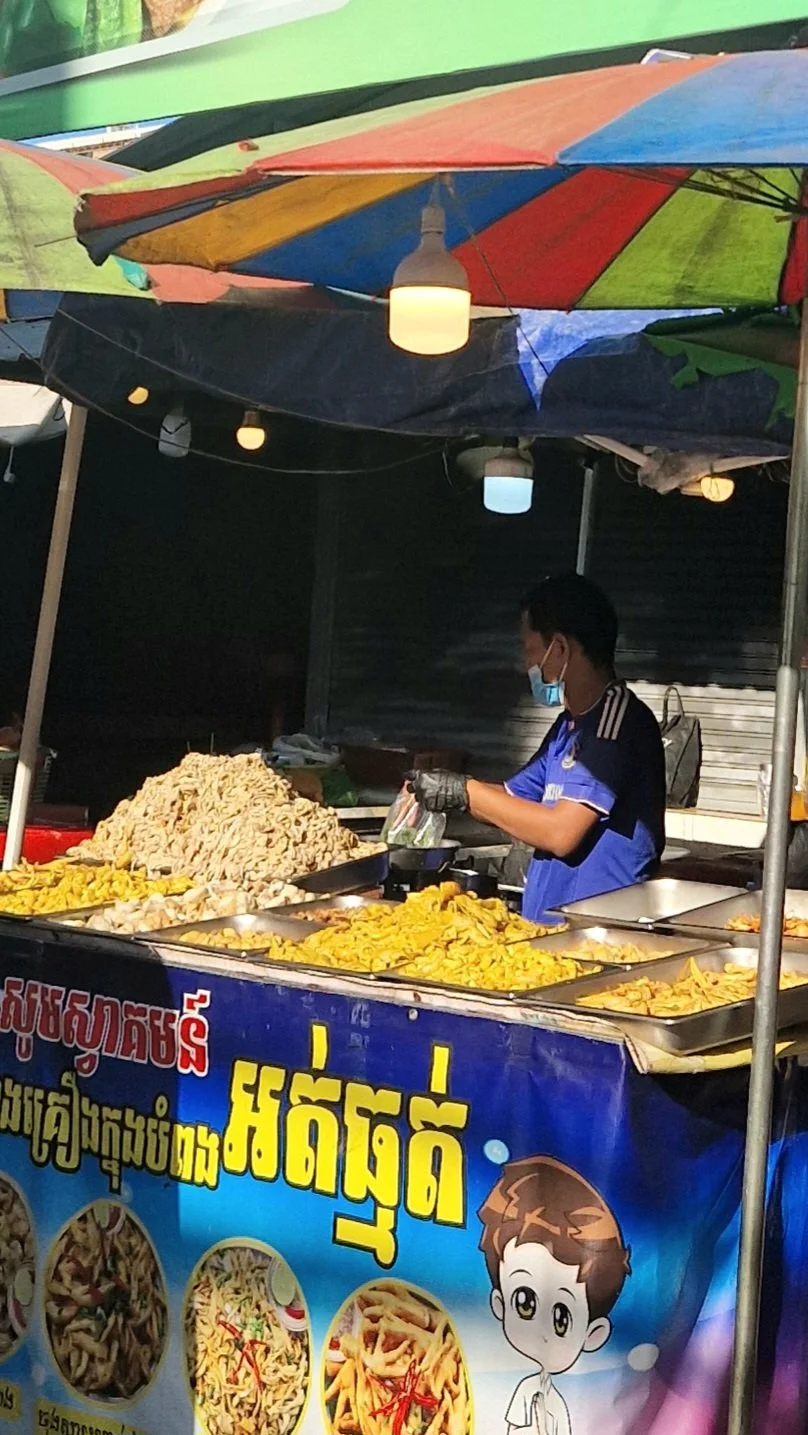
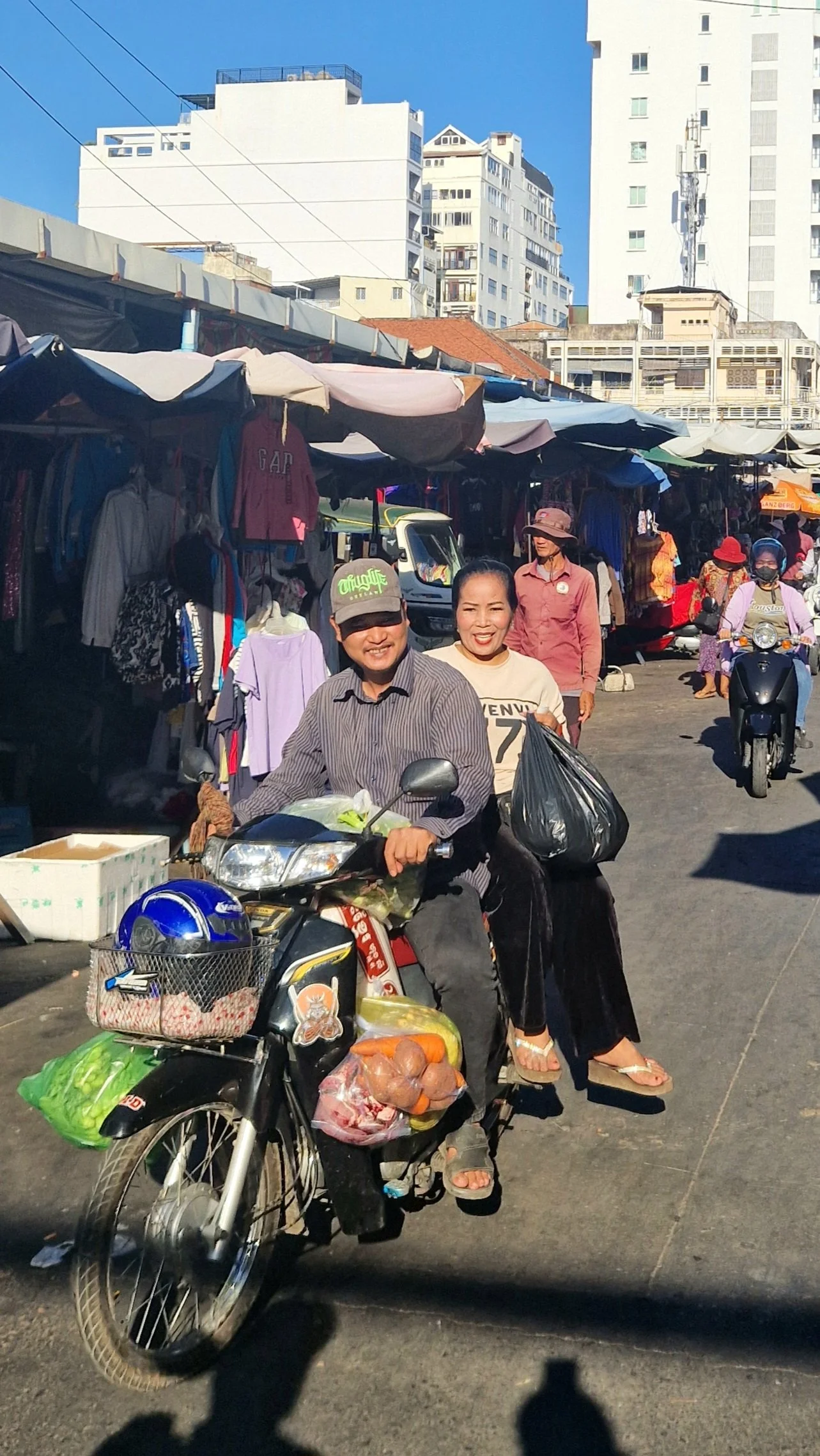
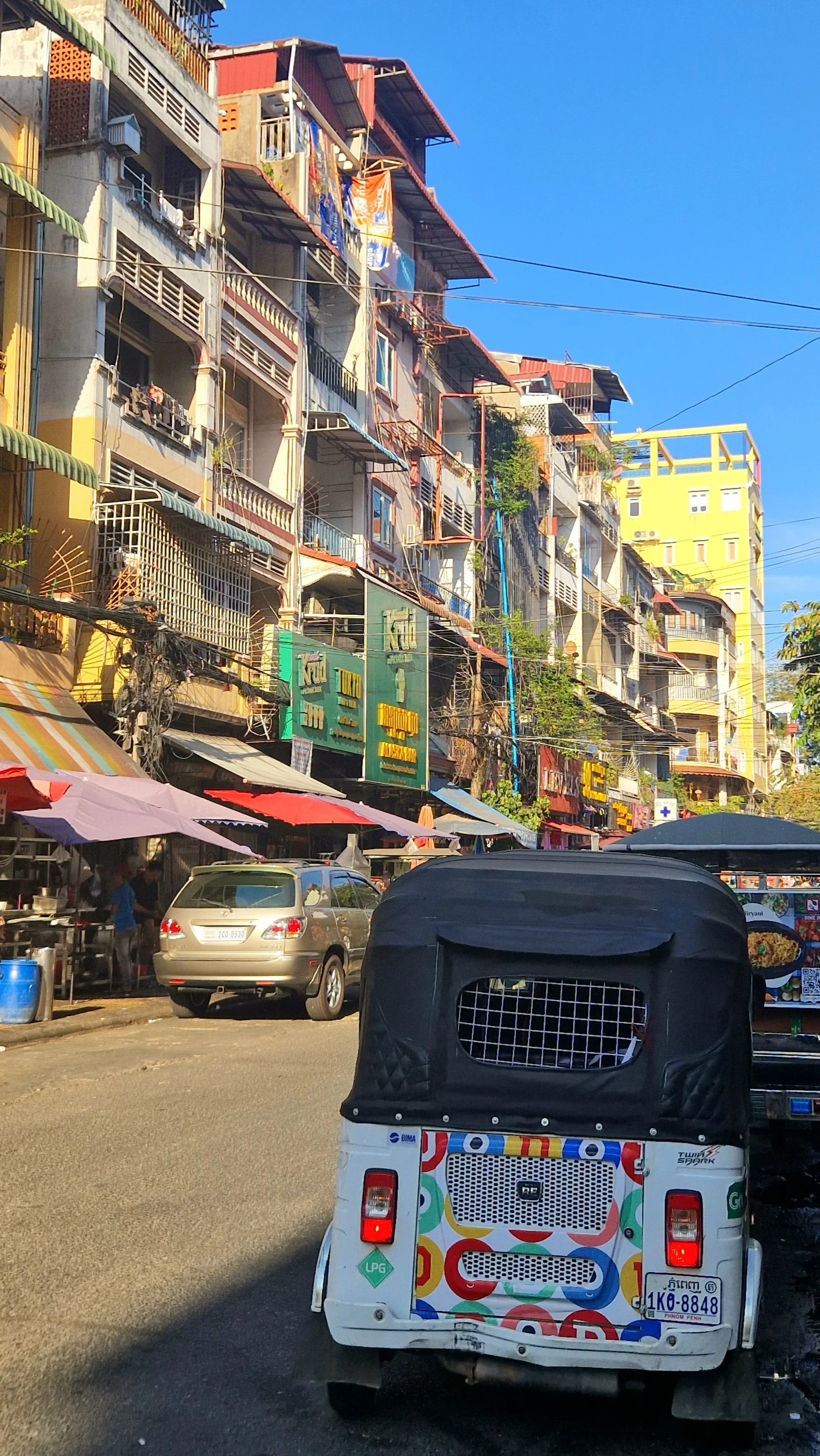
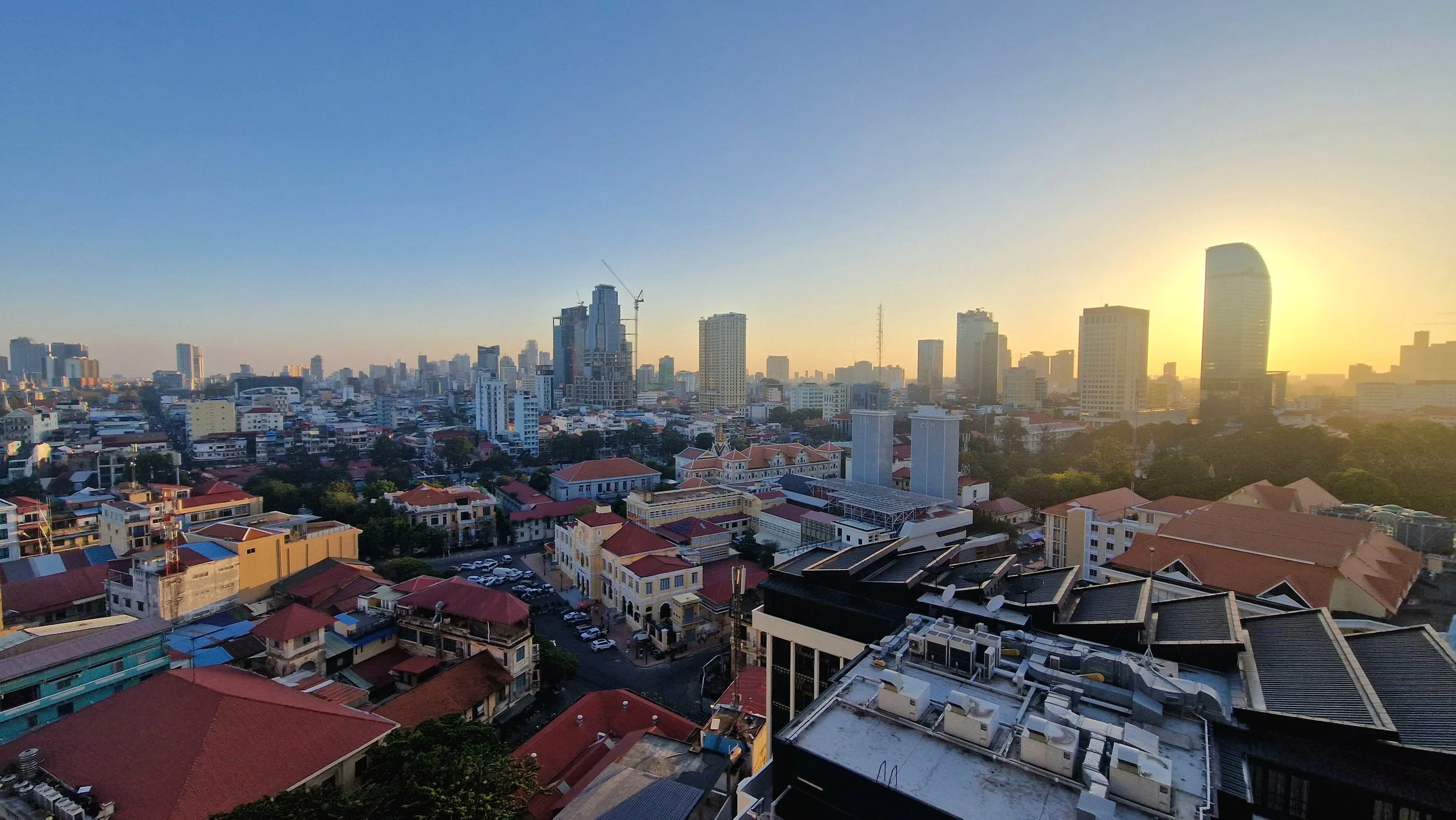
After a series of discussions with the officials, we decided to return to our apartment to explore alternative options for extending the visa. Additionally, one significant reason why we did not want to spend much longer in the official offices was that our son wasn’t feeling well. He had developed a persistent, bad cough, and the evening before he also came down with a fever. As soon as we got back to our apartment, he went straight to bed to rest. With no real need for all four of us to stay cooped up inside, Sarah and I decided to split up so we could each make the most of our limited time and still manage to see a little bit of what Phnom Penh had to offer. I set out on a long three-hour walk, during which I visited the impressive presidential palace and wandered through some of the bustling streets of the city. These streets felt like half market, half thoroughfare, but were unquestionably alive with the vibrant pulse of daily life. I returned in the afternoon, just in time for Sarah to take her own walk to the central market, where she bought some clothes and allowed herself some well-deserved time to unwind.
Oskar’s fever, however, came back with full force, rising to a worrying 40.0 degrees Celsius. Unfortunately, the previously bought Ibuprofen didn’t seem to bring it down at all. After some thorough research and weighing our options, Sarah and Oskar decided to head straight to the Raffles Medical Clinic. With so much at stake, it felt imperative to have a medical professional take a closer look. Would we have gone to a clinic like this in Germany? Probably not. But given the presence of Dengue, Malaria, and other possible diseases on the radar here, we wanted to be absolutely certain and on the safe side. After spending about 300 dollars and undergoing various tests, the diagnosis was fortunately “only” a viral infection. Considering we planned to continue our journey to Siem Reap the very next day, hearing that some paracetamol and Ibuprofen in rotation should help manage the symptoms was a huge relief. Now, two days later, Oskar is already feeling much better and the fever has completely subsided. Nonetheless, we are still taking it very easy the next few days, especially since Leni has started coughing and Oskar remains a bit weak from the infection.
We arrived in Siem Reap yesterday, ready to visit Angkor Wat, once everybody has fully recovered. We have 10 days here in the area, so there is no need to rush things. As promised to ouselves, we would slow things down, so 7 to 10 days will be the absolute mimum we are going to stay at the next places we are visiting. An update on Siem Reap will come, was we have visited the marvelous Angkor Wat. Until then, be well!