Flores & Tikal, Guatemala
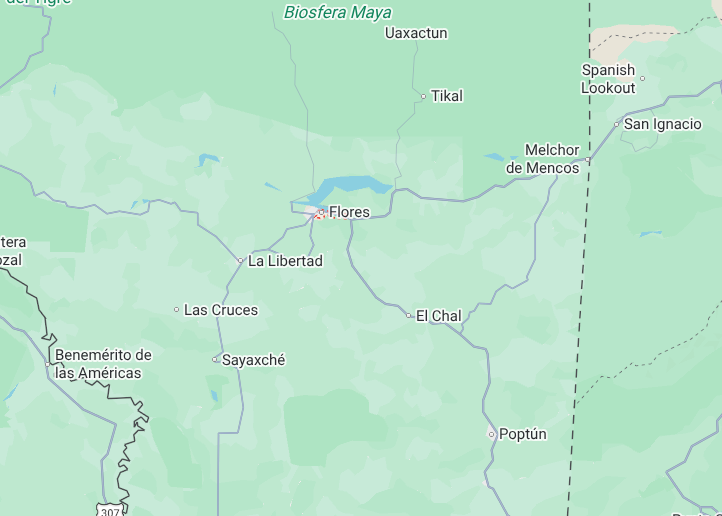
It took a very long and, honestly, quite obnoxious bus ride to arrive in Flores, Guatemala. After a short transfer, we crossed the border into Belize and were hit with a substantial and somewhat dodgy 60 USD “departure fee” per person. I suppose that explains why one of the bus operators had been noticeably cheaper than the others. Crossing the border meant unloading all the bags that had been strapped to the roof of our rather beleaguered bus, which had clearly seen better days. Once everything was re-secured on top, we resumed our journey through Belize. Simply from staring out the window, I sometimes wished we had spent more time there - the place had a different vibe and looked distinctly more Caribbean than Mexico or Guatemala. We stopped in Belize City, the country’s capital, to change buses, and the most obvious difference was that English is the official language. Belize only gained independence from Britain in 1981, and they didn’t just leave the language behind - they left some delightfully unusual village names too. We passed through a town called “Teakettle,” which couldn’t be much more British, and other names like “Never Delay” and “More Tomorrow” kept me entertained as I watched the landscape and small settlements roll by. The bus we had changed to wasn’t any better than the previous one, and as more passengers joined the ride, the “emergency seats” started being used, as well. And be sure, they wouldn’t have stood a chance in an emergency… Eventually, we arrived at the border of Guatemala, and the ordeal of unloading the bags started again. I watched with amusement, how they unloaded 4(!) motorbikes from the roof of the bus, before they reached our bags. Once we paid our arrival fee for Guatemala, which wasn’t as steep as the departure fee in Mexico, but probably just as dodgy, we entered Guatemala, country #23 on our journey! We’ve been to Guatemala before with our kids, 3 years ago, we travelled to Lago Attitlan, Antigua and to a town called “El Paredon” on the Pacific Coast and had a wonderful holiday. As the last trip didn’t allow us to see the Maya ruins of Tikal, located on the North East of Guatemala, we used the proximity to the Mexican border to take a look at this magnificient highlight.
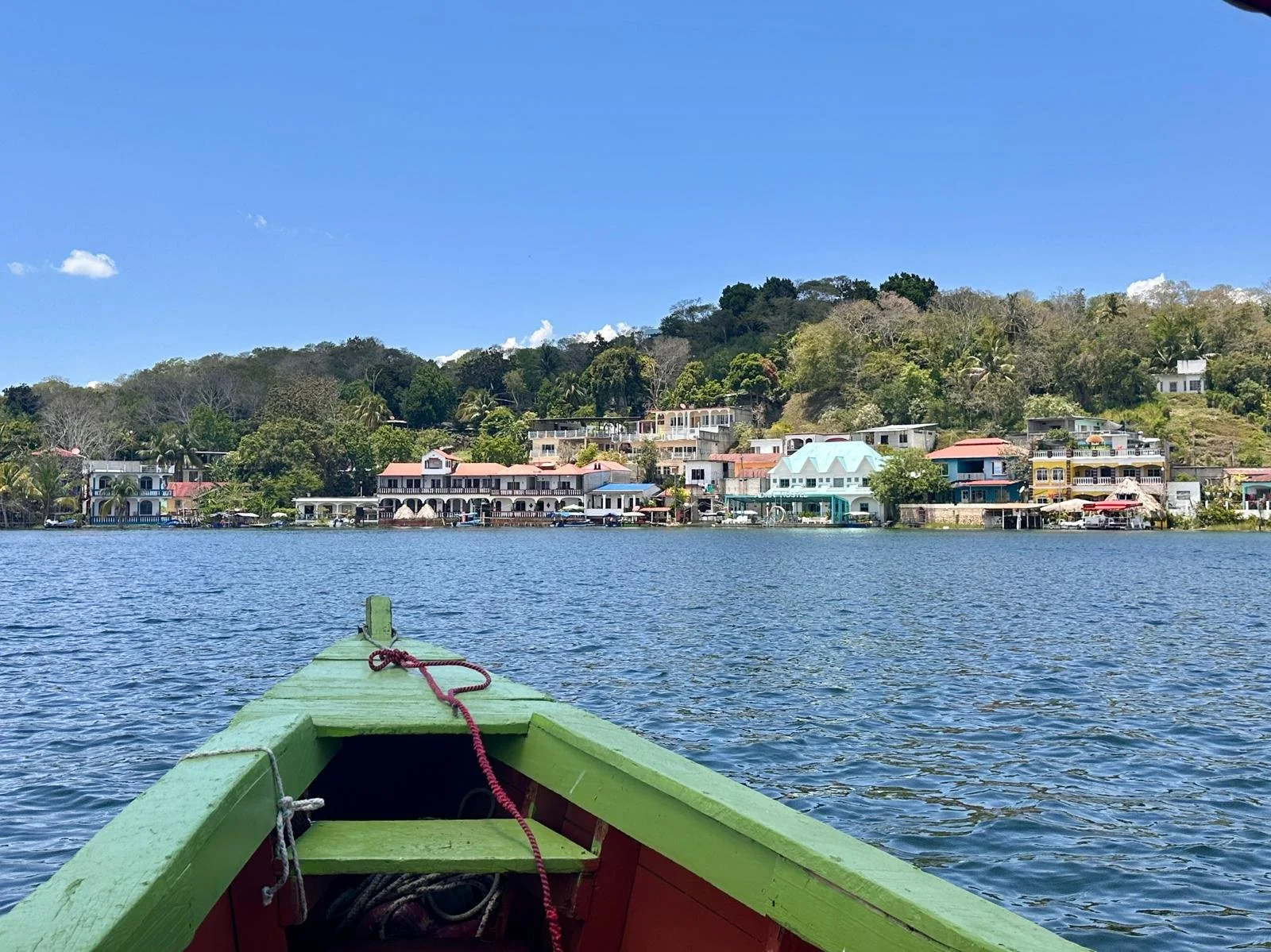
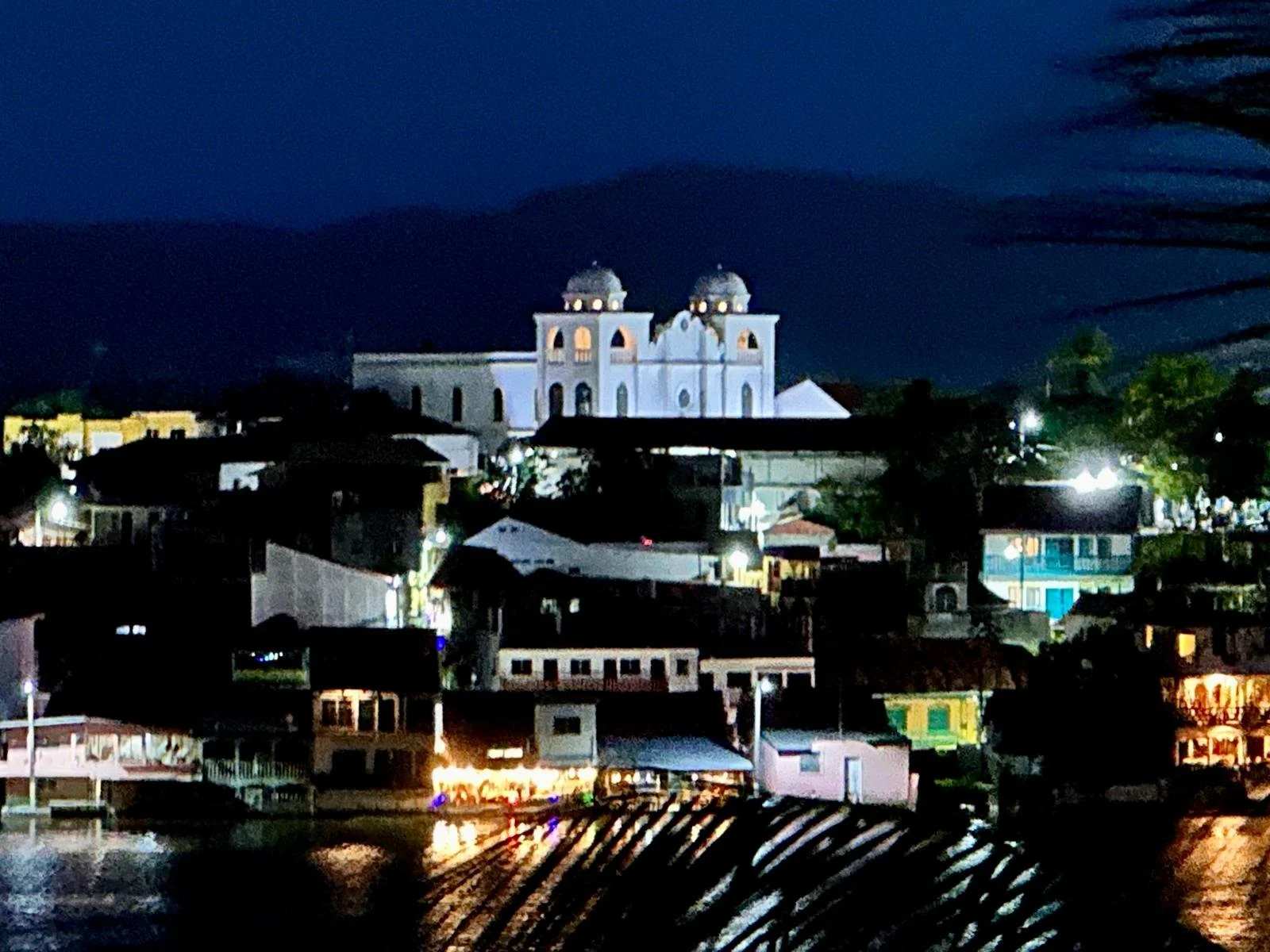
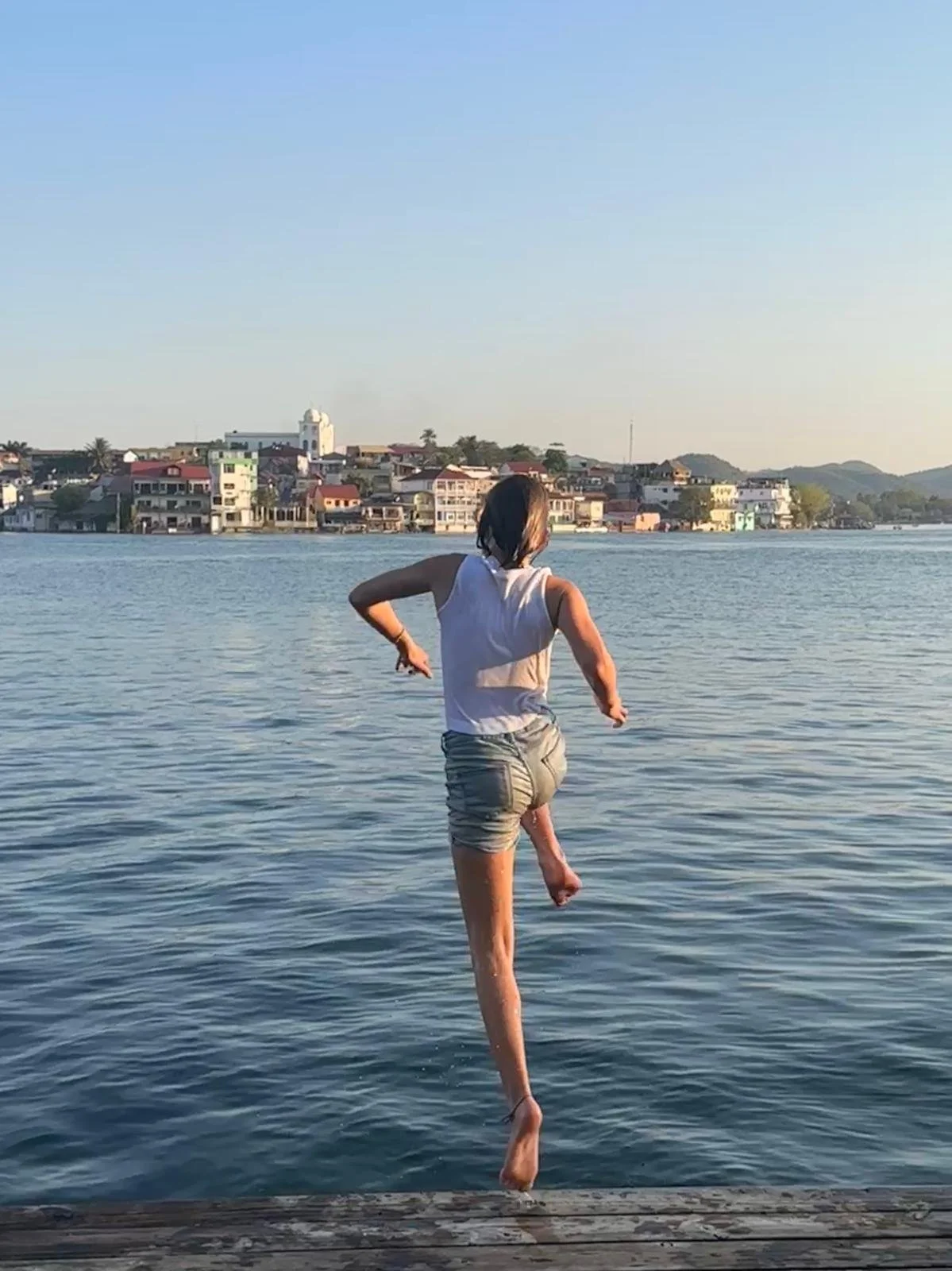
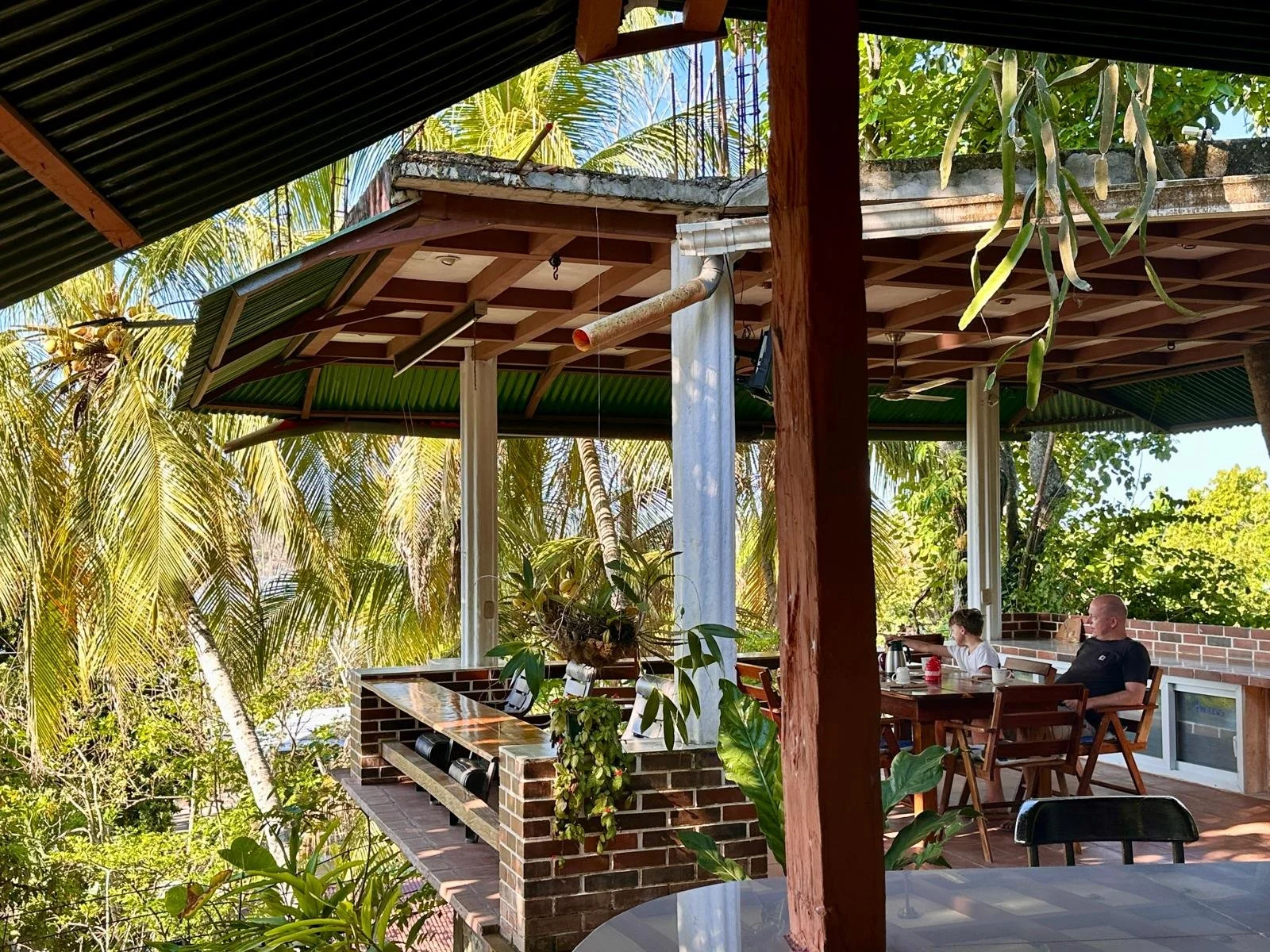
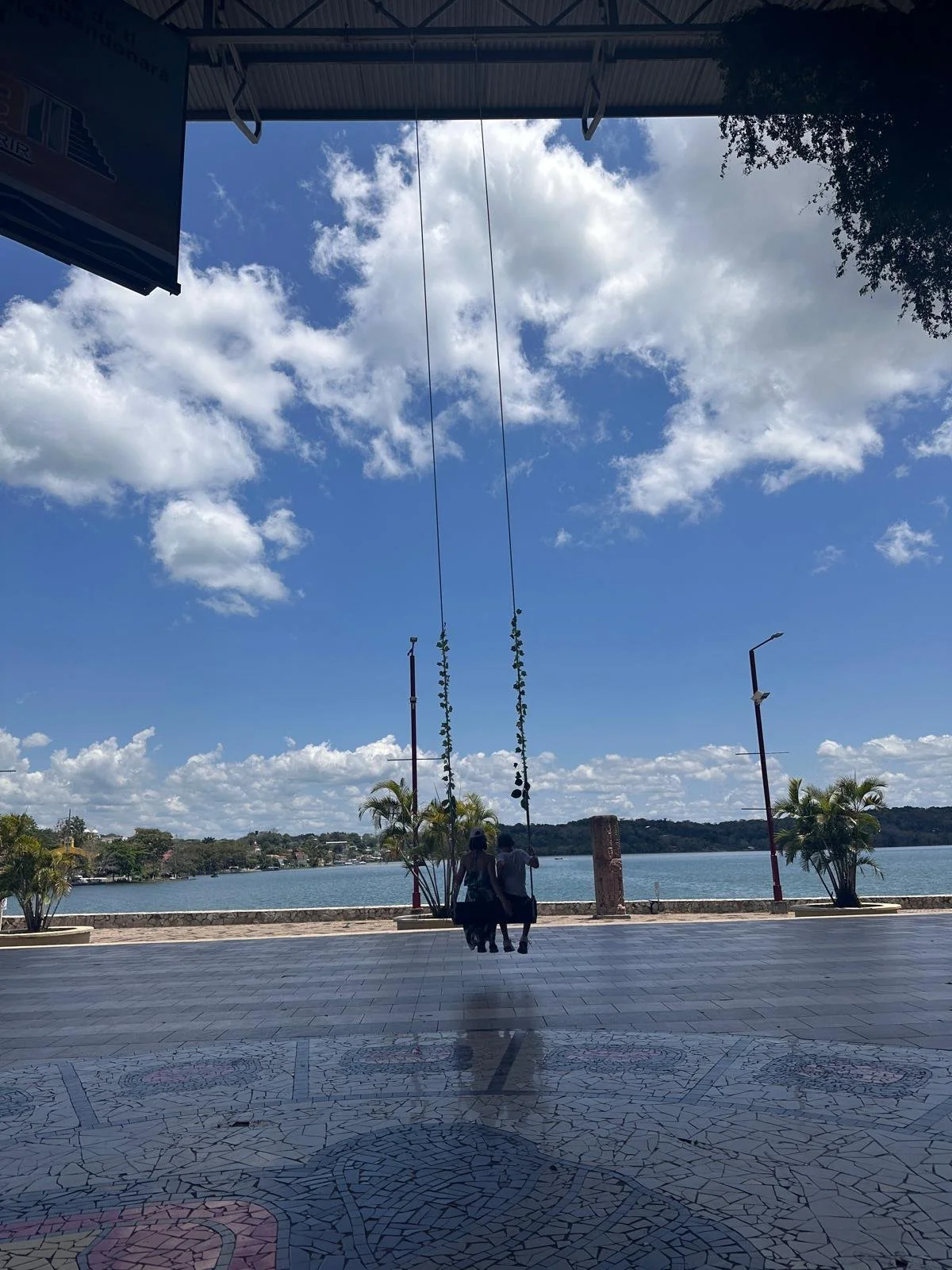
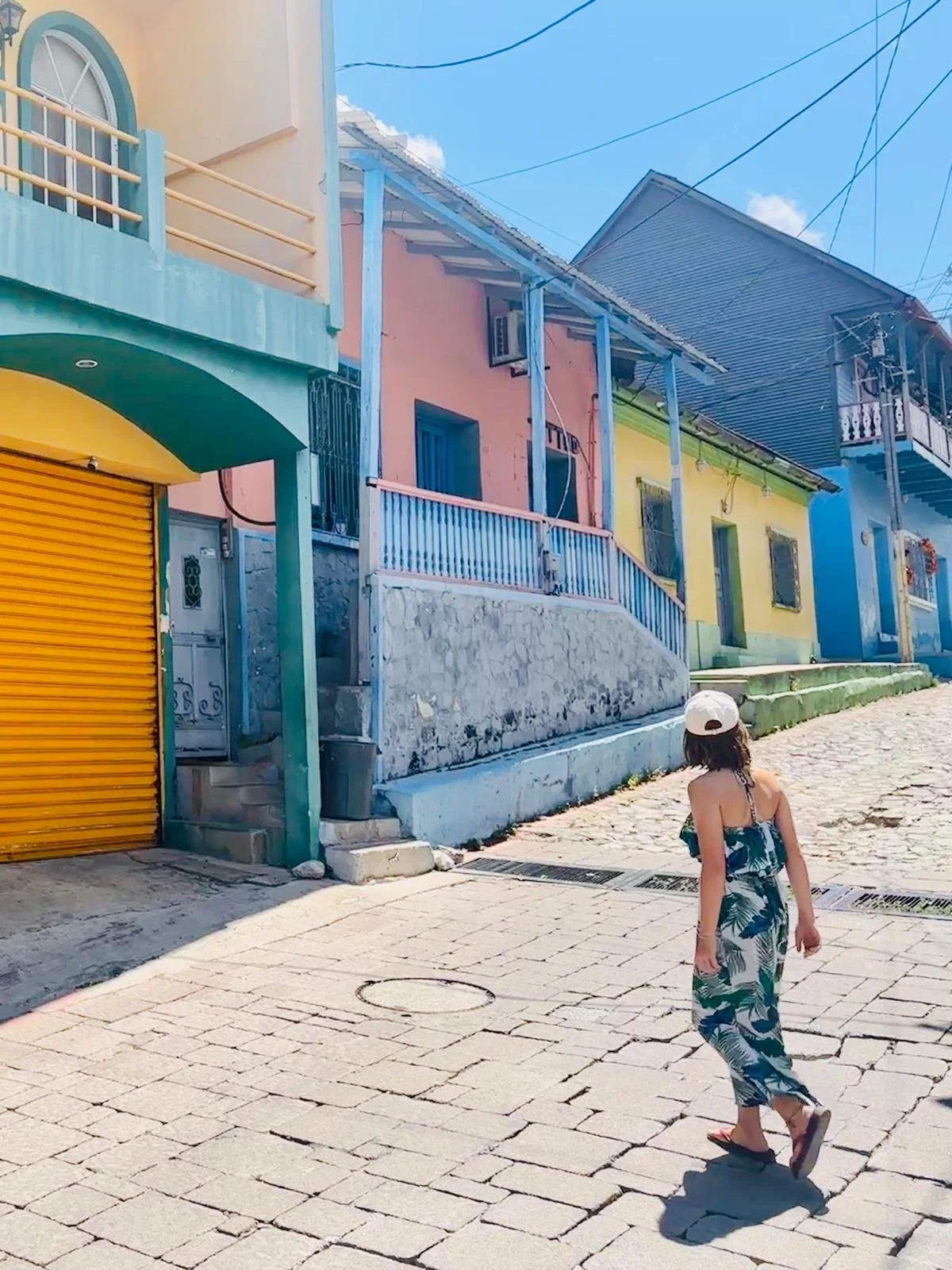
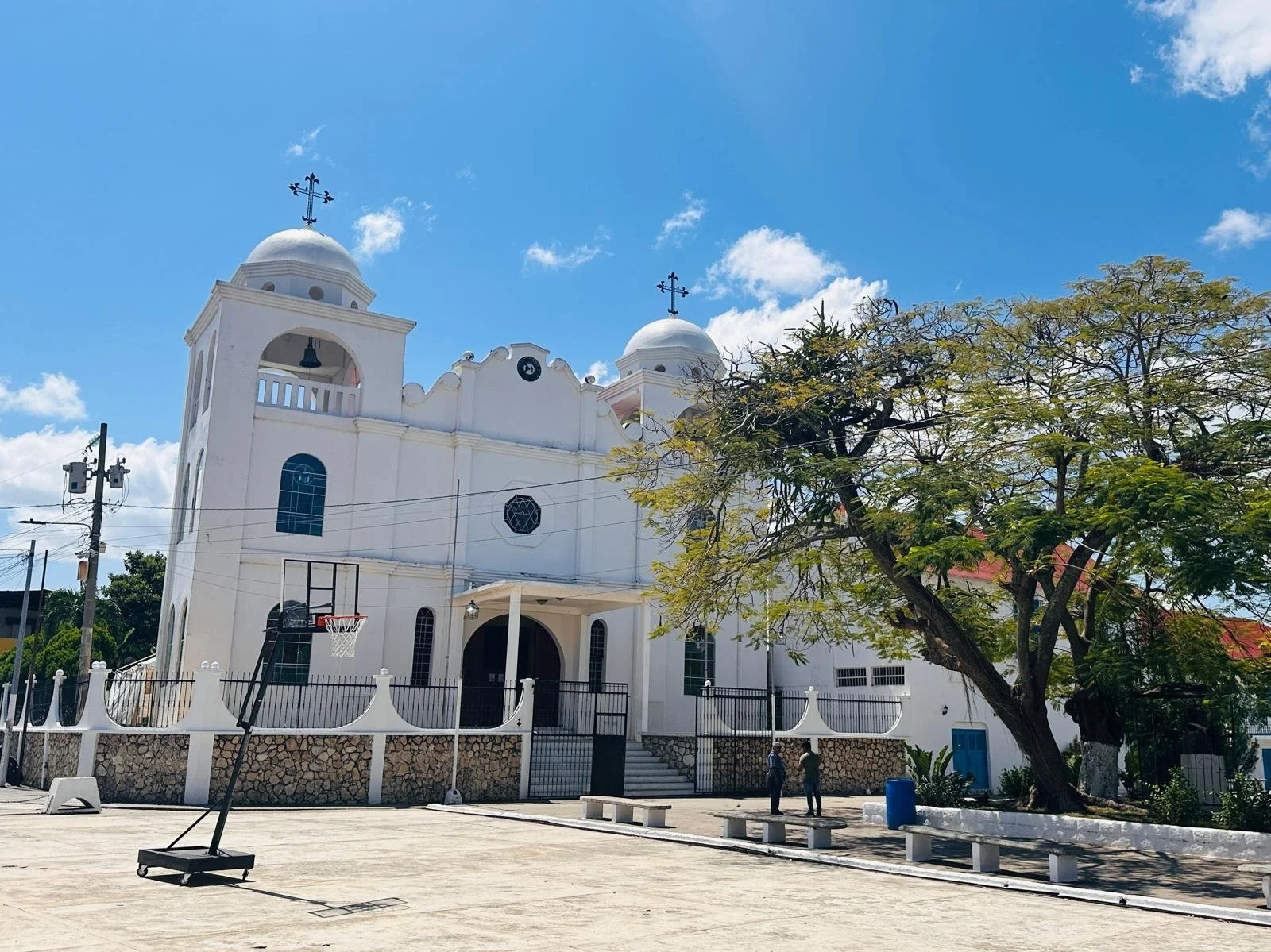
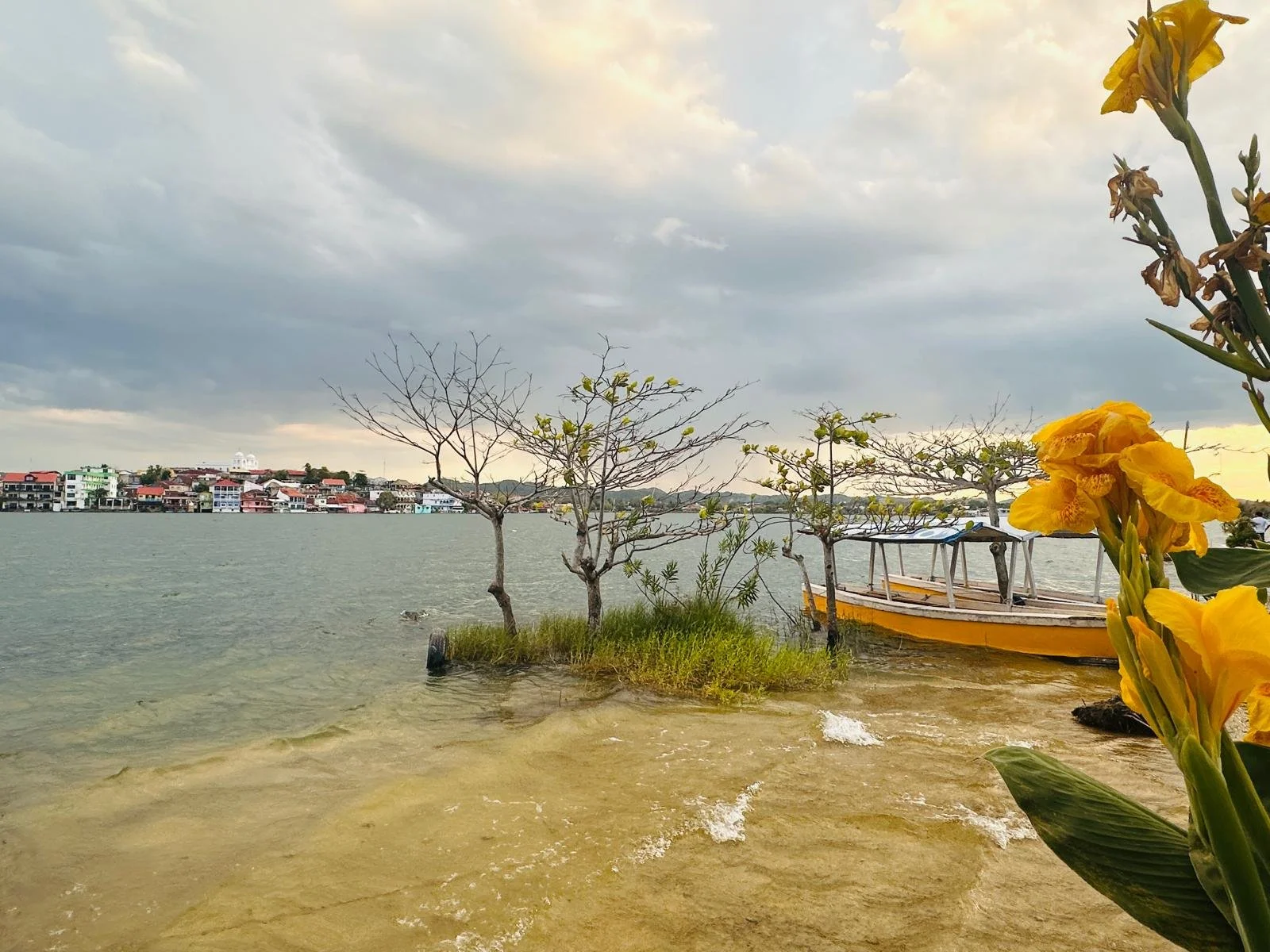
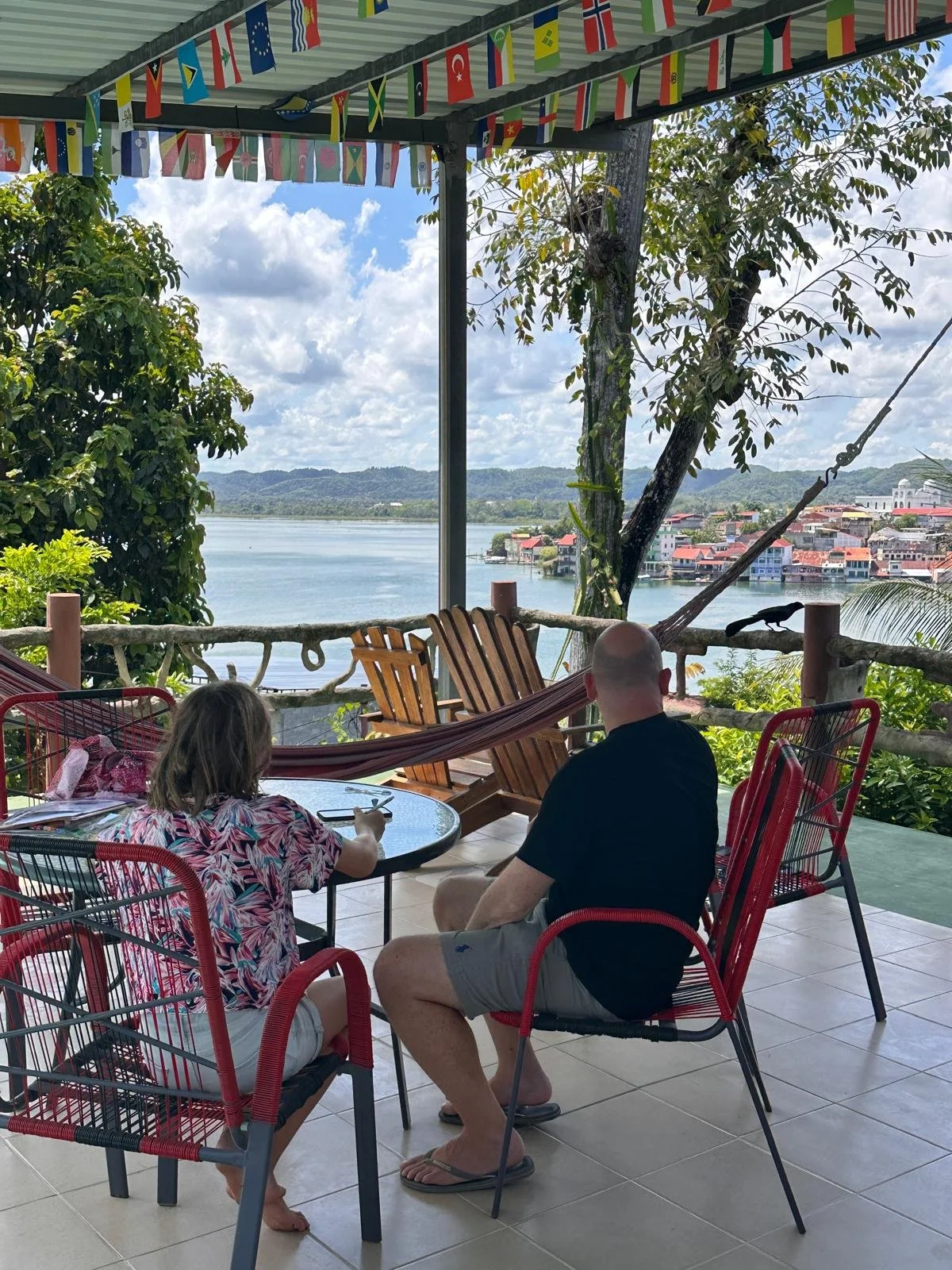
First of all, we spent one week in the small town of Flores, located on the shores of Lago Petén Itzá and roughly 50 kilometres from the ruins of Tikal. After the aforementioned 12‑hour bus ride (it should have taken about nine hours, but the motorbikes strapped to the roof didn’t speed us up), we were picked up by a small boat, since our accommodation for the week, The Zapote Inn, was on the opposite side of the lake. We arrived late at our habitación, and after a quick meal at a local restaurant we collapsed into bed and enjoyed some well‑deserved sleep. Our plan was to stay in Flores for a week, then drive to Tikal in the afternoon and spend the night in a small hotel right next to the Maya ruins. That would allow us to be at the entrance at 06:00 a.m. sharp and have a full day to explore the magnificent site of Tikal. Flores itself is a charming, picturesque little town. We chose to remain there for a full week, not so much because there was an abundance of activities, but because we wanted to keep to our idea of limiting stops. Honestly, after ten months on the road, none of us looks forward to packing up again. That doesn’t mean our appetite for new places has diminished, but the act of packing and constant planning is something we’re simply less fond of these days.
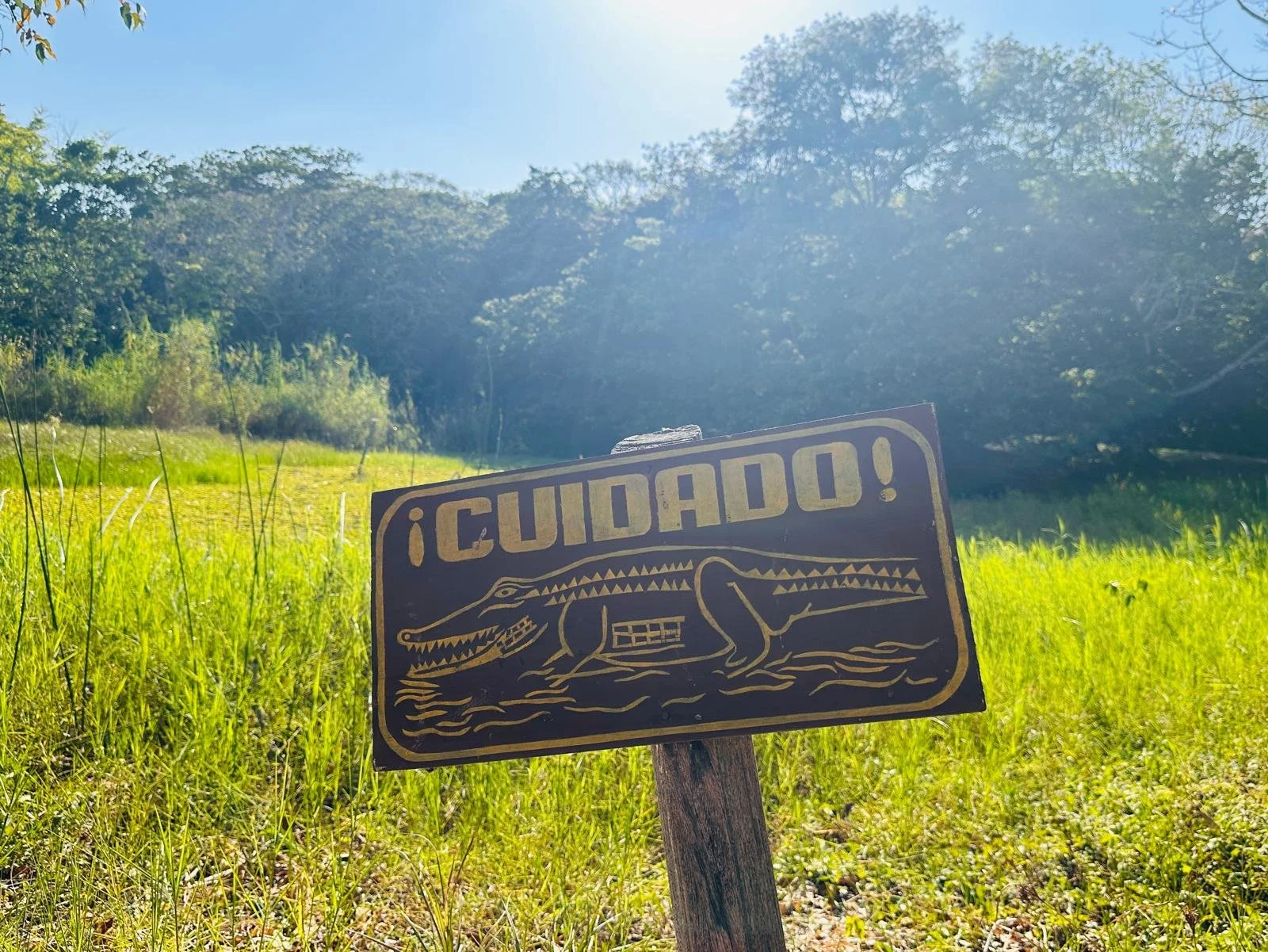
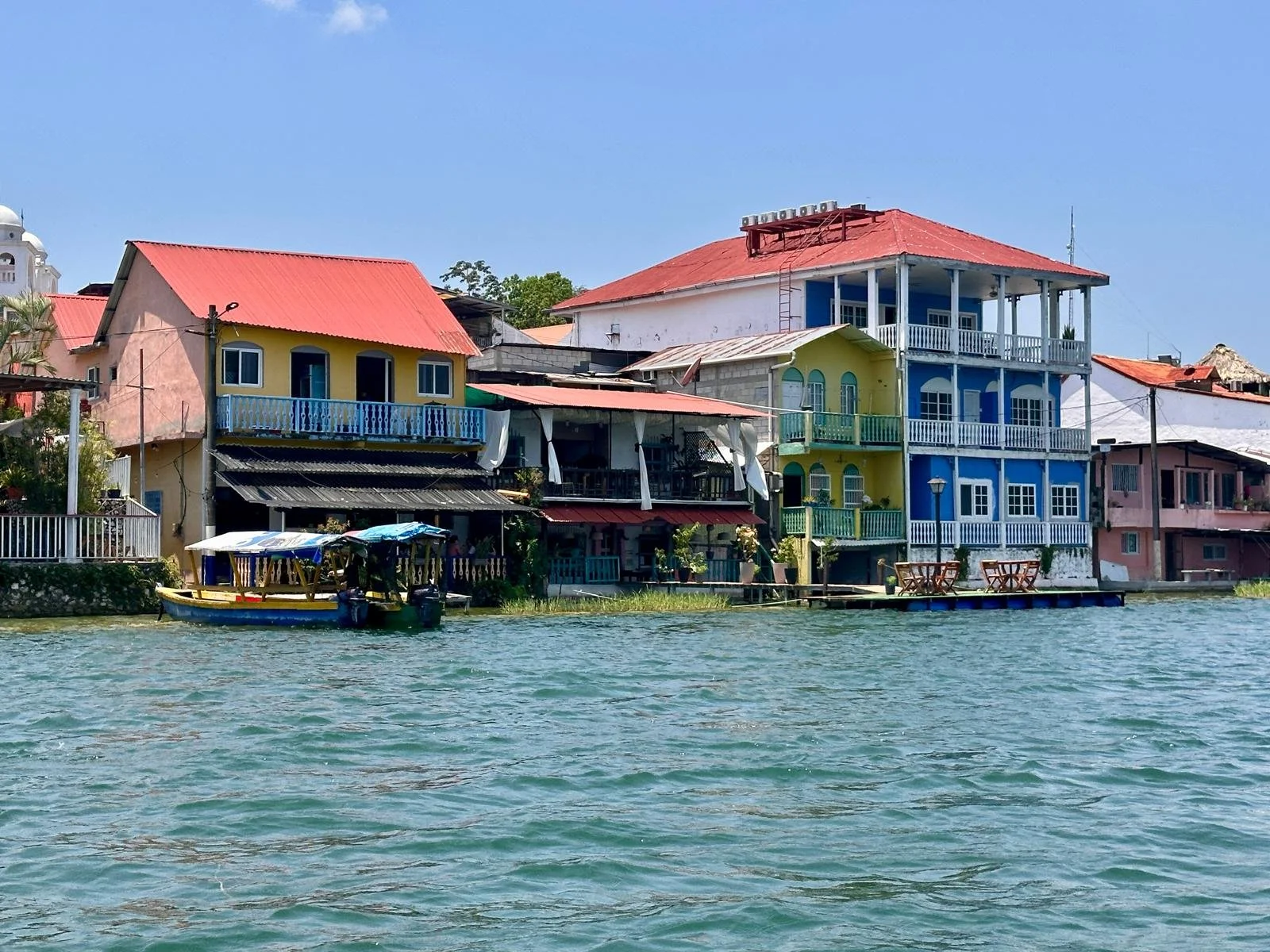
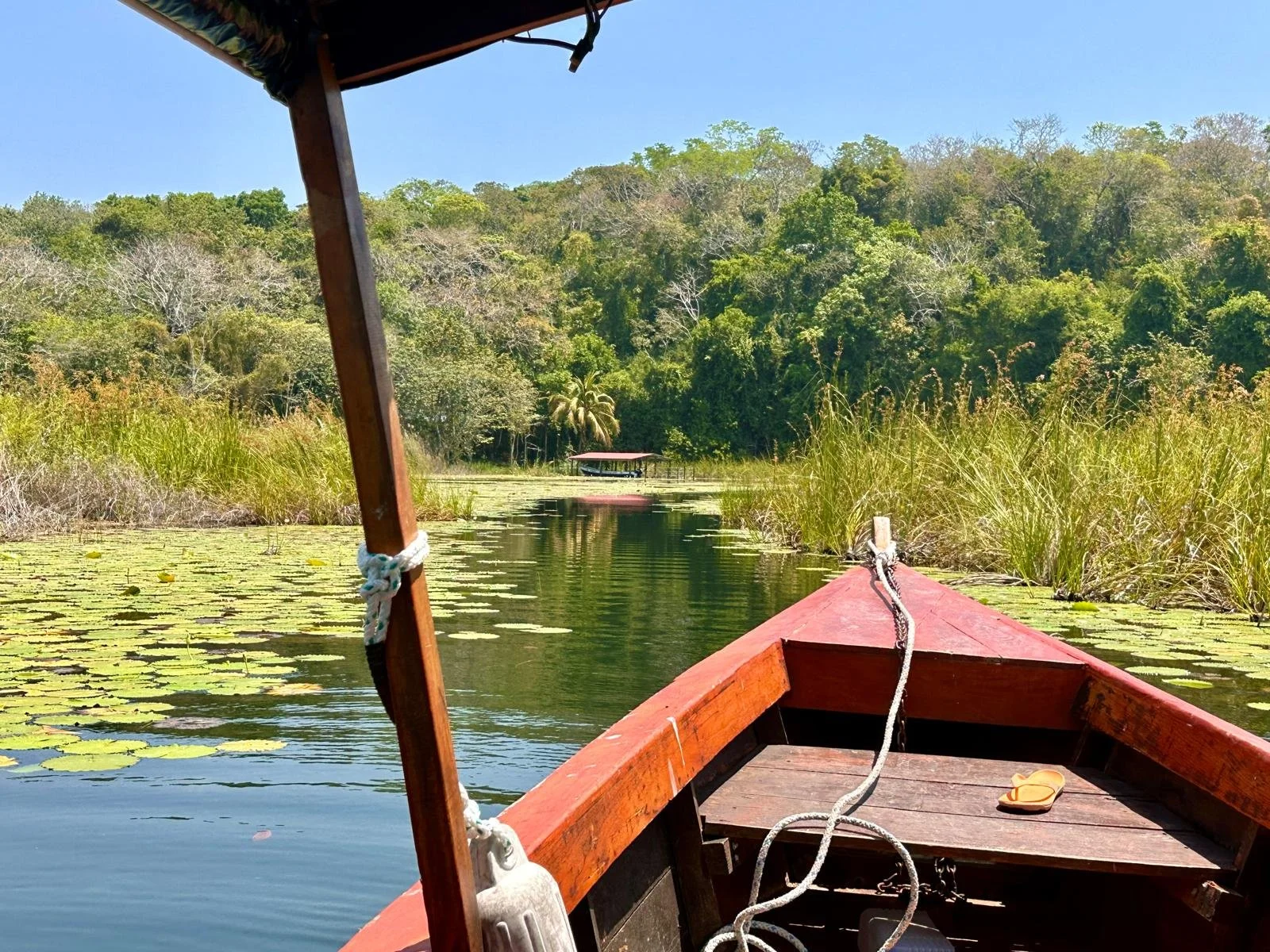
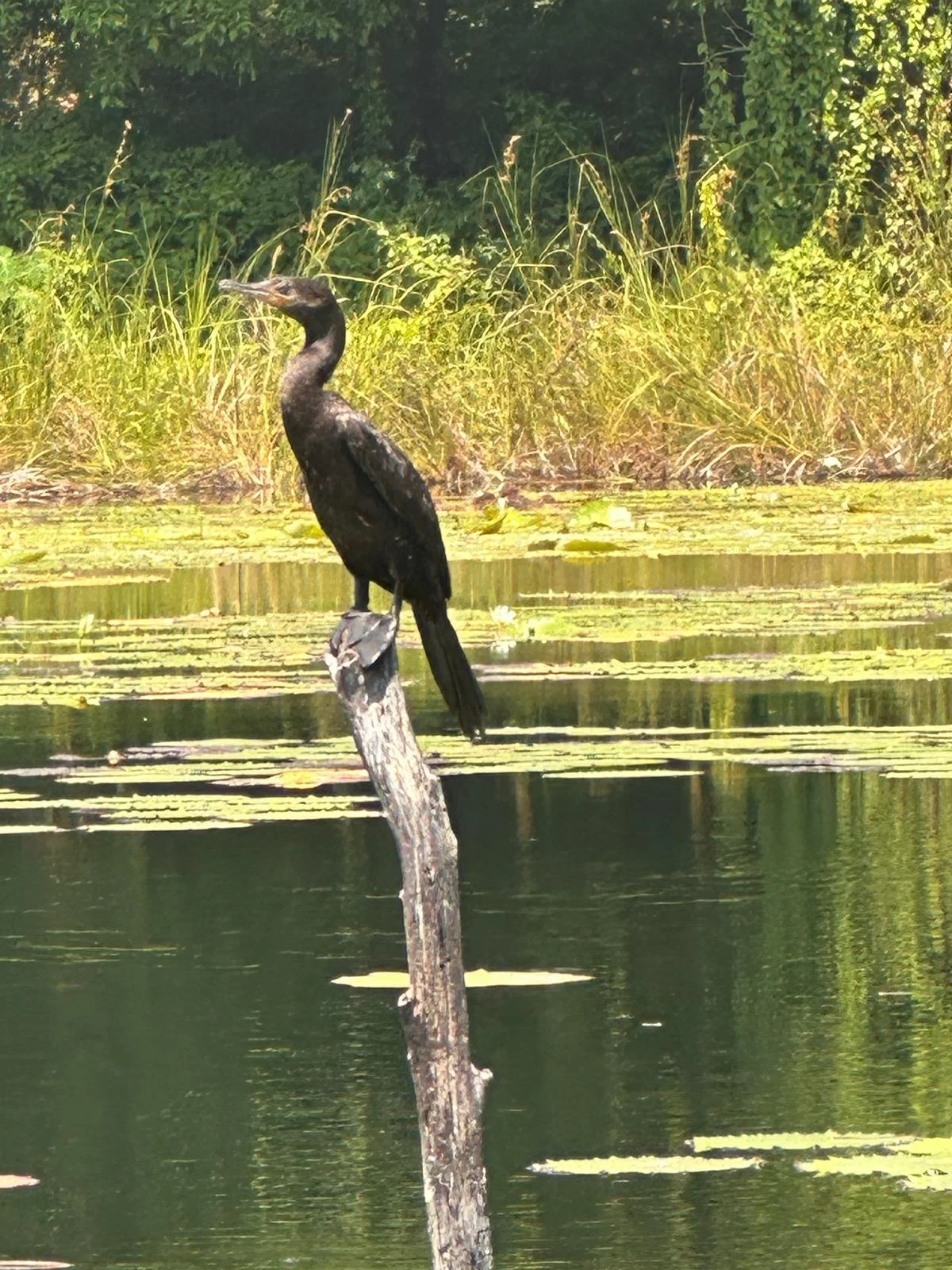
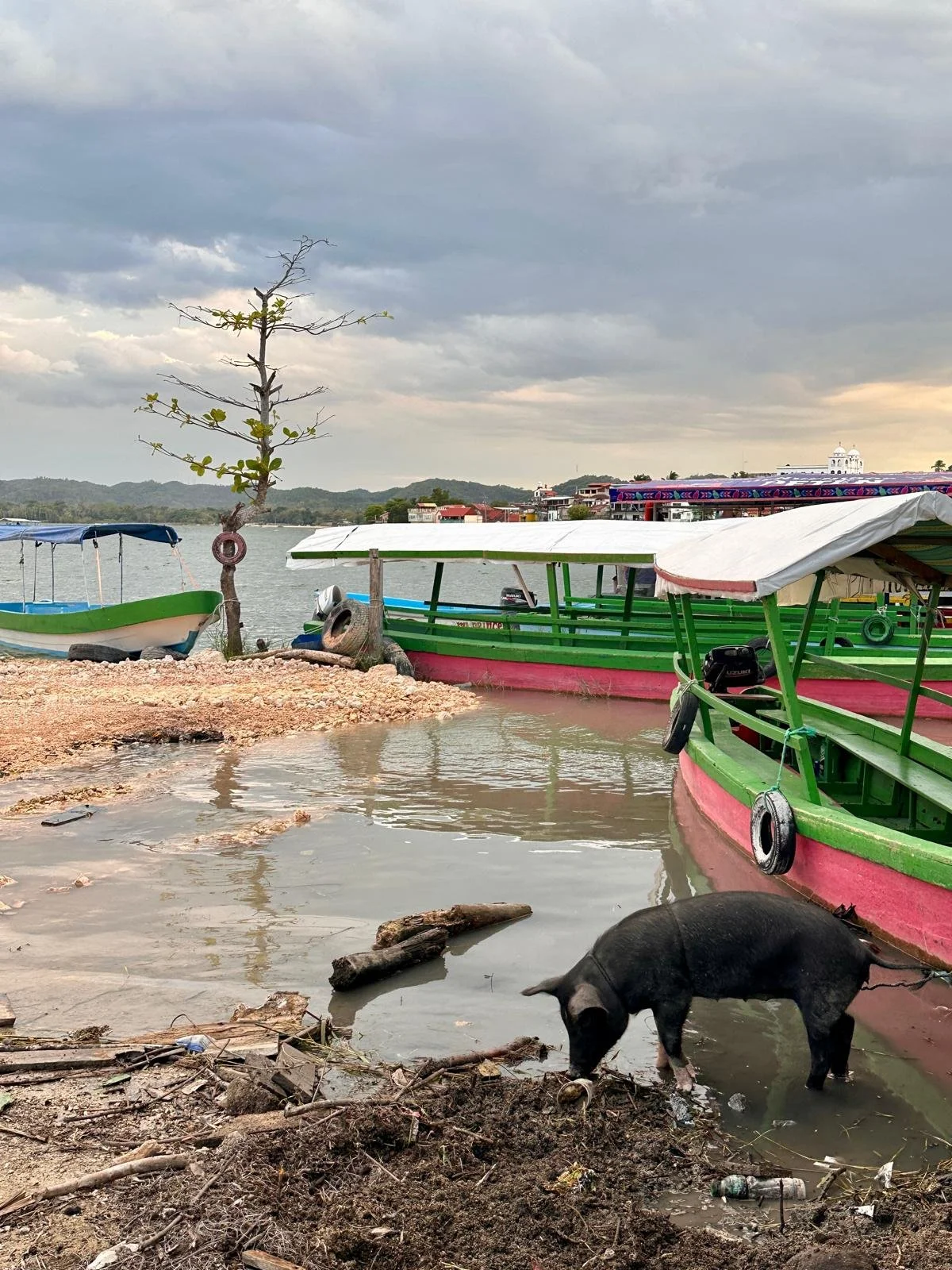
We didn’t get bored during our week in Flores! We did a boat trip with Peter, the owner of “The Zapote Inn.” Peter is originally from Oklahoma, but he built “The Zapote Inn” back in 1992 and has been living in Flores ever since, while still commuting back to the States every now and then. Of course he knows the lake inside and out, which made him the perfect tour guide to point out local flora and fauna and to explain some of the more recent developments in and around Flores. One very striking sight is that the water levels in Lake Petén Itzá are much higher than they should be. Houses along the shoreline now stand partially submerged, certain streets are no longer in operation, and it’s fairly obvious this isn’t a new phenomenon but a condition that has persisted for some time. Peter explained that the lake doesn’t have any natural outflow: no rivers start from it, and the surrounding ground does not absorb any water. Hence the only water the lake loses is through evaporation, and because rainfall has increased in recent years the water levels have been steadily rising. It’s clear the rise has reached a scale where it has become a serious problem. Yet, as is often the case in developing areas without sufficient financial resources, the local population has adapted and learned to live with the ongoing effects of this chronic flooding.
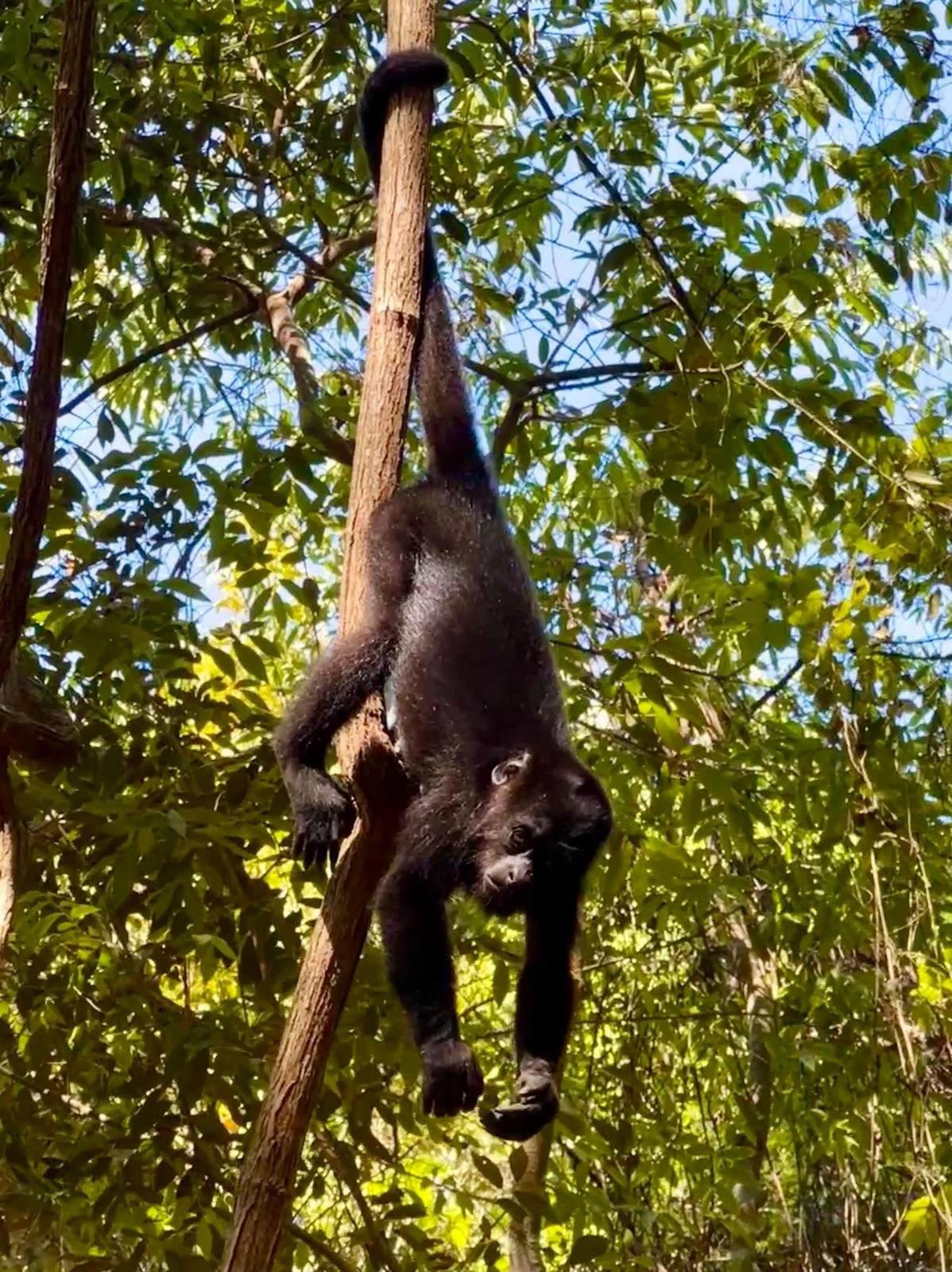
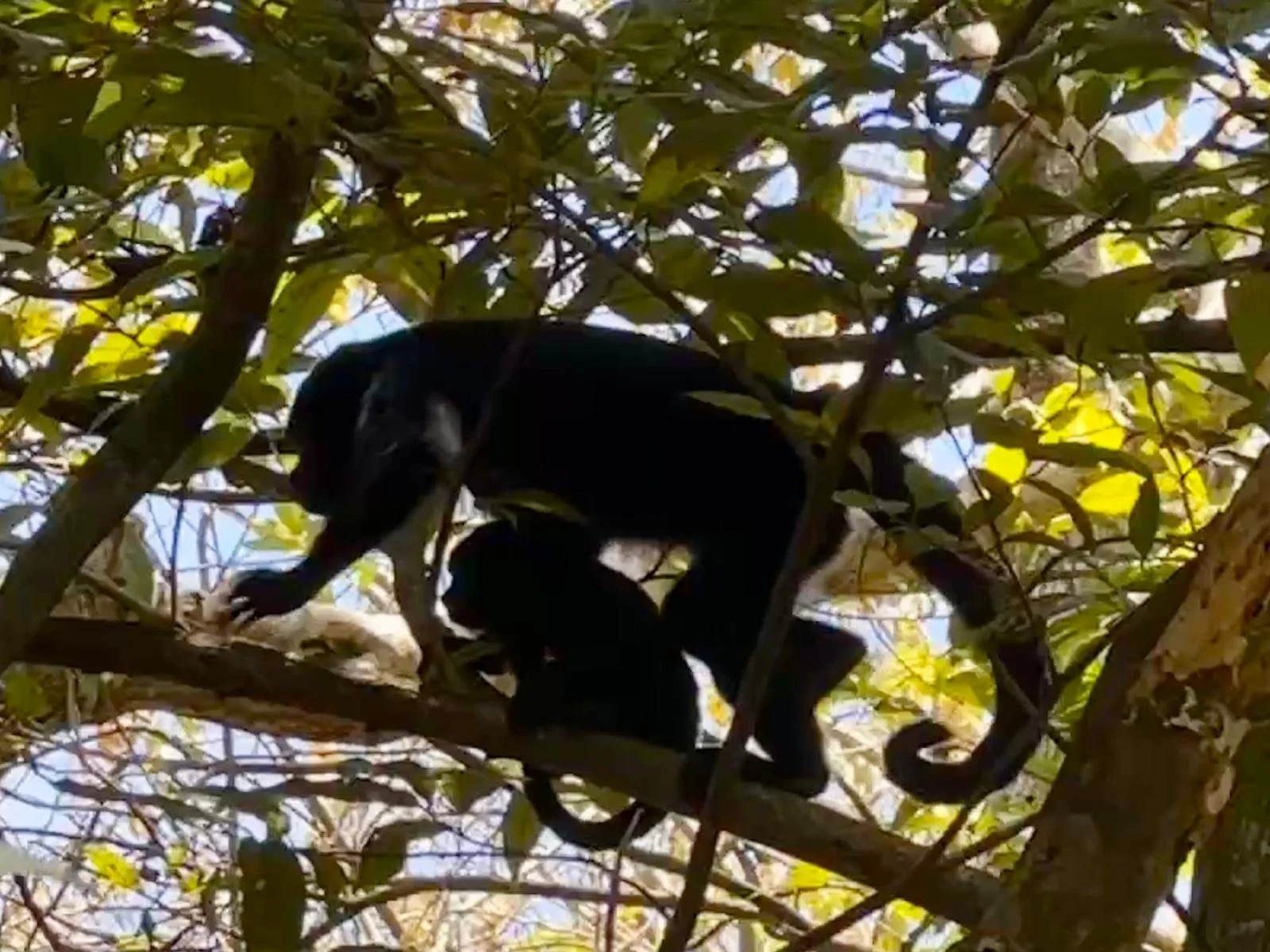
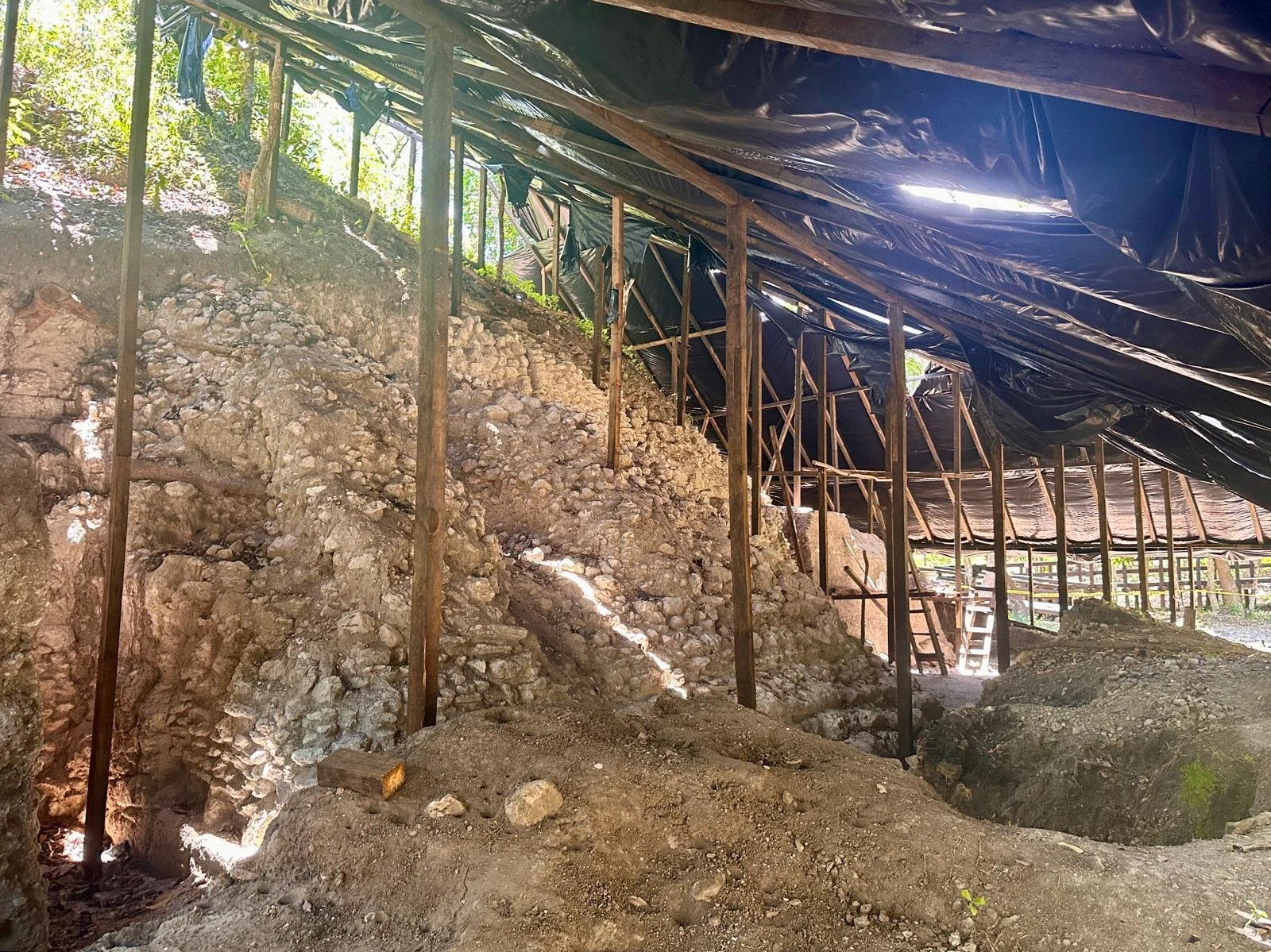
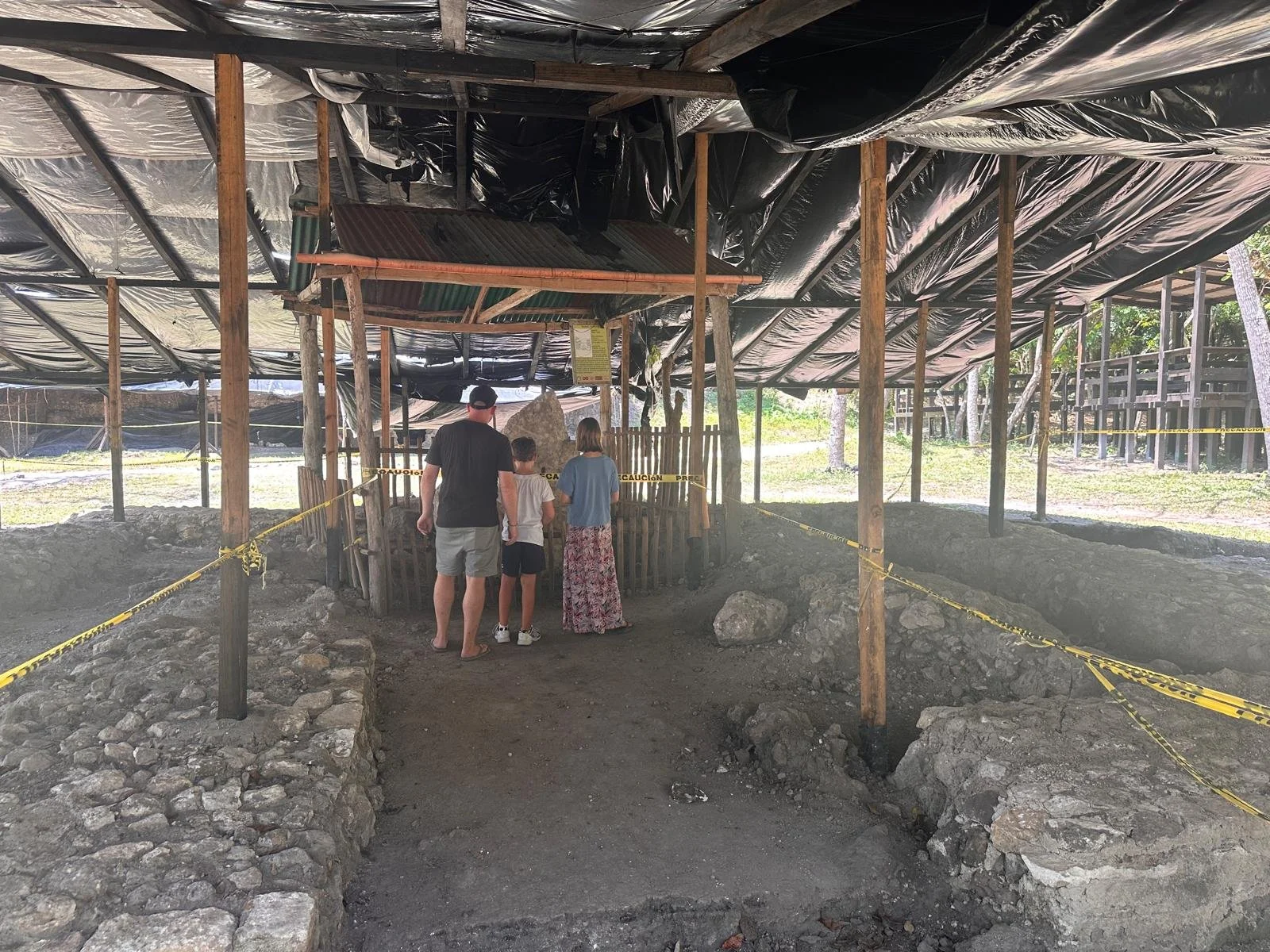
We also visited the local archaeological site of Tayasal, and what we first thought was a minor excavation area turned out to be much larger and far more fascinating than we initially believed. A short walk from our hotel we discovered one of the most intriguing - and still very incomplete - archaeological projects in Guatemala. Compared with Tikal, which we planned to visit later, much of Tayasal remains hidden underground. What makes Tayasal so compelling is that the city was inhabited continuously from around 1000 BCE until the Spanish conquest in 1697. Whereas most other sites were occupied only during the Preclassic period, the Classic peak, or the final phase before the conquest, Tayasal spans all of those eras. The excavation of Spanish musket balls provides direct evidence that the Spanish and the Maya encountered each other on the site, while other human remains date back more than 2,500 years earlier. Tayasal is believed to have been one of the last Maya strongholds, and although the site has been known for centuries, the majority of it remains to be discovered. As we walked through the active excavation, we were also greeted by howler monkeys, whose calls carry for kilometres through the jungle. What we thought would be a short walk “around the block”, turned out to be a very fascinating day!
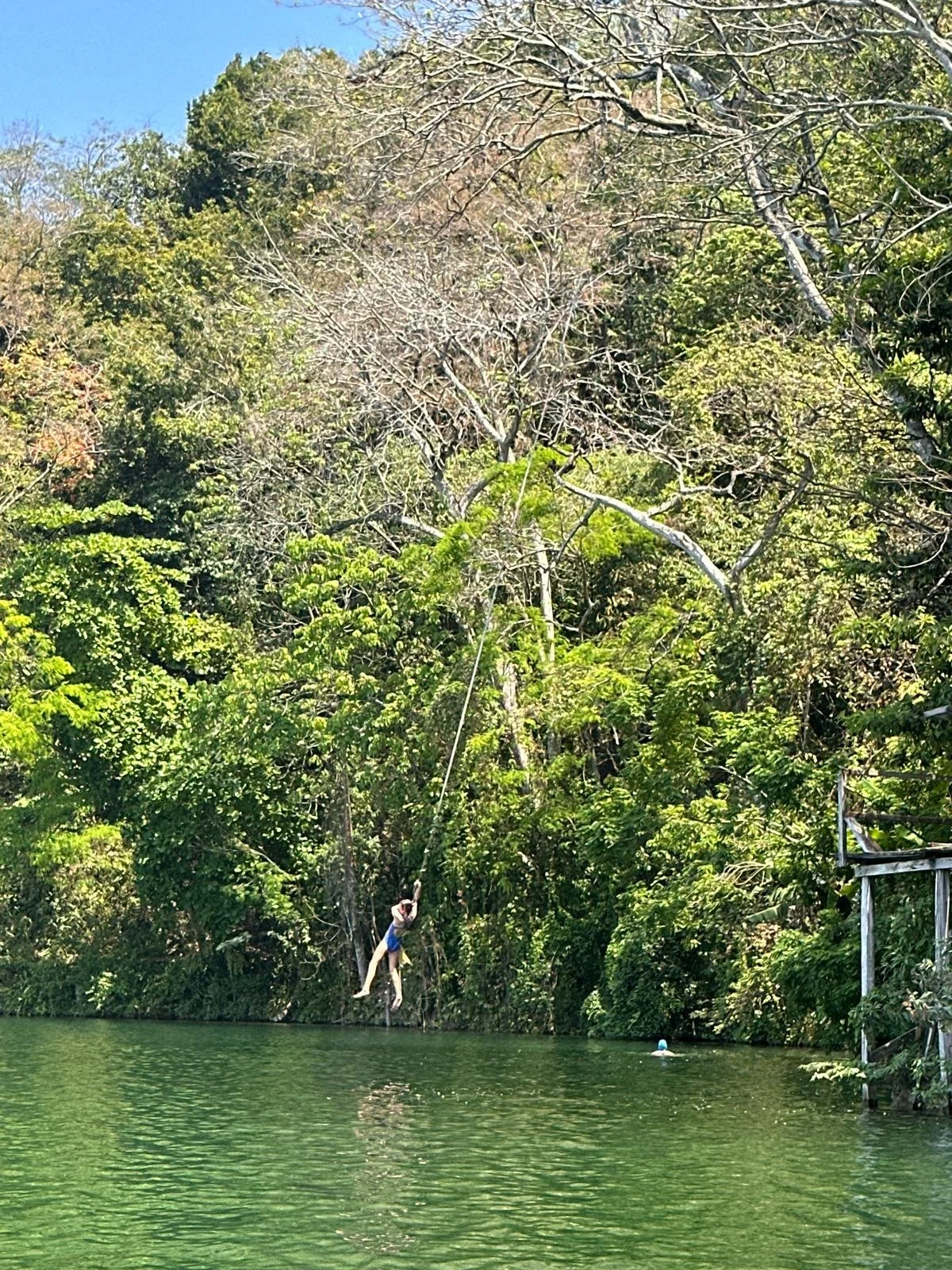
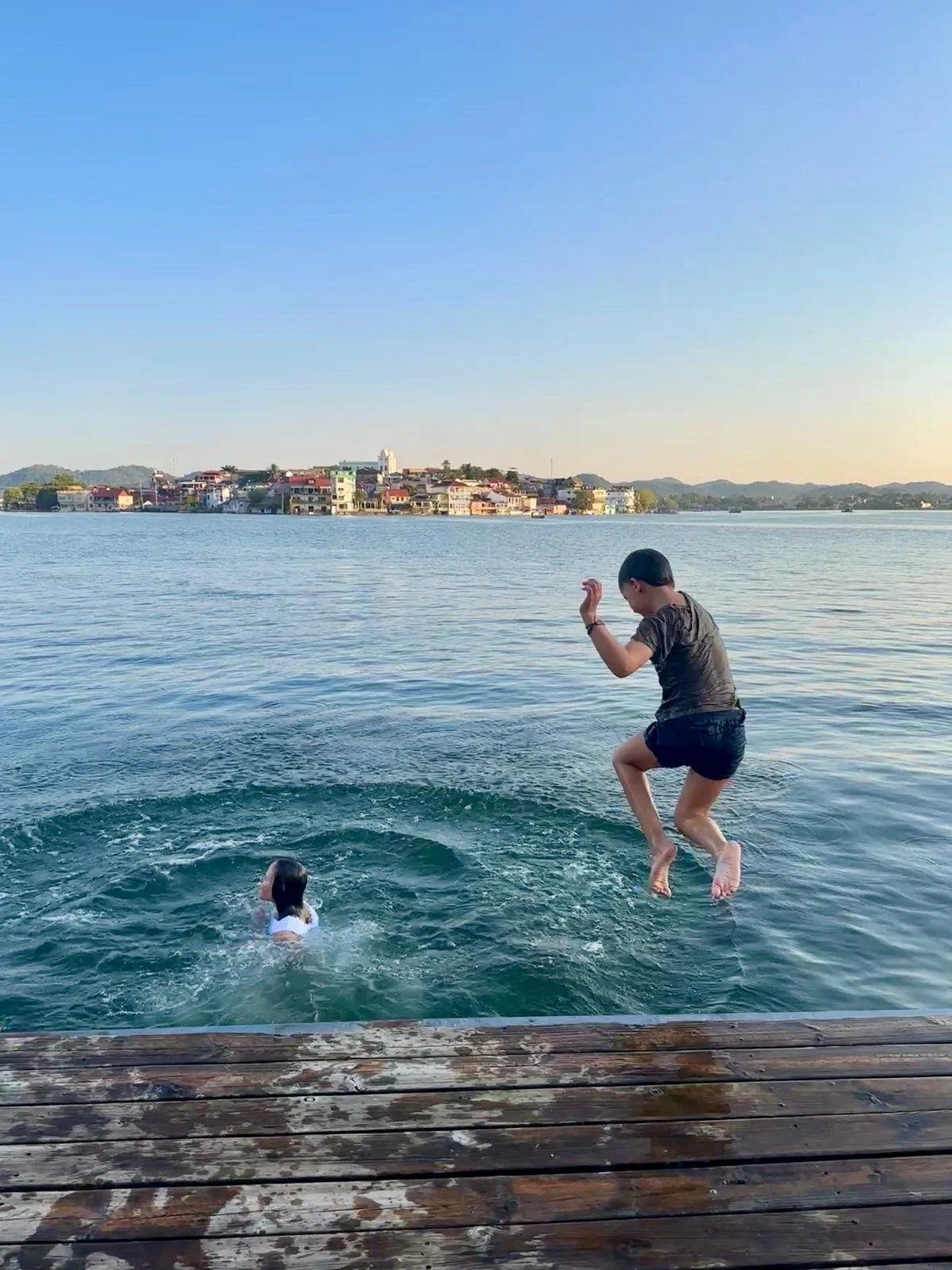
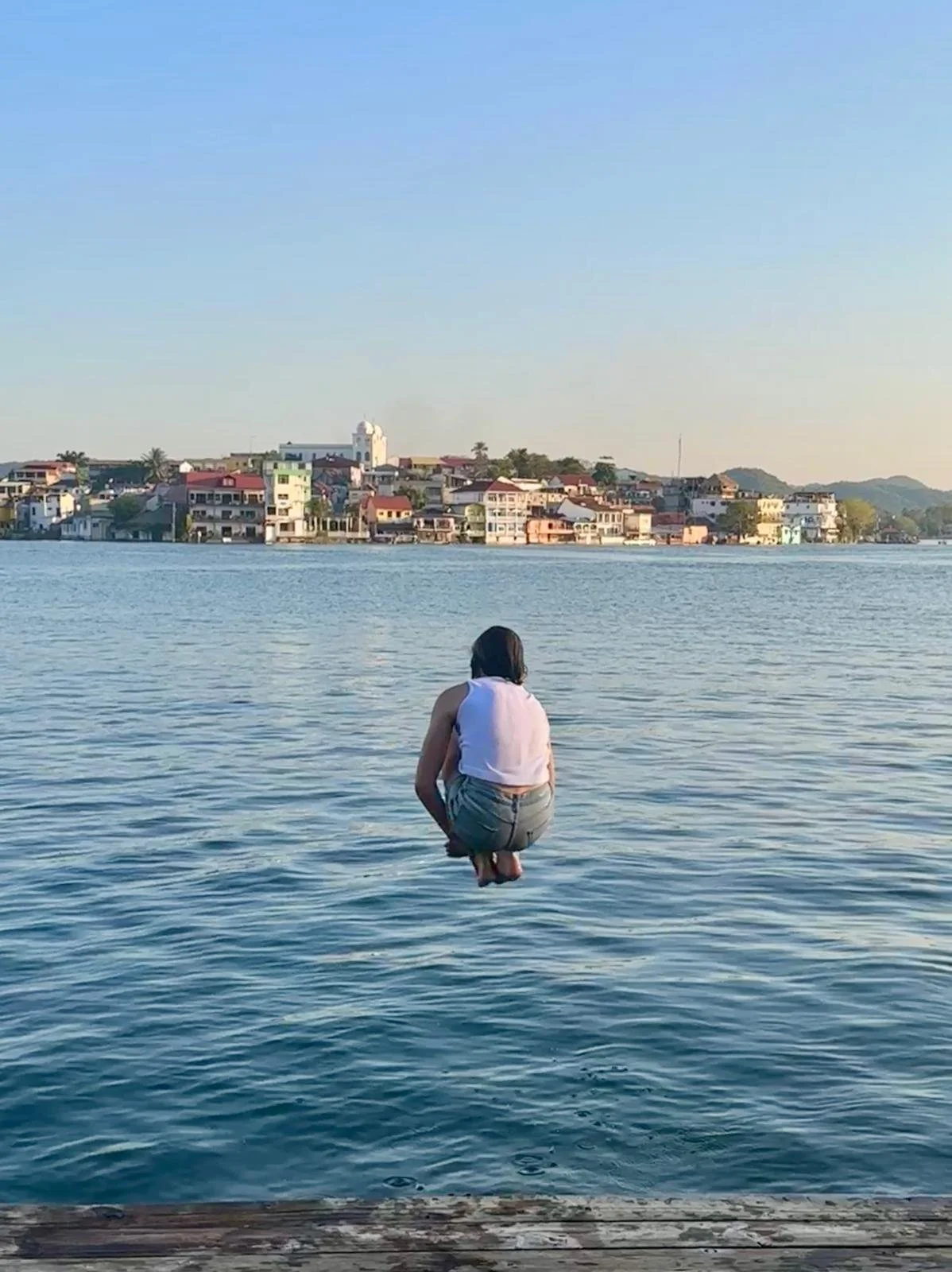
We also just enjoyed our time in the cozy hotel. Temperatures were extremely high at times, and the 38 degrees, paired with the humidity, produced a felt temperature of about 46 degrees during the hottest afternoon hours. The small pool provided a much-welcomed refreshment on a regular basis. We continued our school days with the kids, discovered the charming town of Flores, and - after finding a poker set in the hotel’s board game storage - I introduced my children to the basics of poker; we ended up playing for quite a few enjoyable hours throughout our stay. The two dogs, Mogli and Balu, were cuddled often, and we successfully kept to our theme of “taking it easy.” Sarah and I also spent a good amount of time on travel planning, working out a decent, cost-efficient itinerary for the remaining weeks of our journey.
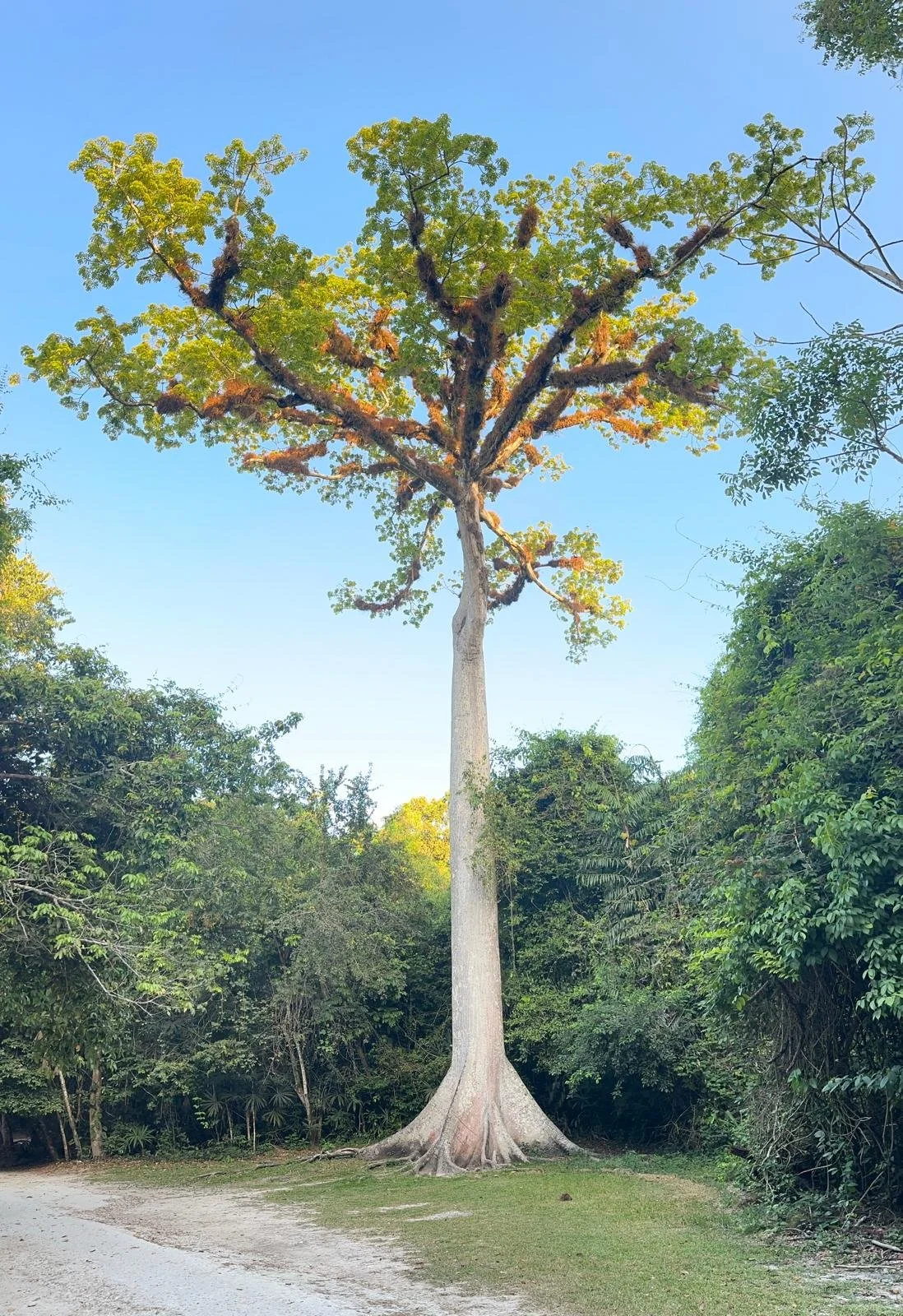
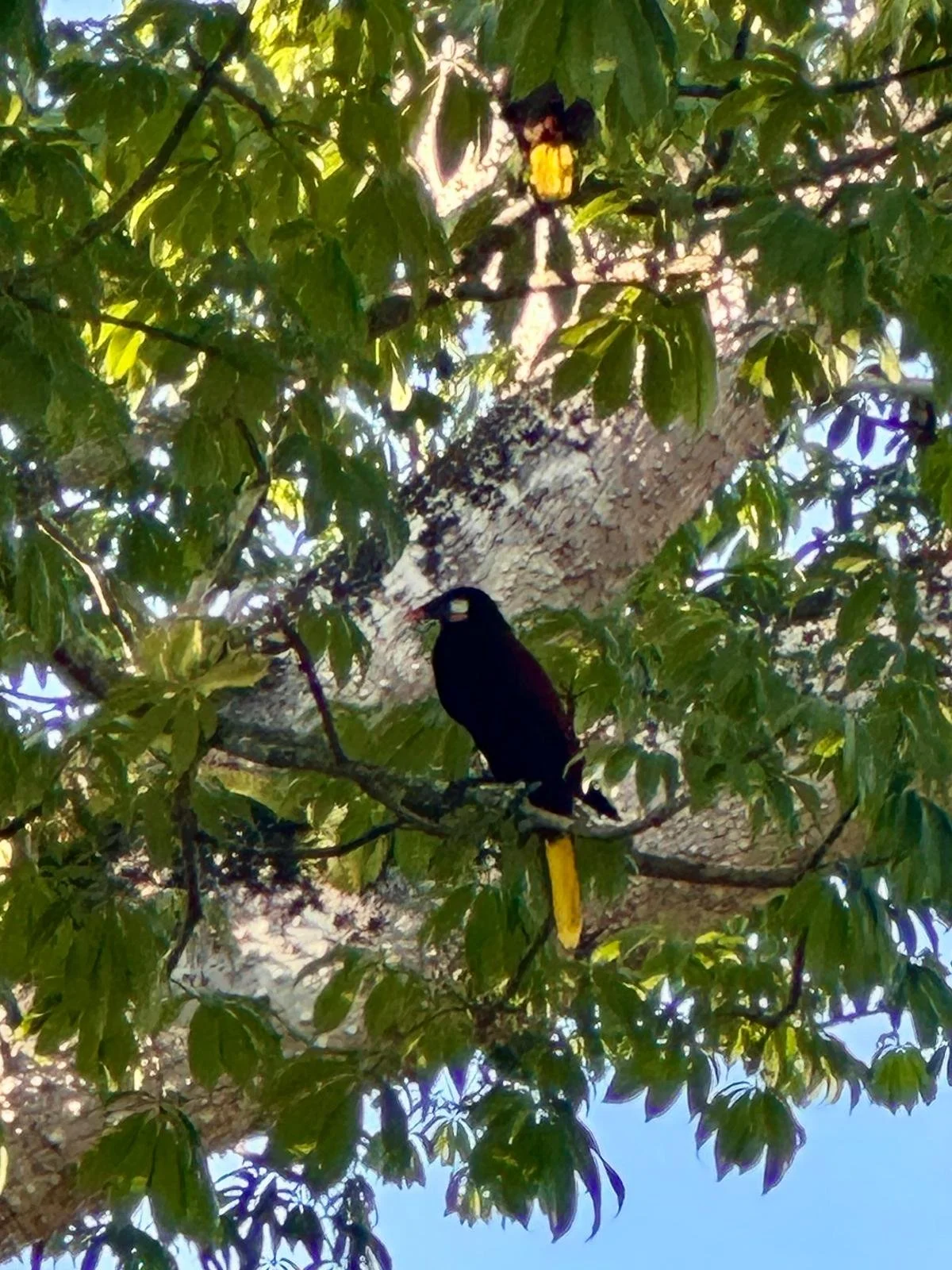
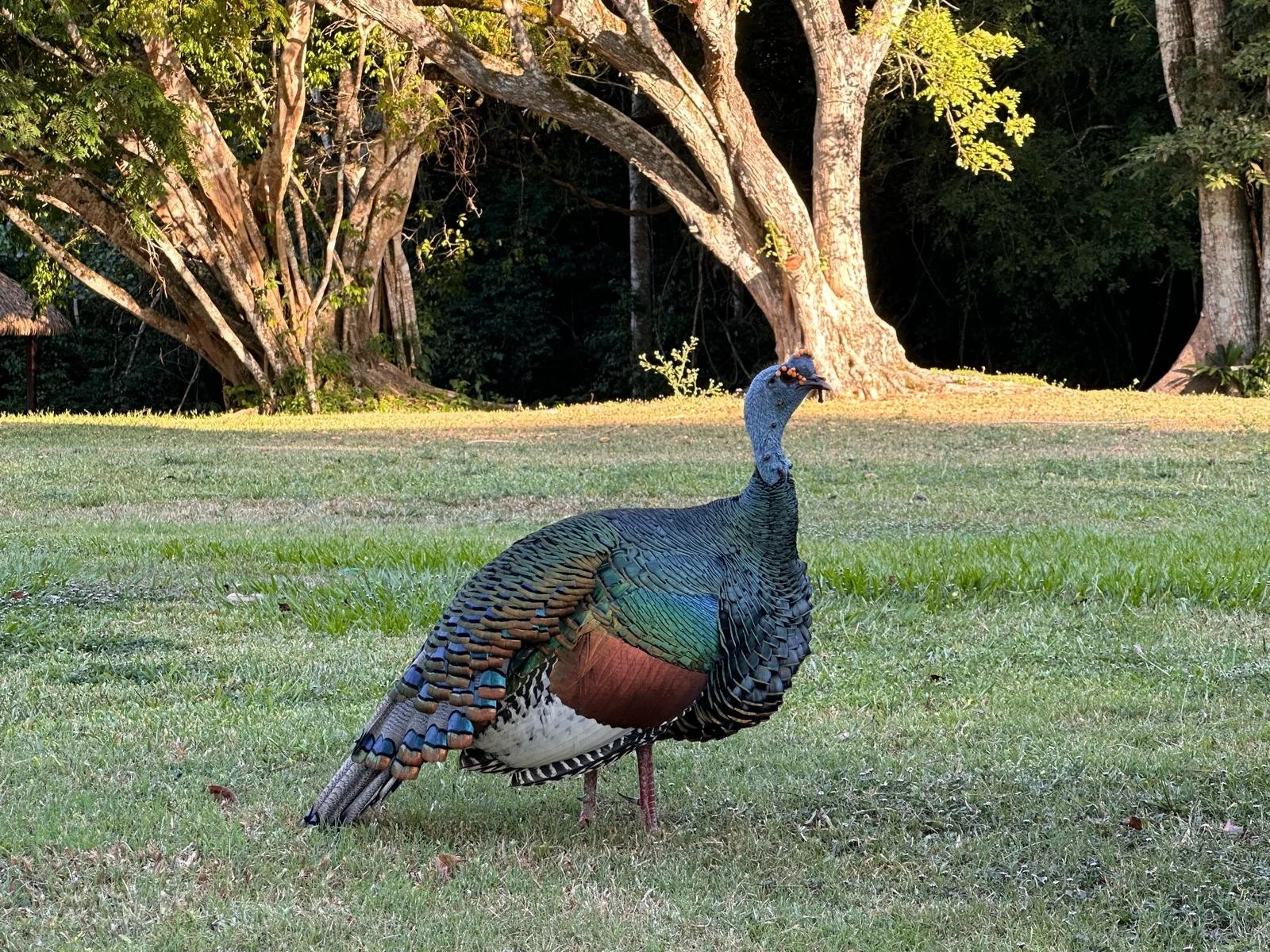
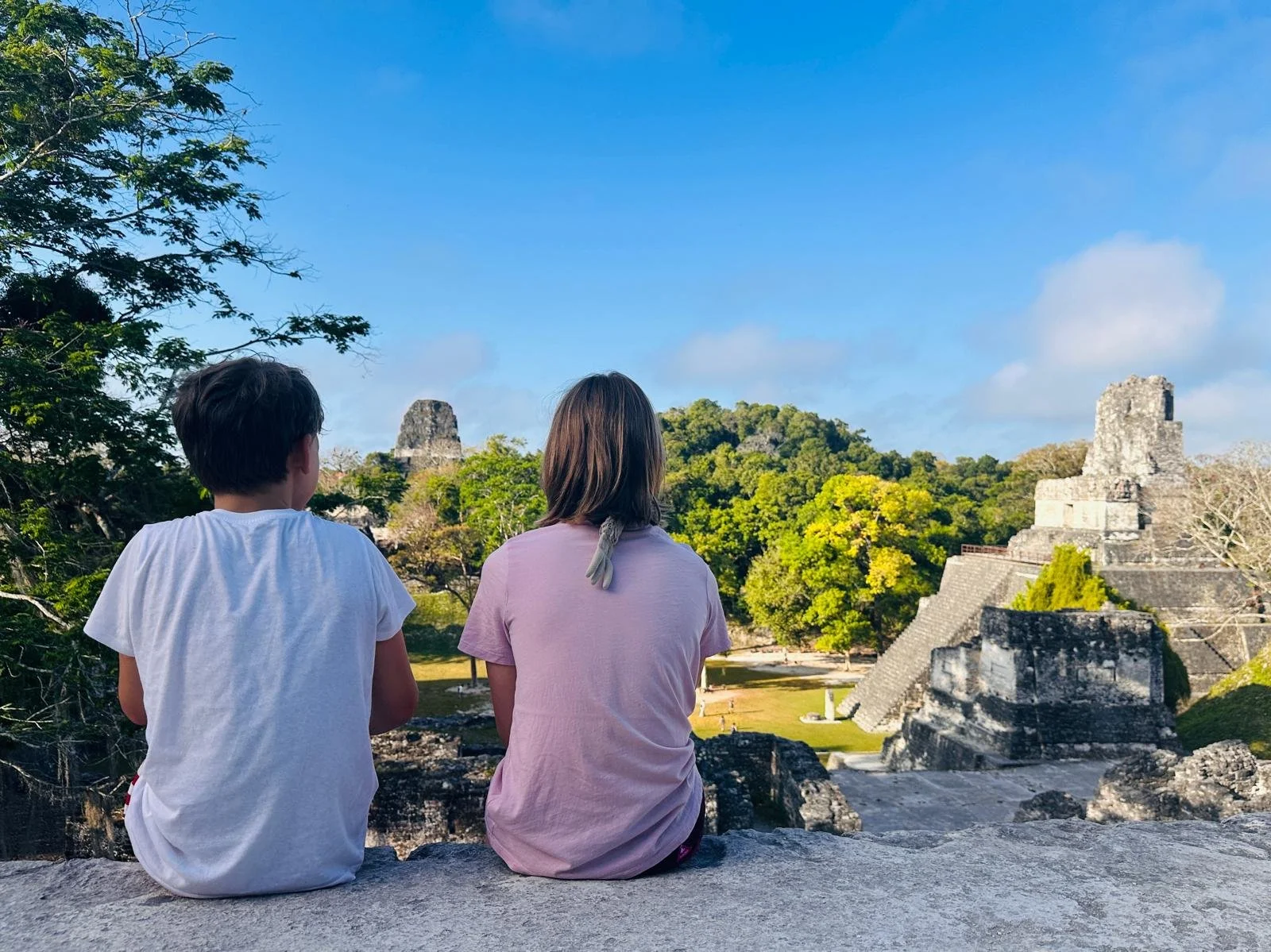
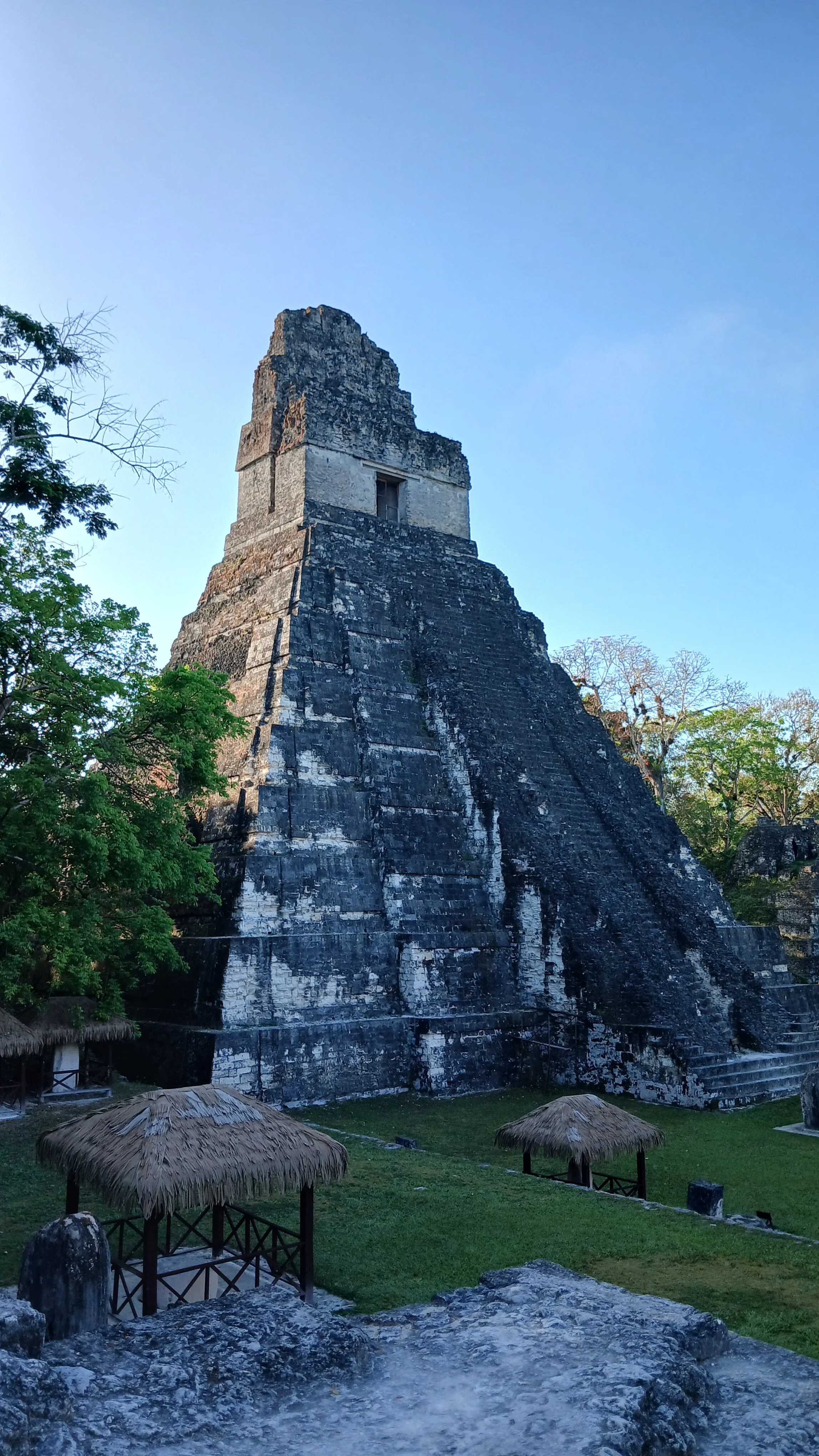
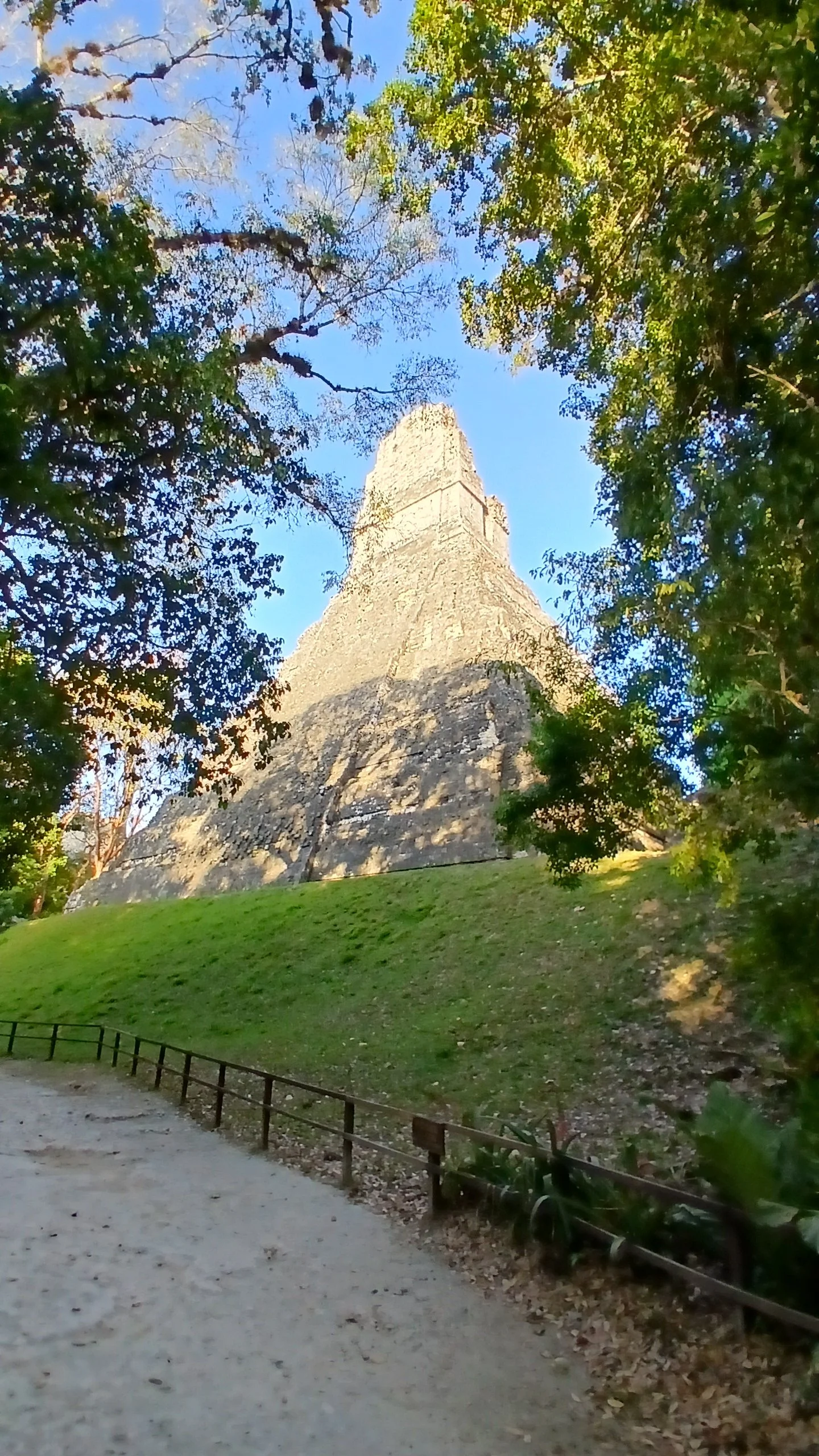
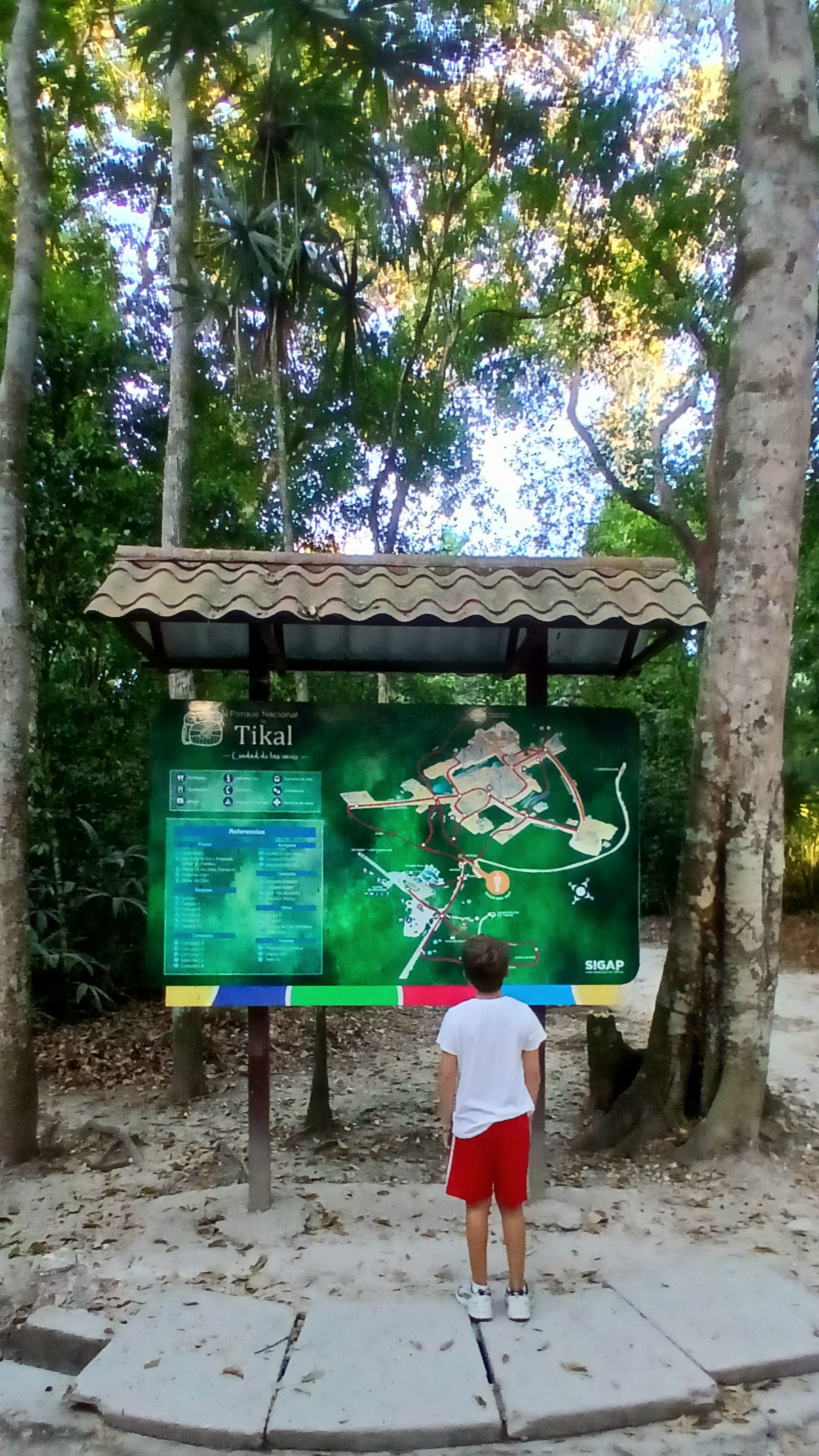
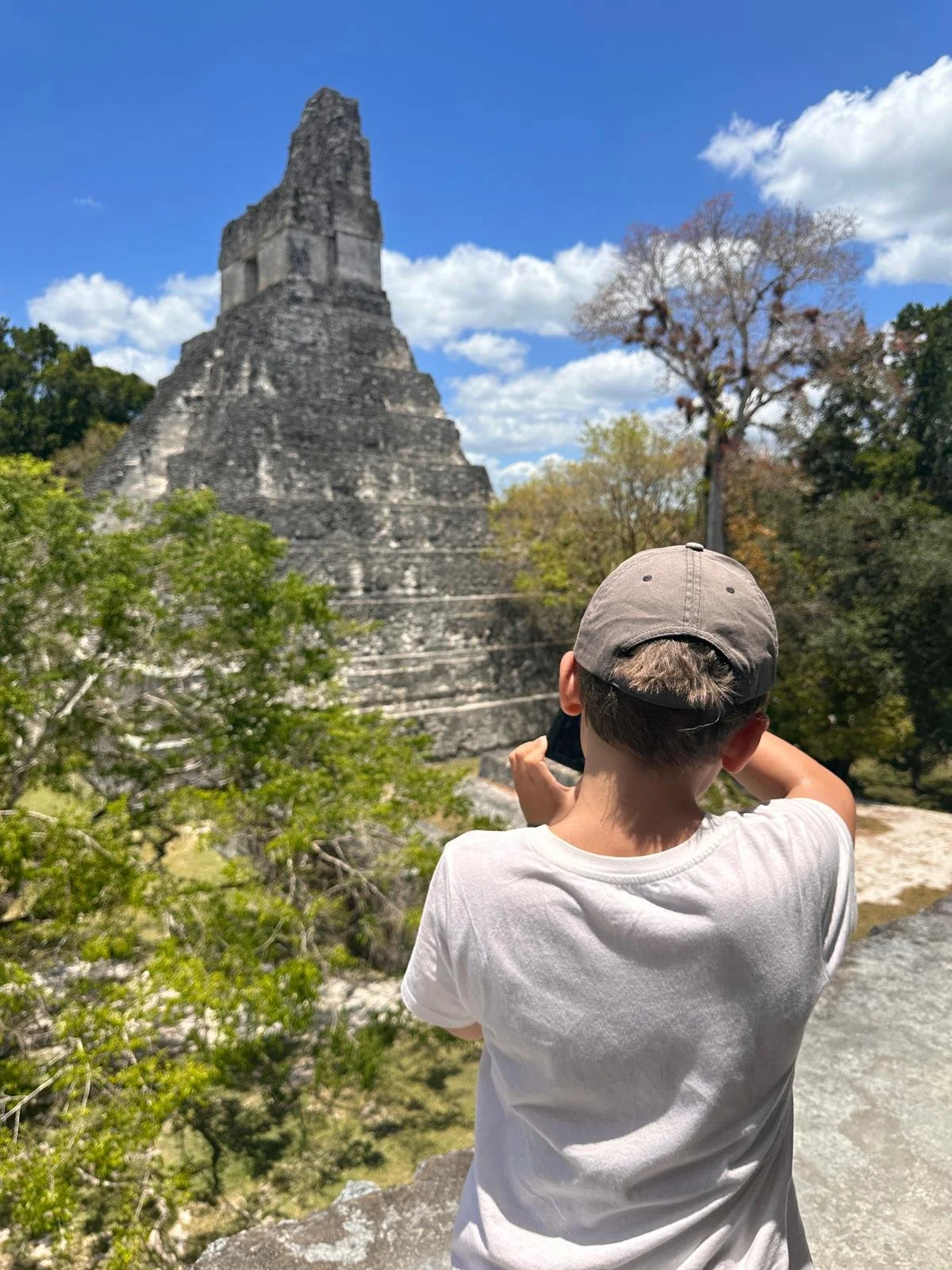
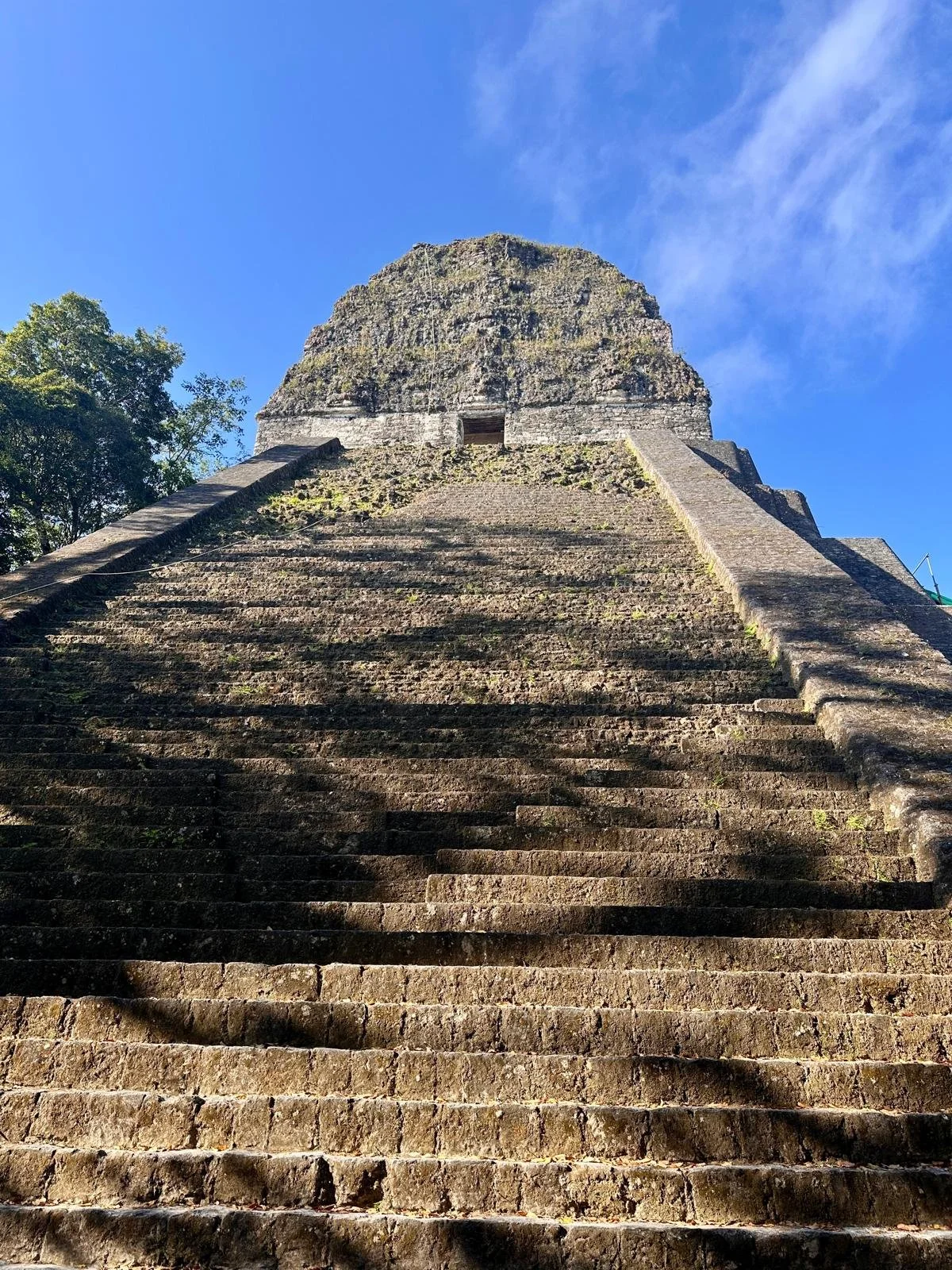
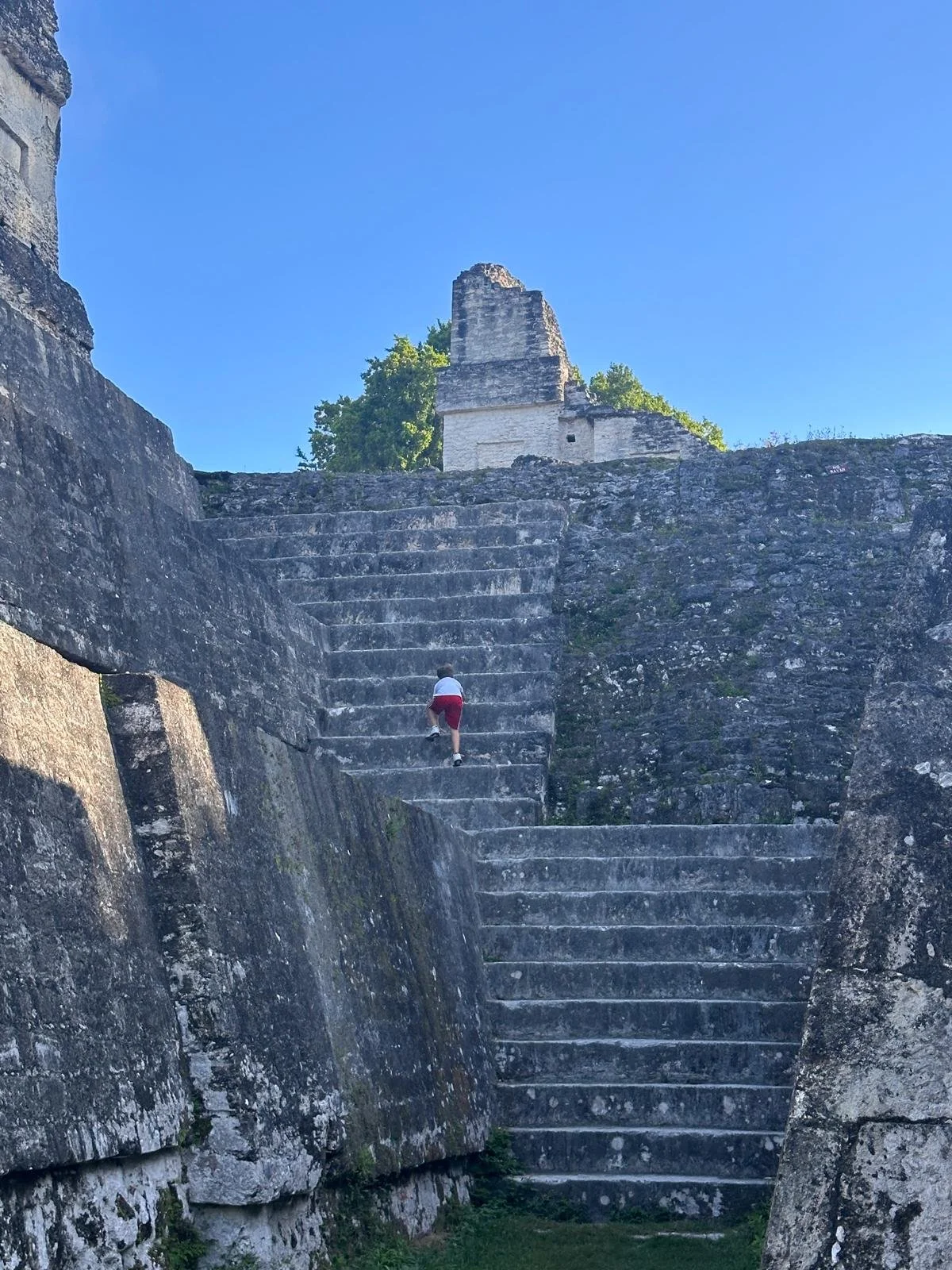
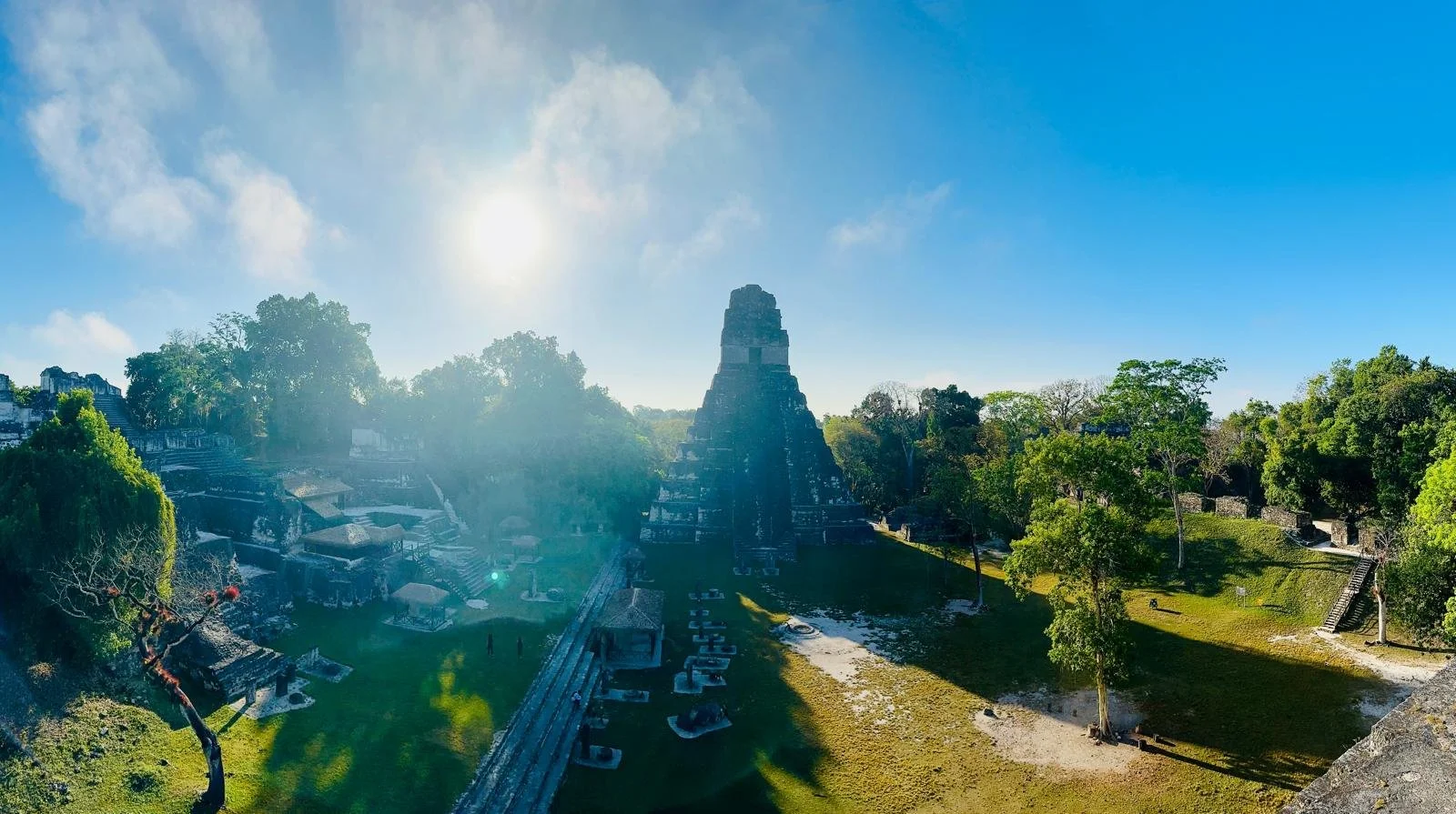
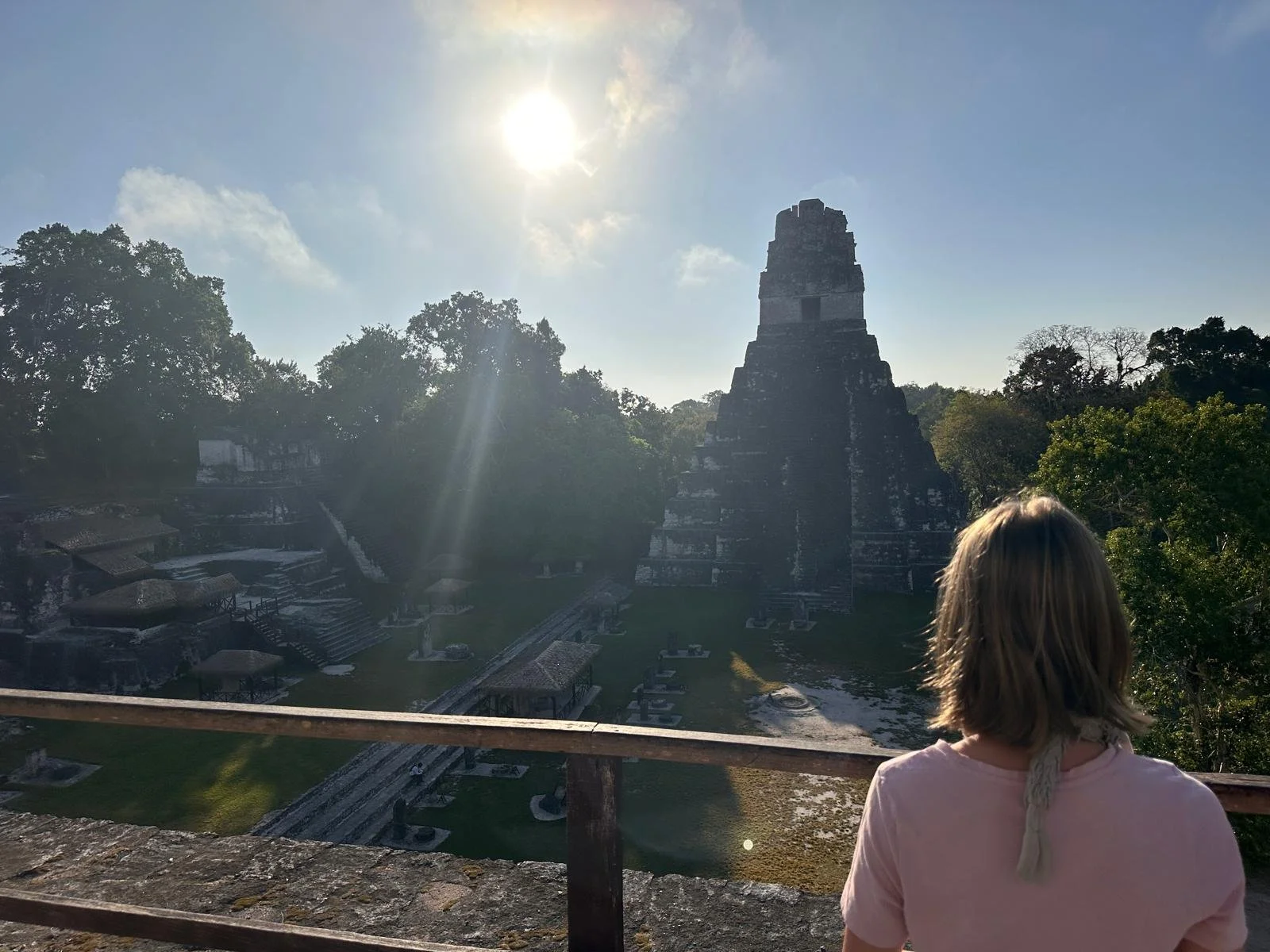
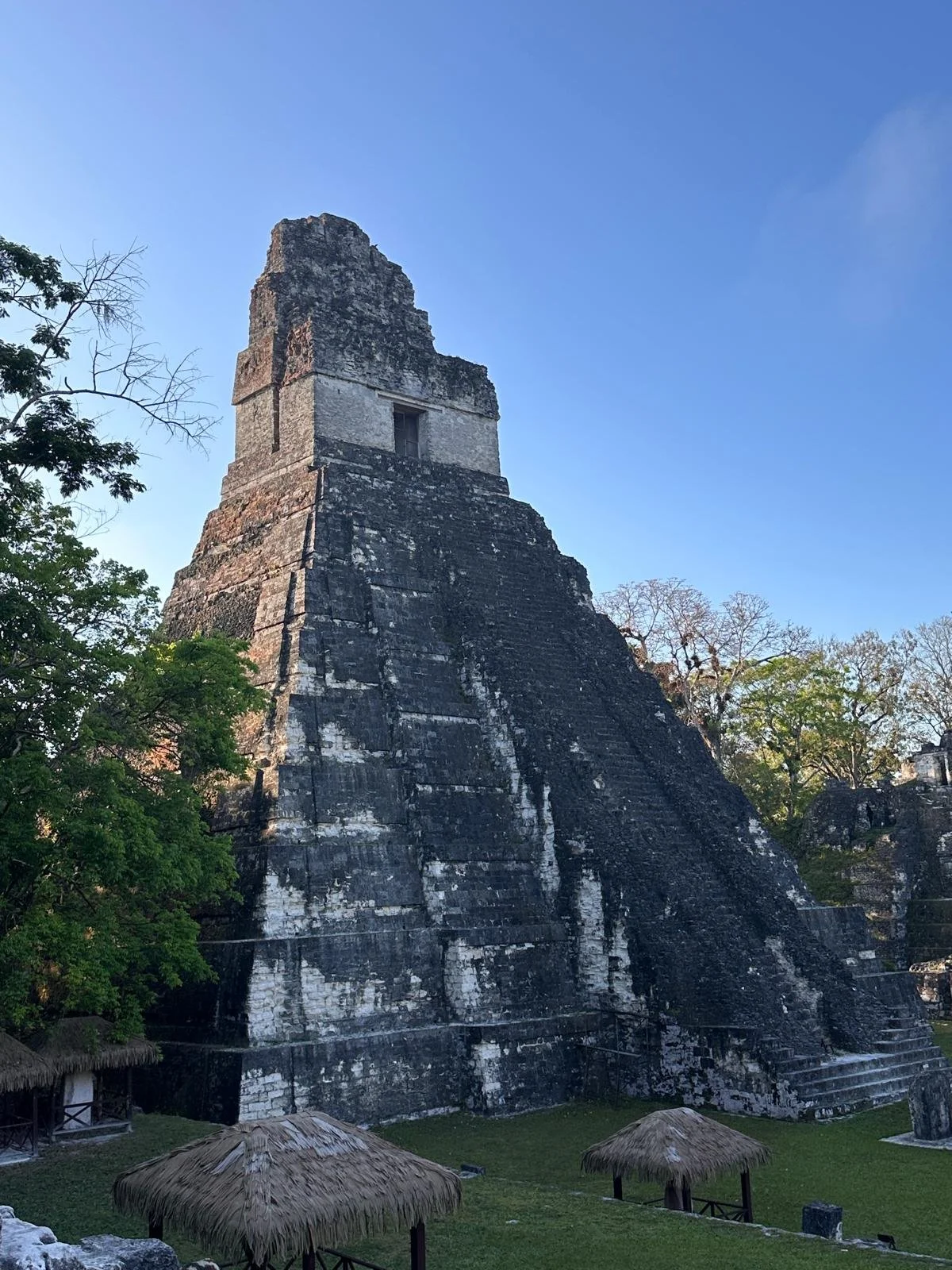
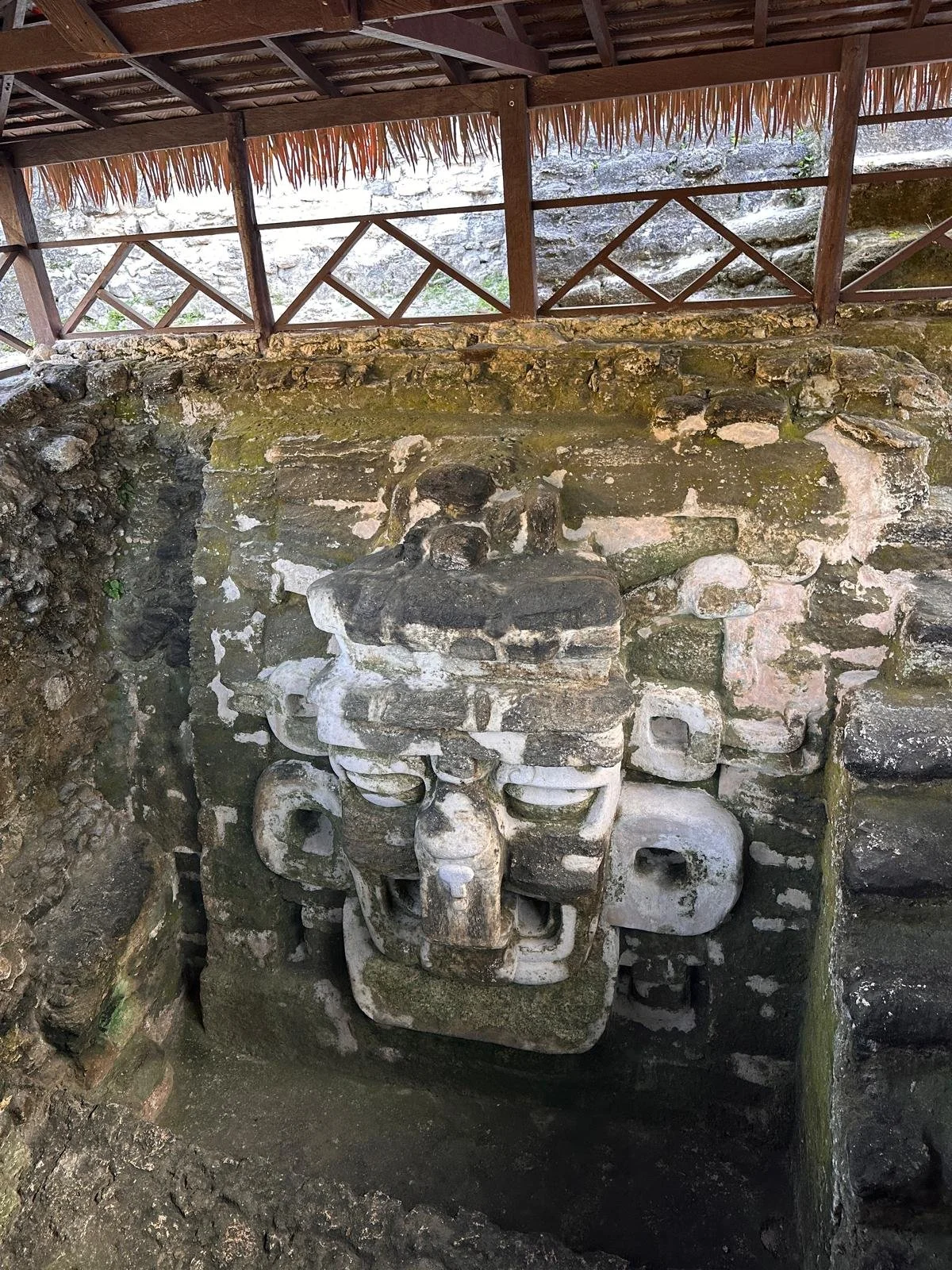
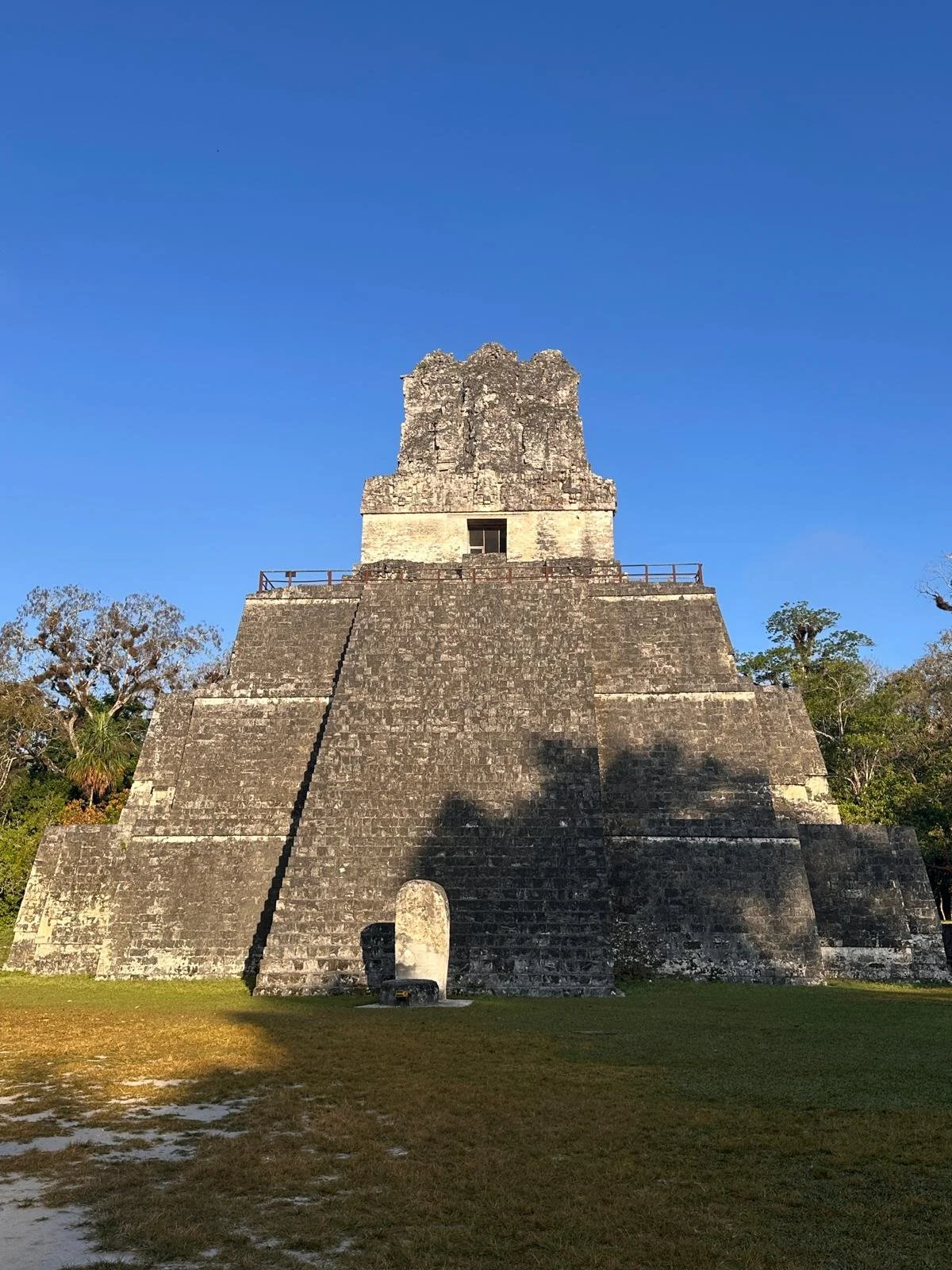
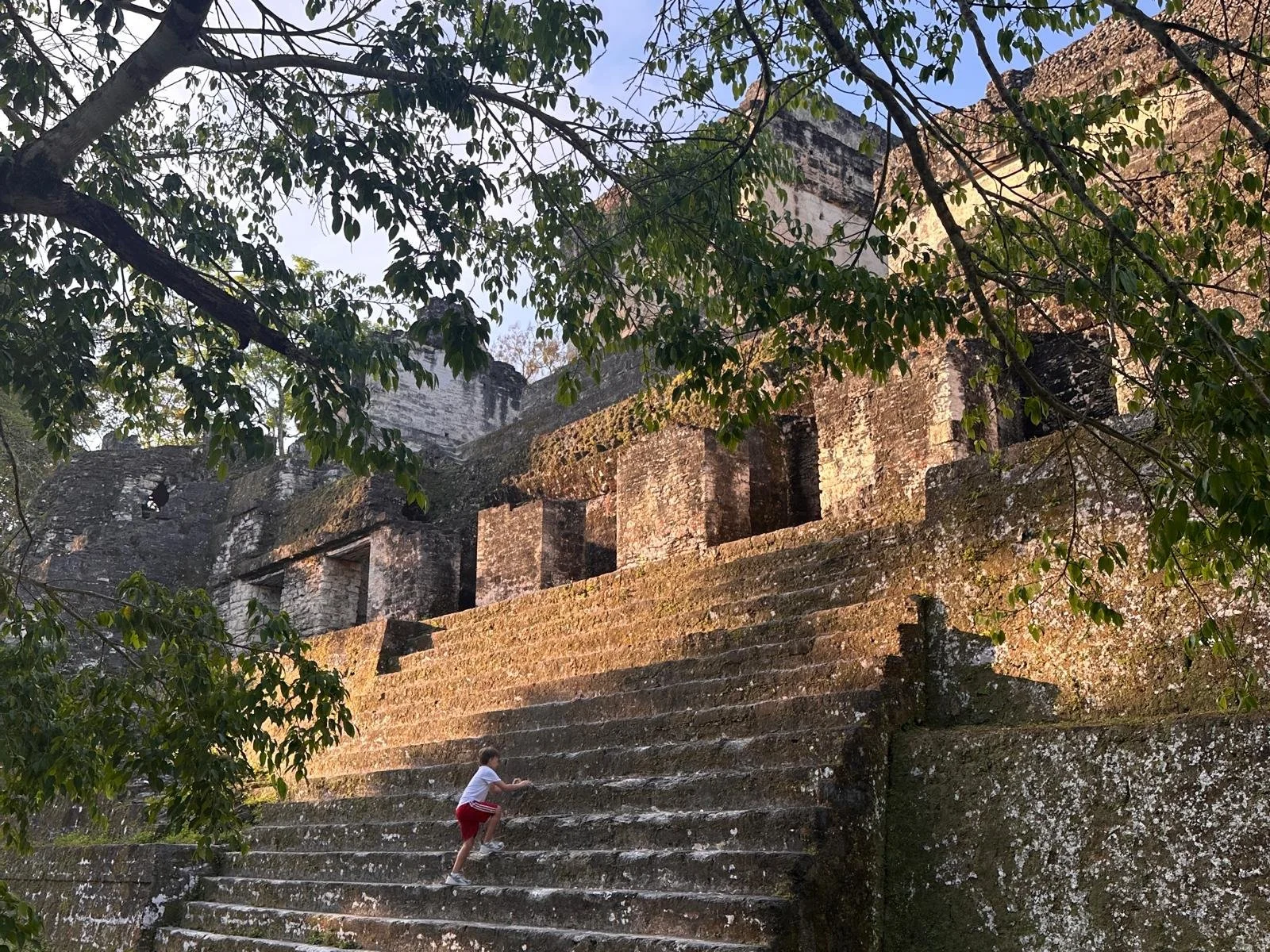
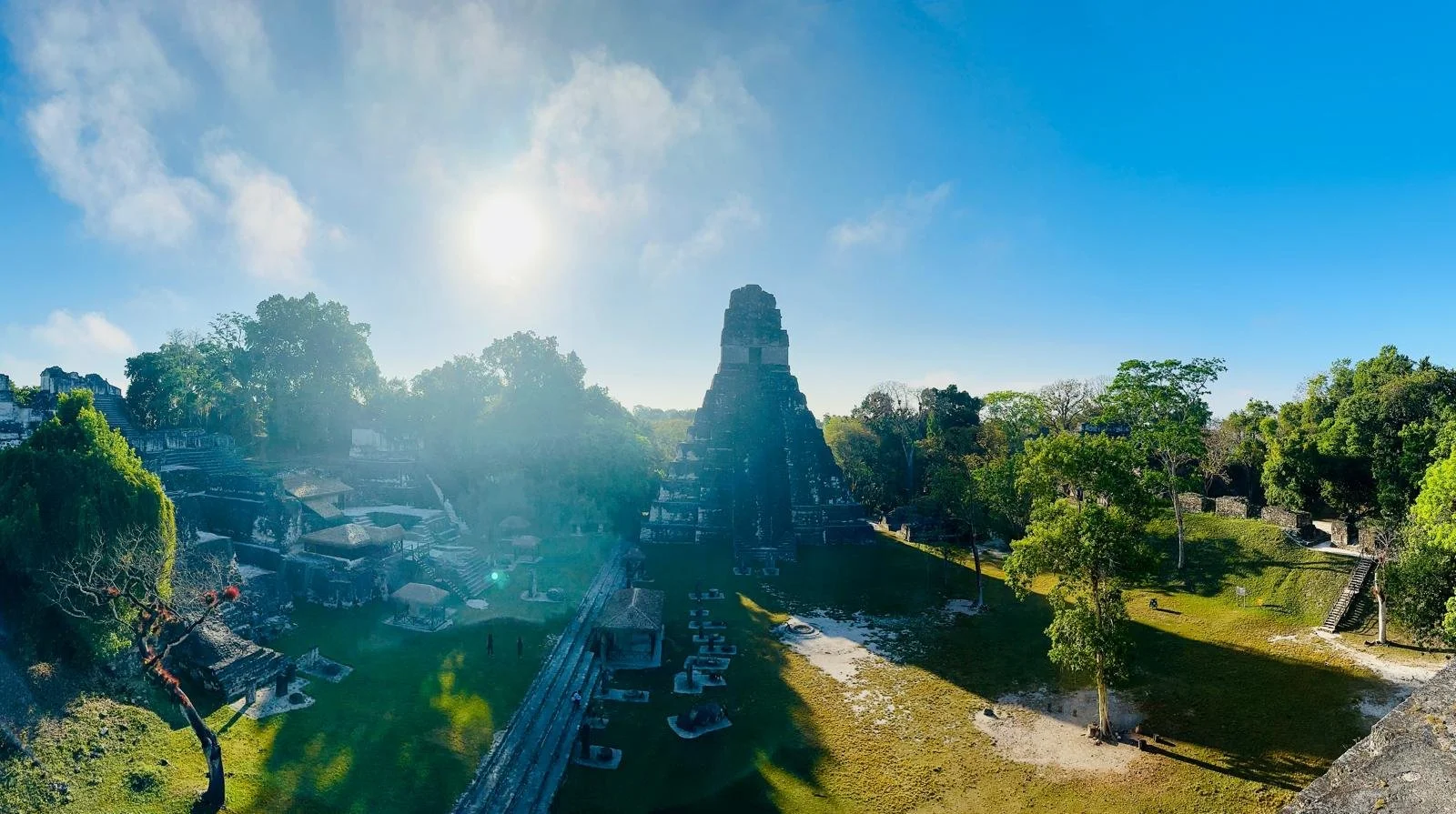
On the 27th, we waved goodbye to the crew of the Zapotee Inn and continued our journey to Tikal, another highlight in the final weeks of our long travel period. Tikal is one of the most impressive and historically significant ancient cities in the Americas. It truly stands out for its mix of scale, setting and cultural importance. It sits deep in the Petén rainforest, and unlike many other Maya ruins that are cleared and isolated, Tikal feels alive. Howler monkeys roar through the jungle, toucans fly overhead, and temples rise above the canopy like ancient skyscrapers. Tikal was a major political, economic and military powerhouse of the Maya civilization. It was inhabited as early as 600 BCE and reached its peak between roughly 200 and 900 CE. At its height it is believed that up to 100,000 people lived in the surrounding area. What makes it extra special is not only the soaring architecture, but the whole experience: you walk through dense jungle and suddenly step into massive plazas that are over a thousand years old. Many of the ancient buildings can be visited up close, with wooden stairways leading to the tops of temples that reach 55 to 65 metres. We rose early and entered the site at 6 a.m., having the place almost to ourselves. We explored the main plaza in the cooler early hours and were all equally impressed by the setting and the scale of the temples. The kids ran around, discovering ancient passages and staircases -it felt like a thousand-year-old playground. We returned to our hotel around 9 a.m. for a lengthy breakfast before heading back into the park, spending many more hours exploring the areas behind the main plaza, which were just as impressive as the temples and plazas we had seen earlier. We walked many kilometres that day, up to the point of total exhaustion, but it was absolutely worth it.
Sitting on one of the benches for a short break, it also struck me and made me realize how much we had seen during our journey over the last 10 months. Just a few months ago, we were walking through Angkor Wat in Cambodia, which was just as magnificent as Tikal, even though in a different way. While Angkor Wat feels more engineered and open, Tikal feels more wild and reclaimed by the jungle. Tikal was constructed much earlier than Angkor, and while Angkor Wat is believed to have been among the largest cities in the world in the 12th and early 13th centuries, Tikal reached only a fraction of that scale of inhabitation. Yet there is shared magic to both sites. In both places you are not merely looking at ruins; you are standing in what were once among the most developed centers on earth. The realization that we were able to witness these extraordinary sites with our kids filled me with immense gratitude for having undertaken this trip, despite all the risks and uncertainties that came with it. It certainly was amongst the best decisions Sarah and have ever taken!
We are now back in Flores and tomorrow, our journey will continue. We will board a series of flights that will eventually bring us to Panama! Country #24 on our journey! More on that during my next update. Until then: Be well!